
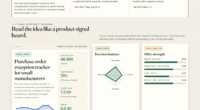
📊 Full opportunity report: The license. Why the AI content market pays the brand-name corpus and strands the long tail. on ThorstenMeyerAI.com — validation score, market gap, and execution plan.

Get hardware and tech essentials delivered free with Prime
- Fast, free delivery on millions of items
- Prime Video, Amazon Music and more included
- Member-only deals all year
TL;DR
Major publishers are striking large licensing deals with AI companies, while small publishers remain excluded. This exacerbates the structural imbalance in the AI content market, raising questions about fairness and future reforms.
Large publishers have entered into multi-million dollar licensing agreements with AI companies, securing access to their archives and brand-name content, while small publishers remain largely excluded from these deals.
Major publishers like News Corp, the New York Times, and the Associated Press have disclosed licensing deals worth hundreds of millions of dollars with AI firms such as OpenAI and Meta, enabling these companies to train their models on high-trust, brand-name content. In contrast, small publishers and niche sites, which collectively provide a significant portion of the web’s diverse content, are unable to negotiate comparable deals due to their lack of leverage and the abundance of their content in training datasets.
This licensing pattern reflects a structural asymmetry: large publishers hold scarce, high-value archives with significant bargaining power, while small publishers’ content is plentiful and interchangeable, offering little leverage. As a result, the licensing market reproduces the same inequality it was supposed to address, with value flowing to the brand-name corpora and the long tail of small publishers providing free training data.
The license.
Why the AI content market
pays the brand-name corpus
and strands the long tail.
licensing deal below it
the large-publisher reality
largest licensing deal · a rounding error
tail’s most direct shot, via aggregation
↓
leverage
↓
a fee
The license that saved the Wall Street Journal does not reach the niche site, and the only thing that could is a market the small publisher cannot build alone. The escape route is real. For most of the publishers who needed it, it leads to a door they cannot open.Thorsten Meyer · The License · Post-Wire 04
Implications for Content Diversity and Market Power
This licensing asymmetry consolidates market power among large publishers and limits small publishers’ ability to monetize their content in the AI era. It reinforces the winner-take-all dynamic, risking further marginalization of small publishers and reducing content diversity in AI training data. Without intervention, the current pattern favors established brands and may threaten the sustainability of smaller content creators.
As an affiliate, we earn on qualifying purchases.
Background of AI Licensing and Market Dynamics
Following the collapse of referral traffic caused by search engine algorithm changes, publishers sought new revenue streams, leading to the emergence of licensing as a primary mechanism for monetizing content used in AI training. Large publishers, with their high-value archives, secured major deals, while smaller sites, which make up the bulk of web content, remained excluded. Discussions around collective and statutory licensing are ongoing but have yet to produce scalable solutions.
“The licensing deals reflect exactly the difference in bargaining power: large publishers have scarce, high-trust archives worth licensing, while small publishers provide abundant, interchangeable content that AI firms can scrape freely.”
— Thorsten Meyer
intellectual property law for publishers
As an affiliate, we earn on qualifying purchases.
As an affiliate, we earn on qualifying purchases.
Unresolved Questions About Collective Licensing Potential
It remains unclear whether collective or statutory licensing schemes will be successfully implemented at scale before small publishers are further marginalized. The legal, political, and platform resistance to such reforms is significant, and their future viability is uncertain.
As an affiliate, we earn on qualifying purchases.
Future Prospects for Market Reform and Policy Action
Efforts toward establishing collective licensing frameworks, such as proposals by the UK coalition, EU, and WIPO, are ongoing but face hurdles. The next steps involve legal battles, policy negotiations, and potential court rulings that could determine whether the licensing asymmetry can be addressed at a systemic level before small publishers are entirely pushed out of the ecosystem.
digital rights management for publishers
As an affiliate, we earn on qualifying purchases.
As an affiliate, we earn on qualifying purchases.
Key Questions
Why are large publishers able to secure licensing deals with AI companies?
Large publishers possess scarce, high-value archives with strong brand recognition, giving them significant bargaining power in licensing negotiations.
Why can’t small publishers access similar licensing deals?
Small publishers’ content is abundant and interchangeable, offering little leverage, and they lack the bargaining power that comes from having a high-value, branded archive.
What is collective licensing, and could it change the current situation?
Collective licensing involves a trade-association or government regime that automatically pays publishers for content used in training AI, regardless of individual leverage. It could address the structural imbalance but is not yet implemented at scale.
What are the risks if the licensing asymmetry persists?
If unresolved, it could lead to further concentration of market power among large publishers, reduced content diversity, and increased marginalization of small publishers, threatening the sustainability of their operations.
Are there legal or policy efforts underway to address this issue?
Yes, proposals for statutory licensing and collective bargaining are advancing in various jurisdictions, but their success depends on legal rulings and political support, which remain uncertain.
Source: ThorstenMeyerAI.com
Halloween Picks
halloween
As an affiliate, we earn on qualifying purchases.