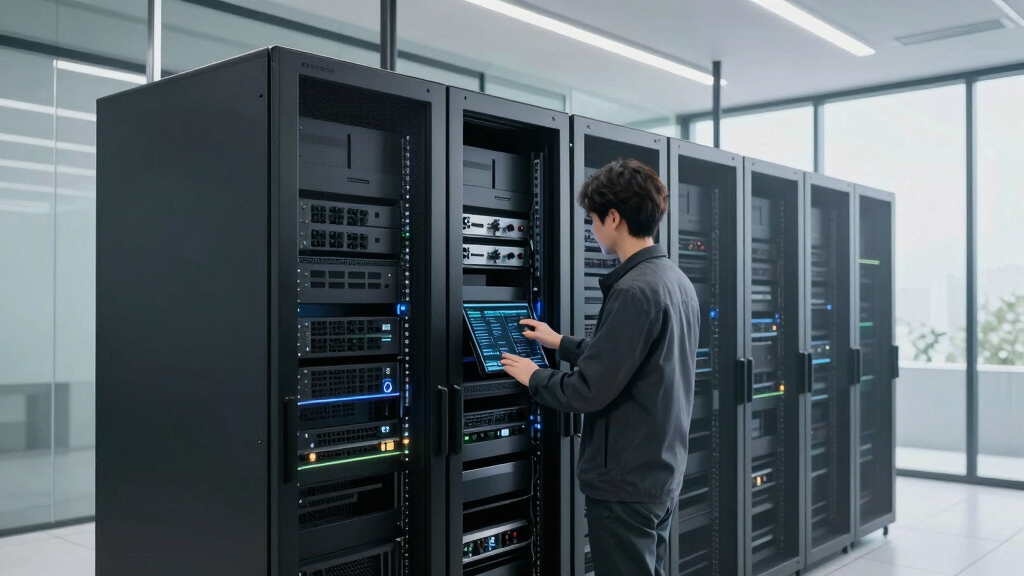

The gigawatt gap. Why China is structurally positioned for AI power and the US is engineering around its grid.

📊 Full opportunity report: The gigawatt gap. Why China is structurally positioned for AI power and the US is engineering around its grid. on ThorstenMeyerAI.com — validation score, market gap, and execution plan.

TL;DR

China is leveraging its centralized planning, vast renewable capacity, and extensive transmission grid to deploy AI infrastructure at gigawatt scales, despite weaker individual chips. The US remains ahead in chip performance but faces constraints at the power delivery layer, creating a structural gap that could influence global AI leadership.

China is structurally positioned for AI power deployment at gigawatt scales through its centralized planning and extensive renewable energy infrastructure, challenging the US’s dominance in AI hardware and models.

While the US leads in AI chip performance, it faces significant constraints at the physical infrastructure level needed to deliver power to data centers. These include grid bottlenecks, permitting delays, and regulatory hurdles, which limit the scale of AI data centers in the US.

In contrast, China has built a vast, centralized transmission network connecting renewable energy hubs with AI demand centers across 40,000+ kilometers, enabling gigawatt-scale data centers. Despite Chinese chips (e.g., Huawei’s Ascend 910C) performing at roughly 60% of US chips, the country’s ability to substitute raw power for chip performance allows it to deploy AI infrastructure at system levels that offset individual chip deficiencies.

This structural difference stems from China’s centralized governance, which facilitates large-scale infrastructure projects, versus the US’s fragmented federal-state-local system that complicates permitting and grid expansion. The Chinese approach leverages renewable energy expansion, adding over 430 GW of wind and solar in 2025 alone, to support this deployment.

The Gigawatt Gap — Thorsten Meyer AI
GIGAWATT
● DISPATCH / MAY 2026
THORSTEN MEYER AI · AI ENERGY & INFRASTRUCTURE · § 01
ENERGY & INFRA · 01
US-CHINA · AI POWER STACK
Essay · Structural-Comparison Analysis · 2026-05-17

The gigawatt gap.
Why China is structurally
positioned for AI power
and the US is engineering
around its grid.

The US dominates AI on chips, infrastructure, models, and applications — except on the layer that physically runs them.
Frontier AI data centers now need 100 MW to start and 1–2 GW at full buildout. Meta Hyperion targets 5 GW; OpenAI Stargate 10 GW; AWS 12 GW. The US reaches this scale through behind-the-meter PPAs · off-grid gas · nuclear restarts · ERCOT regulatory arbitrage · because 2,300 GW are stuck in 5-year interconnection queues. China reaches it through the NDRC’s Eastern Data Western Compute initiative · 45 UHV projects · 40,000 km · 340 GW cross-regional capacity · routing demand to western hubs co-located with 430 GW of new wind+solar added in 2025 alone. Even though Huawei’s Ascend 910C runs at ~60% H100 inference perf, the system-level asymmetry inverts the comparison: US perf-per-watt advantage vs. China watts-without-bound advantage. The gap is constitutional, not technical.
3.89 TW
China total installed
power capacity end 2025
2,300 GW
US interconnection queue
5-year average wait
40K km
China UHV transmission
45 projects · 340 GW capacity
~60%
Ascend 910C inference perf
vs. H100 · compensated by watts
STARGATE 10 GW· HYPERION 5 GW· AWS 12 GW· MICROSOFT 2 GW/YR· 2,300 GW QUEUE· 5-YR WAIT· PJM $29→$329/MW-DAY· ON-SITE GAS +1,800%· CHINA 3.89 TW· 1.8 TW WIND+SOLAR· 430 GW ADDED 2025· 4 TRILLION KWH RENEWABLE· 40,000 KM UHV· 45 UHV PROJECTS· 340 GW CAPACITY· ASCEND 910C ~60% H100· CLOUDMATRIX 384 / 300 PFLOPS· HUAWEI 1M DIES 2025· DEEPSEEK ON H800s· NDRC MANDATE· STARGATE 10 GW· HYPERION 5 GW· AWS 12 GW· MICROSOFT 2 GW/YR· 2,300 GW QUEUE· 5-YR WAIT· PJM $29→$329/MW-DAY· ON-SITE GAS +1,800%· CHINA 3.89 TW· 1.8 TW WIND+SOLAR· 430 GW ADDED 2025· 4 TRILLION KWH RENEWABLE· 40,000 KM UHV· 45 UHV PROJECTS· 340 GW CAPACITY· ASCEND 910C ~60% H100· CLOUDMATRIX 384 / 300 PFLOPS· HUAWEI 1M DIES 2025· DEEPSEEK ON H800s· NDRC MANDATE·
FIG. 01 — THE GIGAWATT SCALE
What frontier AI infrastructure now requires
The unit of measure has shifted from megawatts to gigawatts in 24 months · the binding constraint with it
Starter site
100 MW
Single building
~500 MW
Training sweet spot
1–2 GW
Meta Hyperion
5 GW
Stargate target
10 GW
Stargate Abilene’s 1.2 GW peak is half the system peak of El Paso Electric (serving 465,000 customers). AWS Indiana’s 2.2 GW at full buildout = approximately half the residential electricity consumption of all Indiana households combined. The four largest US hyperscalers have committed ~$650B to AI infrastructure across 2025–2026. Capital is not the constraint. The rate at which transformers can be manufactured, transmission permitted, and generation interconnected is.
FIG. 02 — THE AMERICAN BOTTLENECK
2,300 GW stuck · five-year wait · PJM prices 10x
The capacity exists in the queue · it cannot reach commercial operation at the rate AI buildouts require
Capacity in
interconnection queue
2,300 GW
Approx. US total
installed capacity
~1.3 TW
Of 2000-2019 requests
built by end-2024
13%
2026 capacity from
on-site generation
30%
PJM capacity price
DY 2024-25 → 2026-27
$29→$329
Wait times have more than doubled in 15 years. Onsite gas generation capacity has grown ~1,800% since 2025. Stargate Abilene runs 300 MW of on-site simple-cycle gas turbines; Meta Hyperion is anchored on a $3.2B 2 GW combined-cycle gas plant with $550M shouldered by Louisiana residents; xAI Colossus 2 trucks gas turbines into suburban Memphis. The hyperscalers are not solving the grid problem. They are routing around it.
FIG. 03 — THE TWO POWER STACKS
Constitutional fragmentation vs. centralised mandate
The same gigawatt-scale problem · two structurally different state-architectures solving it
UNITED STATES · WORKAROUND STACK
Five layers · routing around the grid
L1
Behind-the-meter PPAs · TMI restart · Talen-Susquehanna · Microsoft-Chevron
L2
Off-grid gas turbines · xAI Colossus · Stargate Abilene 300 MW · Hyperion $3.2B plant
L3
On-site share scaling · 0% → 30% of new capacity in 12 months
L4
ERCOT regulatory arbitrage · Texas HB 1500 · independent of FERC · 2-3x faster
L5
Executive-order acceleration · DOE Section 403 · FERC PJM order · April 30 2026 deadline
CHINA · CENTRALISED STACK
One mandate · five aligned layers
L1
NDRC mandate (2022) · Eastern Data Western Compute · 8 hubs · 10 cluster sites
L2
UHV backbone · 45 projects · 40,000+ km · 340 GW cross-regional capacity
L3
Western renewable hubs · Guizhou · Ningxia · Inner Mongolia · Gansu · co-located
L4
State Grid + China Southern · unified transmission build · single operator
L5
PUE ≤1.25 mandate · 50 intelligent computing centers · 300 EFLOPS target 2025
The US coordination cost runs through Cleanview · RMI · FERC · DOE · 7 ISOs/RTOs · 50 state utility commissions · local zoning. In China the coordination cost is the NDRC’s planning meeting. This produces speed and scale at the cost of democratic legitimacy and local accountability — both costs are real, and both are routed back to consumers downstream.
FIG. 04 — THE RENEWABLE FOUNDATION
The asymmetry under the chip comparison
China’s renewable buildout operates at roughly 8x the US pace · this is the foundation everything else rests on
United States · 2025
36 GW
Wind + utility solar + distributed
solar additions 2025
~1.3 TW
Total installed power
generation capacity
368 GW
Operating wind + solar
installed base
~26%
Renewable share
of capacity
~8×
2025 capacity
add ratio
China · 2025
430+ GW
Wind + solar additions
2025 alone
3.89 TW
Total installed power
capacity end 2025
1.8 TW
Combined wind + solar
installed capacity
>60%
Renewable share
of capacity
Chinese renewable generation reached ~4 trillion kWh in 2025 — exceeding the entire EU-27 electricity consumption (3.8 trillion kWh). China’s single-day peak load (1.506 TW) is now higher than total US installed capacity. 2025 Chinese energy infrastructure investment: ~$500B across generation, grids, and energy security — roughly the same scale as the four-hyperscaler US AI infrastructure commitment, but spent on the foundation AI runs on rather than on AI itself.
FIG. 05 — THE ASYMMETRIC SUBSTITUTION
Perf-per-watt vs. watts-without-bound
Different binding constraints · per-chip comparisons miss the system-level inversion
UNITED STATES STACK
High perf
Low watts
Perf-per-watt advantage at the chip · grid-bounded at the system
Frontier chip
H100/H200/B200
FP precision
FP8 / FP4
Software stack
CUDA / PyTorch
Rack power
130+ kW NVL72
Binding constraint:
grid + transmission capacity
CHINA STACK
Lower perf
More watts
Watts-without-bound advantage at the system · chip-bounded per unit
Domestic chip
Ascend 910C ~60% H100
FP precision
No native FP8/FP4
Memory
HBM2E (older)
System scale
CloudMatrix 384 / 300 PFLOPS
Binding constraint:
chip performance / FP precision
Production scale: ~1M Huawei Ascend dies shipping in 2025 · ~2M in 2026 · Ascend 960 (Q4 2027) projected H200-comparable. DeepSeek V3/R1 trained on degraded H800s at ~1/10 the US comparable-model compute cost — the lesson is not that DeepSeek had better chips; it is that algorithmic efficiency plus power-throughput substitution can produce frontier-competitive models with constrained silicon. If Chinese chips are 60% as performant per-chip but Chinese power can deploy them at 2-3x density without grid constraint, the system-level capability approaches parity.
The US has perf-per-watt advantage. China has watts-without-bound advantage. These are asymmetric substitutes — not the same axis. When the perf-per-watt side is bounded by grid capacity and the watts-without-bound side is bounded by chip performance, the binding constraint differs.
Thorsten Meyer · The Gigawatt Gap · Energy & Infrastructure 01

Implications of the Gigawatt Power Gap for Global AI Leadership

This structural divergence could reshape global AI leadership. China’s ability to scale AI infrastructure through renewable energy and centralized planning may allow it to deploy AI at larger scales faster than the US, despite weaker chips. If the power bottleneck remains unresolved in the US, it risks capping future AI growth and innovation, challenging its current technological dominance.

Monoprice 12 Outlet 1U Rackmount Power Distribution Unit - NEMA 5-15R, Surge-Protected Sockets, 1050 Joules, 6 Feet Cord

Monoprice 12 Outlet 1U Rackmount Power Distribution Unit – NEMA 5-15R, Surge-Protected Sockets, 1050 Joules, 6 Feet Cord

Designed for standard 19in racks and cabinets.

As an affiliate, we earn on qualifying purchases.

As an affiliate, we earn on qualifying purchases.

US and China Approaches to AI Infrastructure Development

The US has dominated AI hardware, models, and applications but is constrained at the physical layer of power delivery. Its reliance on off-grid gas turbines, nuclear contracts, and regulatory arbitrage has created a bottleneck at the transmission and permitting level, limiting data center size and deployment speed.

Meanwhile, China’s approach centers on large-scale renewable energy expansion and centralized transmission, enabling the deployment of gigawatt-scale data centers. This strategy is supported by the country’s constitutional governance, which allows rapid, large-scale infrastructure projects, and extensive renewable buildout, which underpins its power capacity.

Despite weaker individual chips, China’s system-level approach—substituting raw power for chip performance—allows it to operate AI infrastructure at a scale that could challenge US dominance, especially if efficiency improvements in chips or policy reforms in the US do not close the structural gap.

“The US AI infrastructure stack has won every layer except the one that physically delivers electrons to silicon. China is deploying chips across a transmission network that operates without the regulatory and transmission constraints the US faces.”

— Thorsten Meyer

Advances in Smart Grid and Renewable Energy: Select Proceedings of ETAEERE 2020 (Lecture Notes in Electrical Engineering, 691)

Advances in Smart Grid and Renewable Energy: Select Proceedings of ETAEERE 2020 (Lecture Notes in Electrical Engineering, 691)

As an affiliate, we earn on qualifying purchases.
As an affiliate, we earn on qualifying purchases.

Unresolved Questions on Future AI Infrastructure Trends

It remains unclear whether US efficiency gains in chips, improvements in regulatory policy, or new infrastructure projects will close the gigawatt power gap. Additionally, the long-term impact of China’s centralized infrastructure on global AI leadership is still developing and depends on geopolitical and technological factors.

BestParts Upgraded 2000W Power Supply PSU Unit Replacement for FSP2000-52AGPBI Multi-GPU Server

BestParts Upgraded 2000W Power Supply PSU Unit Replacement for FSP2000-52AGPBI Multi-GPU Server

* Power supply with cables

As an affiliate, we earn on qualifying purchases.

As an affiliate, we earn on qualifying purchases.

Next Steps in AI Infrastructure Development and Policy

The next 24 months will be critical in determining whether the US can overcome its physical infrastructure constraints through policy reforms, technological efficiency, or new grid investments. Simultaneously, China’s continued renewable expansion and infrastructure projects will be closely monitored for their impact on global AI deployment capabilities.

Amazon

gigawatt scale renewable energy infrastructure

As an affiliate, we earn on qualifying purchases.

As an affiliate, we earn on qualifying purchases.

Key Questions

Why does the US face constraints at the power delivery layer?

The US’s federal and state regulatory environment, permitting delays, and limited grid capacity create bottlenecks that restrict large-scale data center deployment at the gigawatt level.

How does China’s approach differ from the US in AI infrastructure?

China leverages centralized planning, extensive renewable energy buildout, and a vast transmission network to deploy gigawatt-scale data centers, bypassing some of the regulatory constraints faced by the US.

Will chip performance improvements close the gigawatt gap?

While chip performance continues to improve, the current structural gap is driven more by physical power delivery constraints than chip capabilities. Closing this gap depends on infrastructure reforms and efficiency gains.

What are the risks if the US cannot address its power bottleneck?

The US could face a ceiling on AI deployment scale, limiting future growth, innovation, and its global leadership in AI technology.

Source: ThorstenMeyerAI.com

Nothing in this article is financial or investment advice. Cryptocurrency and precious-metal investments carry significant risk — do your own research and consider a licensed advisor.
You May Also Like

Emotional Intelligence for Machines: Why It Matters

An emerging frontier in technology promises to transform human-machine interactions—discover why emotional intelligence for machines truly matters.

The City That Watches Itself: The Living Digital Twin, And The God’s-Eye View We’re Building

Cities are now creating real-time digital replicas using sensors, AI, and imaging tech, transforming urban management and surveillance—raising new privacy concerns.