You might have noticed that voice assistant technology is becoming a staple in many households. With 60% of consumers embracing it, convenience and efficiency are clearly driving this trend. Younger users and wealthier families are leading the charge, but what does this mean for the future of consumer behavior? As more people integrate these devices into their lives, the implications for smart device purchases and daily routines are worth exploring.

Get hardware and tech essentials delivered free with Prime
- Fast, free delivery on millions of items
- Prime Video, Amazon Music and more included
- Member-only deals all year
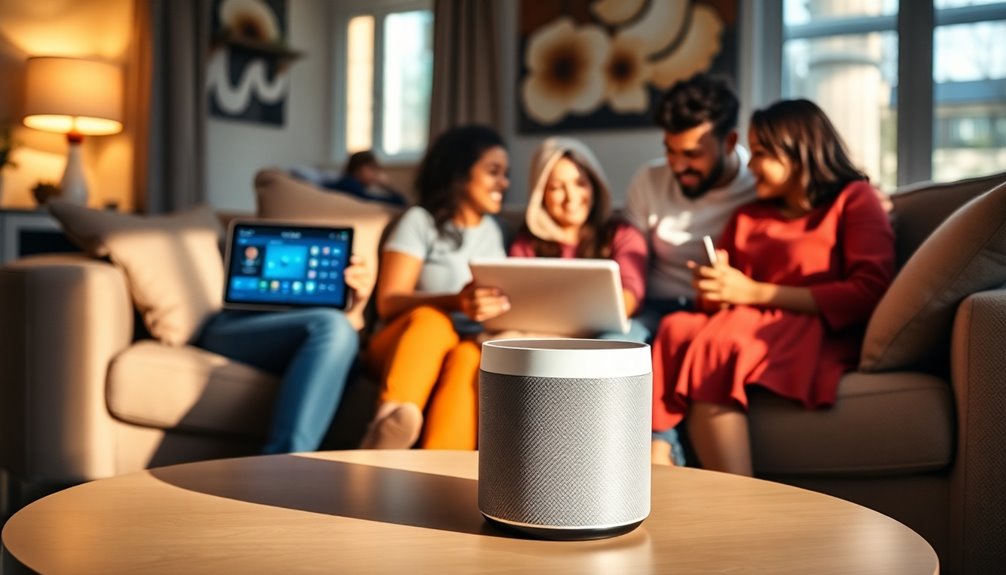
As voice assistant technology continues to evolve, more people are embracing its convenience in their daily lives. You might be surprised to learn that around 20.5% of people globally already use voice search. That number is expected to grow significantly, with nearly half of Americans projected to use voice assistants by 2026. This shift is fueled by the integration of voice assistants into over 8.4 billion devices worldwide. It's clear that as these technologies become more accessible, they're becoming a staple in households.
You may find it interesting that the virtual digital assistant market has seen massive growth, skyrocketing from $1,640 million in 2015 to an astounding $15,792.60 million by 2021. This boom indicates a larger trend where voice assistants aren't just a novelty but a vital component of modern life. By 2028, the installed base of voice assistants is expected to surpass 27 billion units, showcasing how integral they've become.
When you look at user demographics, younger consumers and families with children are leading the charge in adopting voice assistant technology. If you're in a household with an income over $100,000, you're more likely to be using these devices. In fact, around 30% of households in the US and UK engage with smart speakers on a daily basis.
It's encouraging to know that 93% of consumers are satisfied with their voice assistants, and about a third of US consumers utilize them weekly. You probably use your voice assistant for various tasks, and you're not alone. Searching for information tops the list of use cases, followed closely by music streaming and smart home automation. Additionally, over 1 billion voice searches are performed monthly, highlighting the growing reliance on this technology.
Businesses in the US are also tapping into voice technology to improve operational efficiency and customer service, reflecting its versatility. Most people, including you, likely rely on voice assistants for simple tasks, making everyday life that much easier.
Looking ahead, voice assistant technology is set to reshape consumer behavior and industry practices. With voice search assistants accurately answering 93.7% of queries and loading results 52% faster than traditional search methods, you can expect a more streamlined experience.
The US remains the largest market for voice assistants, but growth in regions like China is notable. As compatibility with voice assistants influences smart device purchases, it's clear this trend isn't slowing down anytime soon.
Products Worth Considering

Apple iPad Air (2025) 13‑inch Wi‑Fi 256 GB – Space Gray (M3 chip)

Logitech MX Master 4 for Mac, Ergonomic Bluetooth Mouse with Haptic Feedback, Ultra-Fast Scrolling, USB-C Charging, for MacOS, iPadOS, Windo

Bose SoundLink Flex Bluetooth Speaker (2nd Gen), Portable Waterproof Speaker, Black
As an affiliate, we earn on qualifying purchases.