Intelligent robots combine advanced sensors, cameras, and software to understand their surroundings and make decisions in real time. They use machine learning algorithms to learn from experience, recognize objects, and adapt to new challenges. These technologies work together to enable autonomous navigation and task execution across industries like healthcare, manufacturing, and agriculture. As they continue to improve through ongoing innovation, you’ll discover how these smart systems are transforming daily life and work—if you keep exploring further.
Key Takeaways
- Intelligent robots use sensors, cameras, and software to perceive and interpret their environment in real-time.
- They employ machine learning algorithms to recognize objects, predict outcomes, and improve performance over time.
- Autonomous navigation enables robots to plan routes, avoid obstacles, and adapt to changing conditions.
- Advanced AI systems allow robots to understand human gestures and natural language for better interaction.
- Continuous data analysis and learning enhance robot capabilities, making them more efficient and adaptable across various tasks.
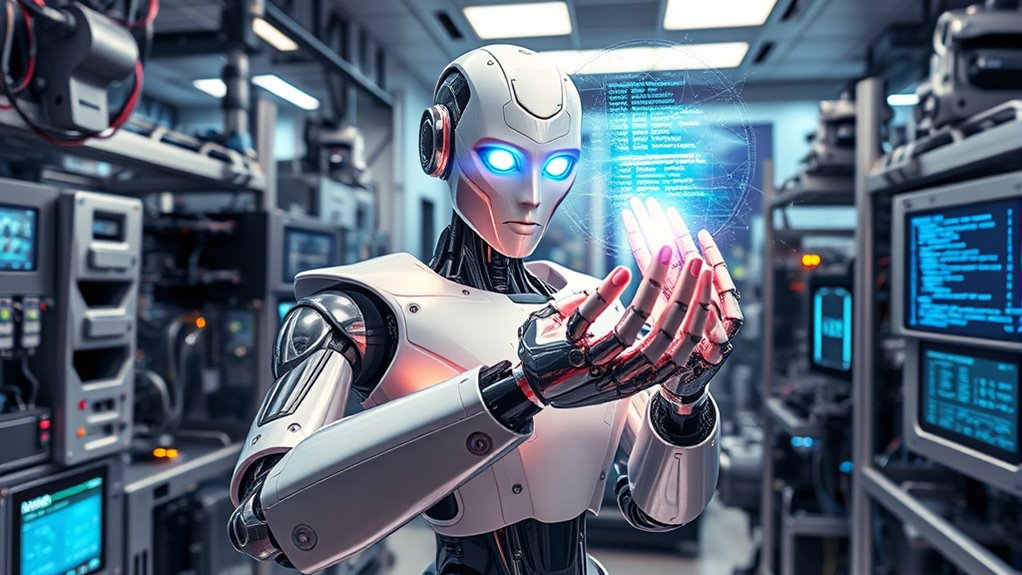
Have you ever wondered how robotics and AI are transforming our world? One of the most impressive advancements is how intelligent robots now navigate complex environments with ease. This ability is mainly driven by autonomous navigation, a process that allows robots to move independently without human intervention. It’s a feat made possible through sophisticated algorithms and real-time data processing. When you see a delivery drone or a self-driving car smoothly weaving through traffic, you’re witnessing autonomous navigation in action. These robots constantly analyze their surroundings, identify obstacles, and plan routes on the fly, ensuring safe and efficient movement. Behind this capability lies a combination of sensors, cameras, and advanced software that work together seamlessly.
Intelligent robots now navigate complex environments seamlessly using autonomous navigation, sensors, and advanced algorithms.
At the core of these systems is machine learning techniques, which enable robots to improve their performance over time. Instead of being explicitly programmed for every scenario, robots learn from their experiences, adapting to new environments and unforeseen challenges. For instance, a robot vacuum cleaner uses machine learning to recognize furniture and optimize its cleaning path, avoiding obstacles and covering surfaces more effectively as it gathers data. Similarly, autonomous vehicles learn to interpret traffic patterns, recognize pedestrians, and respond to unpredictable situations by analyzing vast amounts of driving data. These machine learning models continuously refine their understanding, making robots smarter with every task they perform.
The integration of autonomous navigation and machine learning techniques has revolutionized how robots operate across industries. In manufacturing, robots navigate factory floors, transporting materials with precision and safety. In healthcare, robotic assistants move through hospitals, delivering supplies or assisting with patient care. Even in agriculture, autonomous machines navigate fields, planting seeds or harvesting crops efficiently. The key is that these robots don’t just follow predetermined paths; they interpret their environment and make decisions in real time. This dynamic adaptability is what makes them so effective.
What’s exciting is that these technologies are constantly evolving. As machine learning algorithms become more advanced and sensors improve, robots will become even more autonomous, capable of handling more complex tasks. You’ll see robots that can better understand human gestures, interpret natural language, and respond with a level of intelligence that was once science fiction. Additionally, advancements in sensor technology enhance their ability to perceive and adapt to their environment more accurately. The future of robotics and AI is bright, and it’s transforming the way we live and work, making processes faster, safer, and more efficient than ever before.
Frequently Asked Questions
How Do Robots Learn From New Experiences?
You can think of robots learning from new experiences through machine learning and neural networks. When they encounter something new, they analyze data patterns and adjust their algorithms accordingly. This process allows them to improve their performance over time. By constantly updating their neural networks, robots can adapt to unfamiliar situations, making smarter decisions and becoming more efficient at tasks without needing explicit reprogramming every time they face a new challenge.
What Are the Main Challenges in AI Robot Development?
Think of AI robot development as steering a maze filled with unseen twists. You face main challenges like technical limitations that restrict capabilities and ethical considerations that shape responsible use. Overcoming these hurdles is like clearing a path through dense fog, requiring innovation and care. Balancing safety, privacy, and functionality pushes you to develop smarter, more ethical robots, ensuring they serve humanity without unintended consequences.
How Do Robots Interpret Human Emotions?
You can see how robots interpret human emotions through facial recognition and emotional AI. They analyze facial expressions, tone of voice, and body language to identify feelings. By processing this data, they respond appropriately, like offering comfort or adjusting their actions. Emotional AI helps robots better understand human moods, making interactions more natural and intuitive. This technology is advancing quickly, enabling robots to connect with people on a more personal level.
Can Robots Replace Human Workers Entirely?
Like a storm sweeping across the sky, robots might replace some jobs, but they won’t fully replace humans. You can’t ignore robot job displacement or the ethics of automation, which remind us of the importance of human touch. While robots excel at repetitive tasks, many roles need empathy, creativity, and judgment. So, complete replacement isn’t likely; instead, humans and robots will work together, balancing efficiency and ethics.
What Safety Measures Are in Place for Autonomous Robots?
You should know that autonomous robots have safety measures like sensor integration and safety protocols. Sensors detect obstacles and human presence, preventing accidents. Safety protocols include emergency stops, restricted zones, and regular maintenance checks. These measures guarantee you work safely alongside robots by minimizing risks and enhancing control. Always stay alert to the robot’s signals and follow established safety procedures to keep everyone safe in shared environments.
Conclusion
Now that you know how robotics and AI work together, you can see they’re transforming the world faster than a lightning bolt. These intelligent robots are not just machines; they’re like supercharged superheroes, revolutionizing industries and making tasks easier. With each innovation, you’re witnessing a leap into a future where robots think, learn, and adapt — changing everything around you. Get ready, because this technological explosion is just beginning, and it’s going to be more incredible than you ever imagined.