
📊 Full opportunity report: From Concept To Reality: The AI-Driven Sovereignty Market And Its Champion’s Sale on ThorstenMeyerAI.com — validation score, market gap, and execution plan.

Get hardware and tech essentials delivered free with Prime
- Fast, free delivery on millions of items
- Prime Video, Amazon Music and more included
- Member-only deals all year
TL;DR
Germany has established a significant AI sovereignty infrastructure, including a large private data center in Munich and public funding for a European AI gigafactory. Market demand is rising, but key questions about model independence remain.
Germany has officially launched its AI sovereignty infrastructure, including a private data center in Munich powered by nearly 10,000 GPUs, and secured public funding for a European AI gigafactory. This marks a concrete move from policy rhetoric to practical implementation, with significant implications for European AI independence and market dynamics.
On February 4, 2026, the Industrial AI Cloud in Munich was activated, operated by Deutsche Telekom and NVIDIA, featuring approximately 0.5 exaFLOPS of computing power. This infrastructure is fully privately financed and serves major corporate clients such as SAP, Siemens, Mercedes-Benz, and BMW, representing a 50% increase in German AI processing capacity.
Simultaneously, the German government announced a public investment of 805 million euros in 2026 to support the development of a European AI gigafactory, with a consortium including SAP, Deutsche Telekom, Siemens, IONOS, and Schwarz Group negotiating for EU funding. The initiative aims to establish Europe’s own AI hardware manufacturing hub, akin to a ‘Stargate’ for AI independence.
Market demand for sovereign AI services is confirmed by recent procurement trends, with Germany’s Federal Office for the Protection of the Constitution choosing French company ChapsVision over US-based Palantir, and the Bundeswehr excluding Palantir from cloud projects. Industry estimates, such as McKinsey’s, project the global AI services market to surpass one trillion dollars annually, with Europe’s sovereign cloud spending expected to reach $12.6 billion in 2026, an 83% increase from the previous year.
However, the story is complex: the most advanced AI models used in German infrastructure still rely on US-based chips from NVIDIA, highlighting that sovereignty in AI is layered, involving hardware, software, and regulation. The EU’s AI Act and German legislation have created a regulatory framework, but the actual control over AI models remains uncertain, especially as recent mergers, like Aleph Alpha and Cohere, involve North American capital and ownership.
Der Souveränitäts-Markt ist real geworden —
und hat im selben Quartal seinen Champion verkauft
Tagesaktuell verifizierter Marktpuls · Geld, GPUs und eine Ironie
Das Geld ist da — drei Belege
Telekom + NVIDIA in München: ~0,5 ExaFLOPS, +50 % deutsche KI-Rechenleistung, privat finanziert. Schwarz-Gruppe: 11 Mrd. €, perspektivisch 100.000 GPUs.
805 Mio. € Gigafactory-Förderung; Konsortium SAP, Telekom, Siemens, IONOS, Schwarz. SPRIND: 125 Mio. € für eigene KI-Labore.
BfV wählt ChapsVision statt Palantir; Bundeswehr schließt Palantir aus der Cloud aus. Gartner: EU-Sovereign-Cloud +83 % auf 12,6 Mrd. $.
DIE IRONIE · 24. APRIL 2026
Mitten im Souveränitäts-Frühling schließt sich Aleph Alpha mit Kanadas Cohere zusammen — die Schwarz-Gruppe finanziert als Lead-Investor mit 600 Mio. $.
Freundliche Lesart: Konsolidierung unter Gleichgesinnten; 20 Mrd. $ Verbund schlägt unterfinanziertes Startup. Unbequeme Lesart: Deutschlands Modellschicht wird künftig in Toronto mitentschieden — und deutsches Kapital finanziert lieber fremde Champions als eigene.
Souveränität ist eine Schichtenfrage
Das Signal: Die souveräne Betriebsschicht ist jetzt kaufbar und bezahlbar — die Modellschicht bleibt Import. Wer Souveränitätsstrategien baut, sollte sie auf die Schichten bauen, die Europa tatsächlich kontrolliert.
Implications of Germany’s AI Infrastructure for European Independence
This development signifies a major step toward European AI sovereignty, with tangible infrastructure, public funding, and market demand aligning in 2026. It demonstrates that the continent is moving beyond policy rhetoric to build the necessary physical and institutional foundations.
Nevertheless, critical questions about model independence remain, as the core AI models used in Germany are still predominantly based on foreign technology and chips. The reliance on US hardware, in particular, highlights the layered nature of sovereignty—control over hardware, software, and regulation must all be addressed for true independence.
For industry players and policymakers, the key takeaway is that sovereignty is now a multi-layered challenge. Infrastructure and regulation are in place, but the control over the actual AI models and algorithms remains uncertain, shaping future strategic decisions.
As an affiliate, we earn on qualifying purchases.
European AI Sovereignty Efforts and Market Dynamics in 2026
For years, Germany and Europe debated the concept of digital sovereignty, often expressed as rhetoric without concrete action. By early 2026, this has shifted: infrastructure projects like the Munich-based AI cloud, public investments in gigafactories, and legislative initiatives such as the EU Cloud and AI Development Act have made tangible progress.
Major companies like SAP, Siemens, and the Schwarz Group are investing heavily in building local AI capabilities, while public funds and EU policies aim to reduce dependency on non-European technology providers. Meanwhile, the global AI market is expanding rapidly, with estimates indicating a trillion-dollar annual service market and European sovereign cloud spending rising sharply.
However, recent mergers, such as Aleph Alpha with Canadian Cohere, reveal that even in the push for sovereignty, significant portions of AI model development and deployment remain outside European control, especially as core hardware and models are still often based on US or North American technology.
“The infrastructure now in place in Munich is a clear sign that Germany is serious about building sovereign AI capabilities.”
— an anonymous researcher
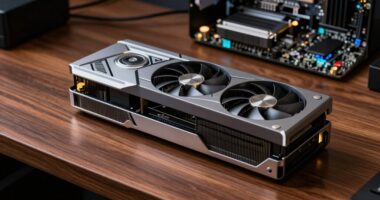
enterprise AI data center hardware
As an affiliate, we earn on qualifying purchases.
As an affiliate, we earn on qualifying purchases.
Remaining Questions About True AI Sovereignty in Germany
It is still unclear how much control Germany and Europe will have over the core AI models used in their infrastructure, given the reliance on US chips and North American-developed models. The recent mergers involving Aleph Alpha and Cohere suggest that model development remains partly outside European jurisdiction, raising questions about the depth of sovereignty achieved.
Additionally, the long-term sustainability of the infrastructure and whether European companies will develop fully independent AI models or continue to depend on foreign technology remains uncertain. The layered nature of AI sovereignty—hardware, software, regulation—means progress in one layer does not guarantee overall independence.
AI hardware manufacturing equipment
As an affiliate, we earn on qualifying purchases.
As an affiliate, we earn on qualifying purchases.
Next Steps for Strengthening European AI Sovereignty
Key developments to watch include the finalization and deployment of the European gigafactory, which aims to produce AI hardware locally, and the evolution of EU and German regulations to tighten control over AI models and data. Additionally, further mergers and investments in European AI startups could help build a more independent model ecosystem.
Monitoring how European companies adapt their AI models, whether they develop more in-house solutions, or continue relying on North American models, will be crucial. The success of these initiatives will determine how much sovereignty Europe can truly claim in the AI domain.
sovereign cloud computing solutions
As an affiliate, we earn on qualifying purchases.
As an affiliate, we earn on qualifying purchases.
Key Questions
What does AI sovereignty mean in the context of Germany?
AI sovereignty refers to Europe’s ability to control its AI infrastructure, models, and data, reducing dependency on foreign technology and hardware providers.
Is Germany fully independent in its AI models?
No, most core AI models and chips are still based on US or North American technology, meaning sovereignty is layered and not complete.
What role does public funding play in Germany’s AI plans?
The German government has allocated over 800 million euros for infrastructure and gigafactory development, supporting local AI capabilities and reducing dependency.
Will European legislation ensure AI independence?
The EU’s AI Act and related policies aim to create a regulatory framework, but control over models and hardware remains a challenge that legislation alone cannot fully resolve.
What are the risks of relying on foreign AI models?
Dependence on non-European models could compromise data sovereignty, security, and strategic autonomy, especially if access or control is restricted.
Source: ThorstenMeyerAI.com
Halloween Picks
halloween
As an affiliate, we earn on qualifying purchases.