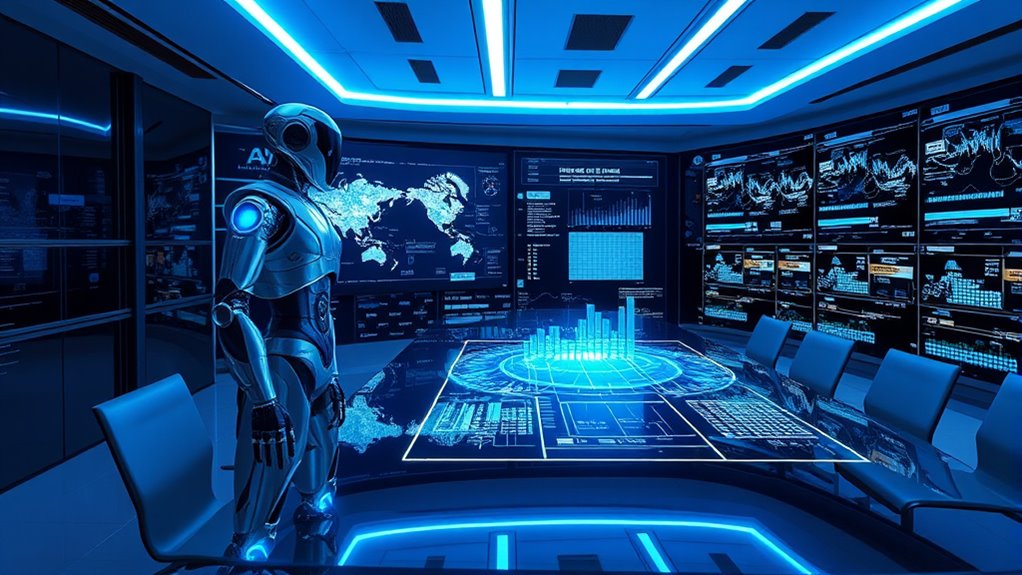

As AI continues to advance, it’s transforming how projects are managed, automating tasks once handled by humans. This shift could redefine roles and reshape traditional workflows, raising questions about the future of project management as we understand it. If AI takes over routine responsibilities, what will remain for managers to do—and how might this change the way we lead projects? The implications are significant, and understanding them could be vital for your future in the field.

Get hardware and tech essentials delivered free with Prime
- Fast, free delivery on millions of items
- Prime Video, Amazon Music and more included
- Member-only deals all year
Key Takeaways
- AI automates routine project management tasks, reducing the need for traditional managerial roles.
- Project scheduling and resource allocation are increasingly handled by AI, minimizing human intervention.
- Managers shift from micro-managers to strategic overseers, focusing on stakeholder engagement and risk.
- AI-driven tools enable real-time, adaptive planning that responds swiftly to project changes.
- The evolution of AI may render some traditional project management skills obsolete, transforming the profession entirely.

As artificial intelligence continues to evolve, it’s transforming how projects are planned, executed, and monitored—so much so that traditional project management roles are rapidly becoming obsolete. You might have relied on Gantt charts, manual scheduling, and team meetings to keep everything on track, but AI-driven tools are changing that landscape. Automated planning, for instance, enables AI systems to generate project schedules instantly, considering numerous variables like task dependencies, deadlines, and resource availability. This isn’t just about saving time; it’s about creating smarter, more adaptable plans that can adjust in real time as conditions change.
AI-driven planning creates smarter, adaptable project schedules that adjust instantly to changing conditions.
Resource enhancement is another game-changer. Instead of manually allocating personnel, equipment, or budget, AI analyzes vast amounts of data to determine the most efficient distribution of resources. It predicts potential bottlenecks, identifies underutilized assets, and reallocates them proactively, ensuring your project runs smoothly. You no longer need to second-guess whether your team is overburdened or if certain tasks are under-resourced; AI algorithms do that work for you, freeing you to focus on strategic decisions rather than day-to-day logistics.
With automated planning, you gain the ability to streamline project initiation and scheduling. AI tools can quickly analyze project scope and constraints, then generate detailed plans that optimize timelines and resource use. This reduces the risk of delays caused by planning errors or overlooked dependencies. Plus, these systems continuously learn from new data, refining their predictions and plans over time. When unexpected issues arise, AI can reconfigure project plans on the fly, offering alternative approaches that minimize disruption.
Resource enhancement also means that you’re less likely to overspend or underutilize assets. AI’s capacity to forecast resource needs based on historical data and project parameters helps keep budgets in check. It can suggest reallocations before problems become critical, improving overall efficiency. As a project manager, you become more of a strategic overseer rather than a micro-manager. AI handles the routine tasks of planning and resource distribution, allowing you to focus on higher-level concerns like stakeholder communication, risk management, and innovation.
In essence, AI-driven automated planning and resource enhancement are transforming project management from a reactive process into a proactive one. You’re empowered with real-time insights, smarter schedules, and optimal resource use—making traditional management roles less relevant. As these technologies continue to mature, your role will shift toward guiding projects with strategic oversight, trusting AI to handle the operational complexities. The future of project management isn’t about managing tasks manually; it’s about leveraging AI to orchestrate projects seamlessly and efficiently. Furthermore, the integration of layer concepts can help organize and optimize the underlying structure of project workflows, enhancing overall efficiency and adaptability.
Conclusion
As you embrace AI’s role, think of it as a seasoned co-pilot guiding your flight through turbulent skies. Just like a navigator who charts the course while you focus on the bigger picture, AI takes over routine tasks, freeing you for strategic decisions. In this new era, your skill shifts from micro-managing to steering with confidence, knowing your intelligent partner guarantees a smoother, more efficient journey—signaling the end of traditional project management and the dawn of a smarter future.
Halloween Picks
halloween
As an affiliate, we earn on qualifying purchases.