Artificial Intelligence (AI) is progressively implemented across various industries. Thanks to the emergence of advanced computer technologies and software, companies are utilizing AI to enhance their processes and the way tasks are carried out. AI technologies have the capacity to engage in numerous functions, from solving problems to performing complex mathematical computations. The main goal of AI is to enhance human capabilities and contributions, rather than replace them.

Get hardware and tech essentials delivered free — and shop member deals
- Fast, free delivery on millions of items
- Access to Prime Big Deal Days deals on October 6–7
- Prime Video, Amazon Music and more included
Uncanny Valley Hypothesis
There is no one definitive answer as to why people react to robots with such uncanny qualities. Some theories suggest that it is linked to the human instinct to self-preservation. For example, an imperfect android may be perceived as a sick person or a genetic defect. Others say that the uncanny valley is just part of human psychology.
The uncanny valley is a phenomenon that has implications for humanoid robots and artificial intelligence. Mori’s 1970 paper introduced the idea and discussed several theoretical approaches from cognitive neuroscience and evolutionary psychology. We will analyze the validity of these theories and explore their relevance to future robotics.
This phenomenon occurs when an artificial entity is deemed so close to human that people develop a strong emotional reaction to it. This reaction is heightened by its movement. Humans are used to interacting with anthropomorphic objects, but there is a point at which such similarity becomes unnerving and makes us distrustful of them.
In the past, studies have shown that the uncanny valley hypothesis holds true for both virtual humans and virtual animals. While researchers have evaluated the effects of virtual humans, there has not been as much research with virtual animals. However, a recent study conducted by Schwind et al.5 shows that the hypothesis holds true for virtual animals, as well.
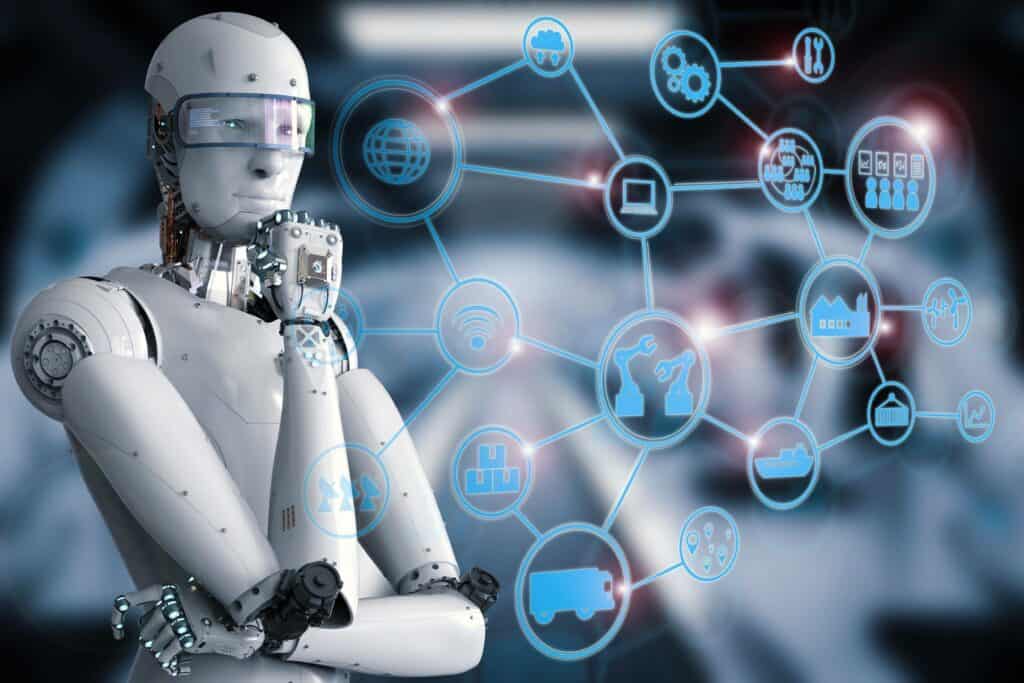
The uncanny valley hypothesis has been linked to the development of robots, but its origins are unclear. However, researchers have shown that the human emotional response to robots increases when the robots look more human and decreases when the robots look uncanny. This effect may explain the emotional reactions humans have when interacting with AI, including poorly targeted ads.
The Uncanny valley hypothesis of artificial intelligence has become a popular topic of discussion among researchers. The uncanny valley concept explains the current applications of AI and challenges traditional understandings of the human-machine relationship. While there has been a longstanding discourse about the likeness of humans and machines, AI has shifted that debate to the statistical (mis)representation of likeness.
While CGI animation and video games are prime examples of how the uncanny valley effect works, the phenomenon is true for robotics and animation. The ability of computer technology to accurately portray human behavior and characteristics has allowed artists and animators to create lifelike characters. However, the resulting appearance may be unsettling for some people, making them feel uneasy about the entire experience. This effect also affects people’s perceptions of naturalness, attractiveness, and commonality.
Cost of Implementing AI Intelligence
Implementing AI requires a significant amount of money and resources. Data scientists and algorithm developers are expensive. Each of these professionals can cost as much as $20 an hour. They can also be charged through your project costs. The hardware necessary for running the AI code can be expensive, too. In addition, you will need to pay for personnel and hardware maintenance. The cost of implementing AI will likely be much more than what you originally budgeted.
The cost of implementing AI is directly related to the complexity of the project. The complexity of the AI solution depends on the application, such as a chatbot or voice assistant. A chatbot requires natural language processing, and security cameras require image processing. The cost of implementing AI solutions varies, but is usually lower than a fully automated system.
AI can help businesses cut fixed costs. These costs are usually associated with rent or utilities. For example, AI can cut cooling costs by as much as 40%. This is important because cooling costs are one of the biggest expenses related to computations. In addition, AI can reduce the cost of hiring a full-time employee.
Implementing AI systems can greatly enhance a company’s bottom line. It can automate key business processes, maximize efficiency, and even help build robust marketing strategies. However, cost is often an impediment to adoption. Therefore, it is critical to determine your specific business needs when implementing AI solutions. Most businesses will not need bespoke AI solutions or premium AI platforms. Instead, starting small and building up from there may be best.
In addition to these benefits, AI solutions are also becoming more accessible to businesses. Previously, only large tech companies could afford to implement them. USM Business Systems, for example, is able to leverage the power of machine learning technology at a price that is affordable for most companies. While the cost of implementing an AI solution may be higher than what you previously budgeted, the benefits it brings are substantial.
Impact of Implementing AI Intelligence on Marketing
AI-based marketing helps marketers understand their audience’s habits and preferences. This technology also allows marketers to quickly make decisions. As marketing activities have become more digital, the challenges and opportunities have grown exponentially. To remain competitive, marketers must make a high volume of decisions quickly. For example, it’s important to create a complete customer experience, which involves end-to-end engagement.
AI can help marketers automate and accelerate the entire marketing process, as it automates routine activities such as data collection, data cleaning and normalization. Moreover, AI can help marketers respond to customer journeys based on data, ensuring one-to-one communication. By leveraging AI, marketers can also gain valuable insights by analyzing customer behavior and preferences, allowing them to tailor their marketing efforts for maximum effectiveness. Furthermore, AI can be used to predict future trends and customer needs, enabling marketers to stay ahead of the competition. In fact, intelligence agencies and AI have also started to collaborate, using advanced algorithms to analyze and interpret big data for national security purposes.
AI also helps marketers personalize their email campaigns. A personalized email campaign can increase customer engagement. In fact, 74% of marketers said that they increased customer engagement after targeting their marketing campaigns with personalized messages. AI also enables marketers to conduct A/B tests, also known as bucket testing, where they compare web page versions to see which is more appealing to customers.
Using AI in marketing can also make digital marketing more efficient. It can help marketers determine which aspects of their marketing efforts need improvement. For example, AI can improve their website’s performance, analyze audience data, predict economic trends, and serve customized messages at the right time. It can also augment marketing teams by performing tactical tasks.
Although the impact of AI isn’t fully understood, it is becoming a powerful tool in the marketing industry. The technology is undergoing a rapid revolution and is already changing the way businesses work. Though some companies are still wary of its benefits, the majority of businesses are eager to adopt the technology.
Fall Picks
fall essentials
As an affiliate, we earn on qualifying purchases.