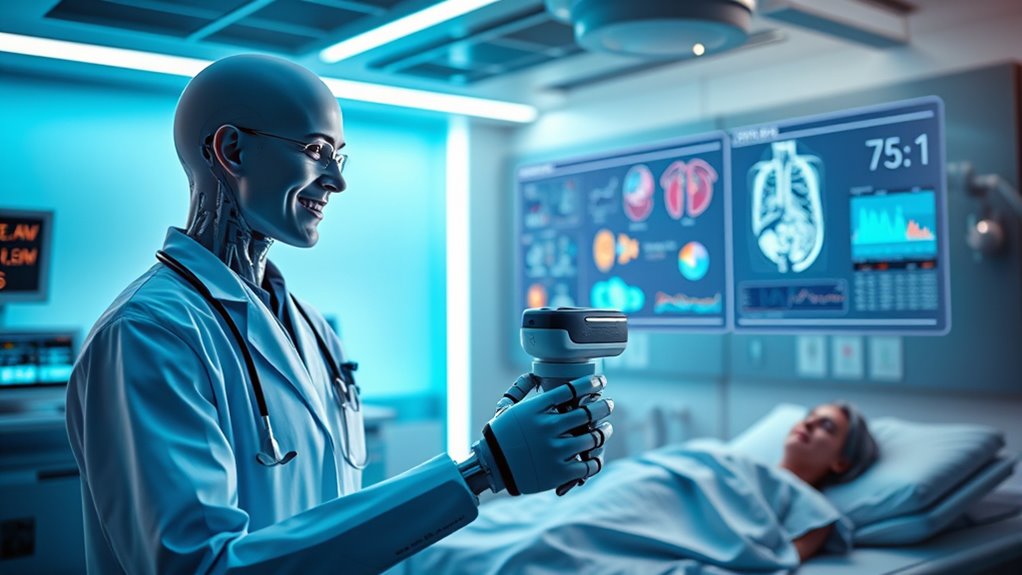

AI in healthcare is saving lives by speeding up diagnoses and improving treatment accuracy. It analyzes large data sets, helping detect anomalies in scans and lab results in real-time. Virtual nurses and remote monitoring provide continuous support, catching warning signs early. This reduces hospital visits, prevents complications, and lowers healthcare costs. If you want to see how these innovations are transforming patient care, there’s more to explore ahead.
Key Takeaways
- AI accelerates diagnosis accuracy and speed, enabling rapid treatment for critical conditions like cancer and stroke.
- Virtual nursing and remote monitoring provide continuous support, improving patient safety and reducing hospital visits.
- AI-powered diagnostics identify anomalies early, decreasing misdiagnoses and facilitating prompt interventions.
- Cost-effective AI tools lower healthcare expenses and expand access, making quality care more widely available.
- AI enhances patient outcomes by detecting early warning signs and supporting personalized, timely treatment plans.

Artificial intelligence is transforming healthcare by enabling faster diagnoses, personalized treatments, and more efficient patient care. You might not realize it, but AI-powered tools like robotic diagnostics are changing how medical professionals identify and treat illnesses. These systems analyze vast amounts of data quickly, helping doctors detect anomalies in imaging scans or lab results with remarkable accuracy. Instead of waiting days or weeks for test results, robotic diagnostics can provide immediate insights, reducing delays and improving patient outcomes. This rapid analysis means you receive a diagnosis sooner, which is essential in conditions like cancer or stroke where every minute counts.
AI-driven robotic diagnostics enable immediate, accurate results, speeding up treatment in critical conditions like cancer and stroke.
Beyond diagnostics, virtual nursing is another innovative application of AI that directly affects your healthcare experience. Virtual nursing involves AI-driven chatbots and remote monitoring systems that can evaluate your symptoms, answer questions, and even remind you to take medications. When you’re managing a chronic condition or recovering at home, virtual nursing provides continuous support without the need for frequent hospital visits. It offers a convenient, accessible way to get professional guidance and reassurance, especially outside regular office hours. This technology helps catch potential issues early, preventing complications and reducing unnecessary hospital stays. You benefit from around-the-clock assistance, making your care more personalized and responsive.
AI’s integration into healthcare isn’t just about convenience; it’s about saving lives. Robotic diagnostics enhance the accuracy of medical interventions, decreasing misdiagnoses and ensuring you get the right treatment faster. Meanwhile, virtual nursing offers ongoing monitoring that can alert healthcare providers to warning signs before they escalate into emergencies. Imagine a system that recognizes changes in your vital signs or symptoms and automatically notifies your doctor, enabling swift intervention. These innovations create a safety net that catches problems early, often before you even realize there’s an issue.
Additionally, research highlights CBD’s potential as a natural supplement that can support overall health and immune function, further complementing traditional treatments. As these AI tools become more widespread, they’re also making healthcare more accessible and affordable. Robotic diagnostics reduce the need for invasive procedures and unnecessary tests, cutting costs and discomfort. Virtual nursing reduces the burden on hospitals and clinics, making continuous care possible without the physical presence of medical staff. For you, this means quicker access to accurate diagnoses, personalized treatment plans, and ongoing support tailored to your needs. AI is ultimately empowering you to take more control over your health, providing a level of precision and convenience that was unimaginable just a few years ago. It’s clear that these advancements aren’t just technological; they’re life-saving innovations that are reshaping the future of healthcare.
Frequently Asked Questions
How Does AI Handle Patient Privacy and Data Security?
You guarantee patient privacy and data security by implementing strong data encryption and strict access controls. Encryption protects sensitive information from unauthorized access, while access controls limit data availability to only authorized personnel. You also regularly update security protocols and monitor systems for vulnerabilities. This way, you keep patient data safe, maintain trust, and comply with privacy regulations, all while leveraging AI to improve healthcare outcomes.
What Are Ai’s Limitations in Diagnosing Rare Diseases?
Think of AI as a detective with a limited toolkit. When it comes to rare disease challenges, AI struggles with diagnostic accuracy because it relies on existing data and patterns. Rare diseases often lack enough cases for the AI to learn from, making it less effective at identifying these conditions. As a result, AI’s ability to diagnose rare diseases remains constrained, highlighting the need for human expertise and more all-encompassing data.
How Cost-Effective Is Implementing AI in Healthcare Systems?
Implementing AI in healthcare can be highly cost-effective, leading to significant cost savings by streamlining operations and reducing unnecessary tests. You’ll notice improved budget efficiency as AI automates routine tasks, accelerates diagnoses, and predicts patient needs more accurately. Although initial investments may seem high, the long-term benefits include lower operational costs and better resource allocation, making AI a valuable addition to your healthcare system’s financial sustainability.
Can AI Replace Healthcare Professionals Entirely?
AI can’t replace healthcare professionals entirely. It enhances their work through robotic surgeries and virtual health assistants, but human judgment remains essential. You rely on professionals for empathy, complex decision-making, and personalized care. AI tools support, not substitute, healthcare providers, helping improve outcomes and efficiency. So, while AI transforms healthcare, it’s a partner, not a replacement, ensuring patients receive the best possible care.
What Are the Ethical Concerns Surrounding AI Decision-Making?
You might worry about algorithm bias skewing AI decisions, leading to unfair treatment. It’s also vital that patients give informed consent before AI tools influence their care. These ethical concerns highlight the importance of transparency and accountability in AI systems. If you’re involved in developing or using AI, make sure you address biases and prioritize patient rights, so technology enhances healthcare without compromising ethical standards.
Conclusion
You see how AI transforms healthcare by diagnosing faster, treating smarter, and saving lives more effectively. It empowers you to stay ahead of illnesses, supports you with personalized care, and offers hope for better outcomes. As AI continues to evolve, it’s not just changing medicine — it’s changing lives. Embrace this technology, trust its potential, and join the journey towards a healthier future where innovation and compassion work hand in hand.