
AI in education personalizes your learning by analyzing your performance, interests, and learning style. It creates tailored lesson plans and activities that match your needs, helping you stay engaged and overcome challenges. For high achievers, it offers advanced material to stay motivated. This technology not only makes learning more effective but also adapts to your pace. Keep exploring to discover how AI can transform your educational journey in ways that suit you best.

Get hardware and tech essentials delivered free with Prime
- Fast, free delivery on millions of items
- Prime Video, Amazon Music and more included
- Member-only deals all year
Key Takeaways
- AI analyzes individual student performance, learning styles, and interests to create customized lesson plans and activities.
- It supports struggling students with targeted interventions and challenges high-achievers with advanced content.
- AI enhances engagement and effectiveness by tailoring the learning experience to each student’s needs.
- Personalization helps students reach their full potential through adaptive and responsive instruction.
- Ethical implementation ensures data privacy and fairness, fostering trust in personalized AI-driven education.
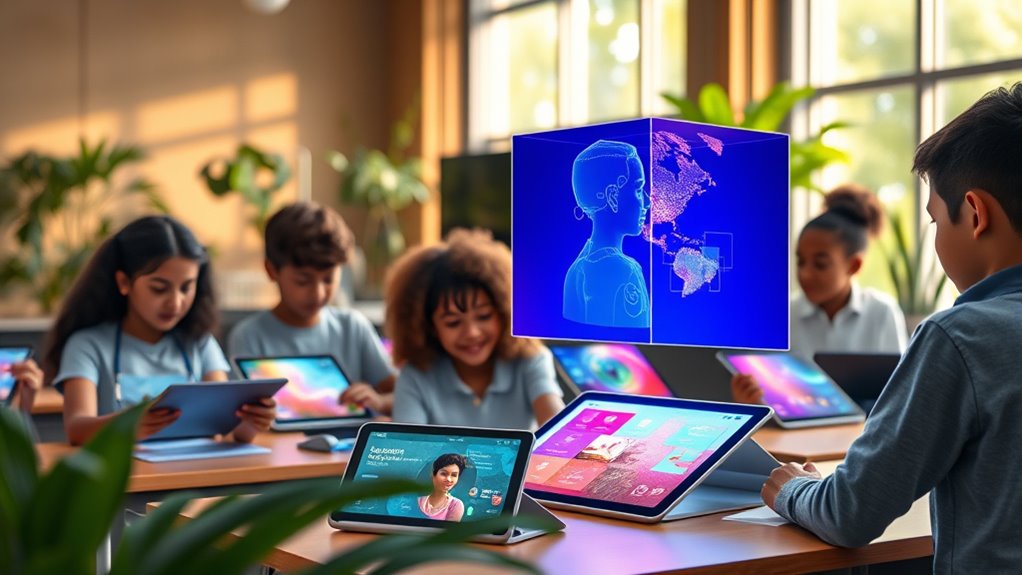
Have you ever wondered how artificial intelligence is transforming education? One of the most exciting developments is how AI personalizes learning experiences, making education more tailored to each student’s needs. Instead of a one-size-fits-all approach, AI analyzes individual performance, learning styles, and interests to create customized lesson plans and activities. This means that students who struggle with traditional methods can receive targeted support, while those who excel can be challenged with advanced material. As a result, learning becomes more engaging and effective, helping students reach their full potential.
AI personalizes education by analyzing performance and interests to create tailored lessons, helping all students reach their full potential.
However, as AI becomes more integrated into classrooms, issues surrounding AI ethics come to the forefront. It’s essential to guarantee that AI systems respect student privacy, avoid biases, and promote fairness. You, as an educator or developer, need to be mindful of how data is collected and used, making sure that AI tools do not perpetuate stereotypes or inequalities. Upholding strong AI ethics means continuously evaluating algorithms for bias and maintaining transparency about how AI influences learning decisions. This way, you can foster trust with students, parents, and colleagues, guaranteeing AI enhances education without compromising ethical standards.
Teacher training also plays a fundamental role in this new landscape. Educators need to understand how AI tools work and how to integrate them effectively into their teaching strategies. Proper training helps teachers interpret AI-generated insights, adapt their lessons accordingly, and support students in navigating personalized learning paths. You’ll find that well-trained teachers can leverage AI to identify student needs early, provide timely interventions, and foster a more inclusive classroom environment. Without adequate teacher training, the potential benefits of AI could be lost or misused, leading to frustration or even resistance from educators.
Moreover, ongoing professional development ensures that teachers stay updated on the latest AI advancements, ethical considerations, and best practices. It’s not enough to simply introduce AI tools; you need to understand their limitations and how to address challenges ethically and effectively. When teachers are confident in using AI, they can create more dynamic and responsive learning environments. This not only improves student outcomes but also empowers educators to embrace innovation confidently, knowing they are supported with the right knowledge and skills. Recognizing that data privacy and security are crucial components helps maintain trust and integrity in AI-driven education systems.
Products Worth Considering

DJI Osmo Mobile 8 Phone Gimbal with Mic Mini Transmitter, Infinity Black
Logitech MX Mechanical Wireless Illuminated Keyboard, Tactile Quiet, Graphite

Amazon Kindle Scribe Colorsoft 64GB (1st Generation)
As an affiliate, we earn on qualifying purchases.
Frequently Asked Questions
How Does AI Ensure Data Privacy in Personalized Learning?
AI guarantees data privacy in personalized learning by using data encryption, which protects your information from unauthorized access. It also follows strict privacy policies that regulate how your data is collected, stored, and used. You can trust that AI systems prioritize your confidentiality and comply with regulations, giving you peace of mind while benefiting from personalized education. These measures keep your data safe and secure throughout your learning journey.
Can AI Adapt to Different Learning Styles Effectively?
Sure, AI’s so advanced it can magically adapt to your unique learning style—because who needs a real teacher, right? It uses learning analytics and adaptive feedback to identify your preferences and adjust lessons accordingly. While it might not read your mind, it’s pretty good at tailoring content, making sure you get the right challenge at the right time. So yes, AI can effectively meet different learning styles—no crystal ball required.
What Are the Limitations of AI in Education?
You should recognize that AI in education faces limitations like bias mitigation challenges, which can lead to unfair treatment of students. Additionally, AI systems often struggle with curriculum alignment, making it difficult to guarantee content remains relevant and accurate. These issues can hinder personalized learning experiences. To overcome them, you need ongoing oversight and updates to AI tools, ensuring they serve all students equitably and align with educational standards.
How Accessible Is AI Technology for Underserved Schools?
You might find AI technology isn’t always accessible in underserved schools due to equity challenges and infrastructure barriers. Limited funding, lack of reliable internet, and outdated devices restrict adoption. These obstacles create disparities, making it harder for students in underserved areas to benefit from AI’s personalized learning tools. Addressing these issues requires targeted investments, policy support, and infrastructure improvements to guarantee AI’s benefits reach every student equally.
What Skills Do Teachers Need to Integrate AI Tools?
You need strong teacher training to effectively integrate AI tools, focusing on both technical skills and pedagogical strategies. Understanding how to adapt curriculum design with AI enhances your ability to personalize learning experiences. Stay updated on new AI applications, and develop your digital literacy. Building confidence in using these tools empowers you to create engaging, student-centered lessons, making AI an integral part of your teaching repertoire.
Conclusion
As you embrace AI’s role in education, it’s no coincidence that personalized learning feels more connected than ever. Just like a well-timed lesson, AI adapts to your needs, revealing that technology isn’t just about data—it’s about understanding you. In this journey, you realize that the most powerful tool is not just AI itself, but the human potential it unleashes. Together, you’re shaping a future where learning truly feels personal.