AI is changing how we see creativity by generating original ideas, patterns, and designs that challenge the idea of human exclusivity. While machines analyze vast data and blend randomness to mimic inspiration, they lack consciousness and emotional intent that many consider essential to true creativity. Instead, AI acts as a collaborator, expanding possibilities and pushing boundaries in art, music, and storytelling. To discover how this evolving partnership shapes creative futures, keep exploring the details behind AI’s role.
Key Takeaways
- AI generates novel ideas by analyzing data and blending randomness, mimicking human creative processes.
- Machines lack consciousness and emotional intent, raising questions about their capacity for true creativity.
- AI functions as a collaborative tool, augmenting human creativity rather than replacing genuine artistic insight.
- Algorithmic imagination expands creative possibilities, encouraging exploration beyond traditional boundaries.
- The evolving role of AI challenges and redefines conventional notions of what constitutes authentic creativity.
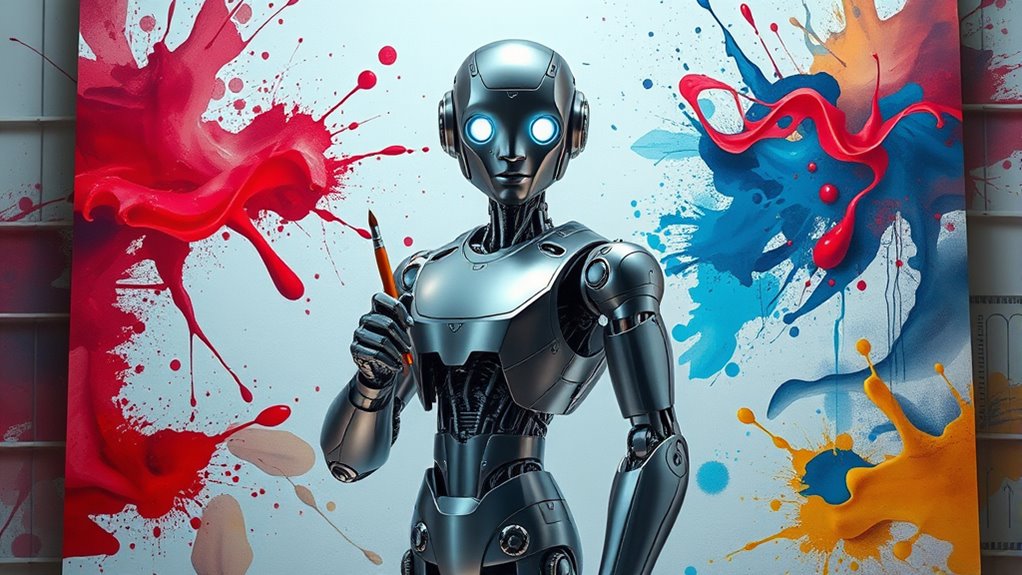
Have you ever wondered how artificial intelligence is transforming creativity? It’s a fascinating shift, one that challenges traditional ideas about human ingenuity. At the heart of this change is the concept of algorithmic imagination—machines generating ideas, patterns, and designs that once seemed exclusive to human minds. Instead of simply executing predefined tasks, AI systems now craft novel solutions, blending data and randomness in ways that mimic the creative process. This phenomenon, often called machine inspiration, isn’t just about automating art or music; it’s about expanding what’s possible within the sphere of creativity itself. You might see AI as a tool that sparks new ideas or as a collaborator that pushes your own creative boundaries, making the process more dynamic and unpredictable.
With algorithmic imagination, AI models analyze vast datasets to identify patterns and generate new content. These models don’t need to understand art or music in the human sense—they operate based on probabilities, recognizing combinations that haven’t been explicitly programmed. When you feed an AI system a prompt or a theme, it can produce original images, stories, or melodies that seem fresh and inventive. This isn’t mere replication or remixing; it’s a form of machine inspiration that taps into the algorithm’s ability to combine elements in surprising ways. As you interact with AI-driven tools, you might be amazed at how they offer fresh perspectives or suggest ideas you hadn’t considered. The machine’s ability to generate “original” work challenges your notions of creativity as solely human.
AI analyzes data to create original, surprising content, challenging ideas of human-only creativity.
However, some skeptics question whether AI can truly be creative or if it’s just remixing existing data. They argue that without consciousness or emotional intent, machines lack the essential qualities that define human creativity. Yet, when you look at the outputs—be it a painting, poem, or innovative design—you realize that the value lies in the result, not in the machine’s internal experience. AI acts as a catalyst for your own creative process, offering inspiration and new directions. It’s less about replacing human ingenuity and more about augmenting it. As you explore these tools, you’re participating in a new form of creative partnership—one where algorithms serve as a source of inspiration, pushing you to think beyond conventional boundaries.
In the end, AI’s role in creativity is evolving. Its algorithmic imagination and machine inspiration aren’t just technological feats; they’re reshaping how you conceive, create, and collaborate. Whether or not machines can be “truly” creative, they’re undeniably expanding the horizons of human expression, inviting you into a future where human and machine creativity intertwine seamlessly.
Frequently Asked Questions
Can AI Generate Original Ideas Without Human Input?
You might think AI can generate original ideas without human input, but it relies on machine originality and algorithmic innovation. These systems analyze existing data to produce new combinations, but they don’t truly invent independently. Instead, they remix and adapt what they’ve learned. While AI can surprise you with novel outputs, it’s ultimately guided by human-designed algorithms, making genuine, autonomous creativity still a human domain.
How Do Ai-Created Artworks Compare to Human Art?
AI-created artworks are like mirrors reflecting human creativity, but they often lack the emotional depth and artistic authenticity that genuine human art possesses. While AI can produce visually stunning pieces, they tend to feel mechanical, missing the soul that comes from personal experience. You might find them impressive, yet they often fall short of the emotional resonance that makes human art truly special.
Is AI Creativity Limited to Specific Genres or Styles?
You might think AI creativity is limited by algorithmic boundaries and stylistic constraints, but that’s not entirely true. AI can adapt across many genres and styles, pushing past those boundaries with new combinations and innovations. While certain patterns may influence outputs, you’ll find that AI can explore diverse artistic expressions, continually evolving and challenging traditional limits. So, AI creativity isn’t confined; it’s expanding into new stylistic horizons.
What Ethical Concerns Arise From Ai-Driven Creativity?
You face a storm of ethical concerns when AI takes the creative helm. Privacy concerns swirl like dark clouds, risking sensitive data exposure. Authorship attribution becomes a tangled web, blurring lines between human and machine. As AI paints, writes, and composes, you must ask if this digital artist respects originality and honesty. Steering through this landscape demands vigilance, ensuring technology enhances rather than erodes the moral fabric of creative expression.
Will AI Ever Surpass Human Creativity Entirely?
You might wonder if AI will ever surpass human creativity, but it’s unlikely. Machines lack true intuition and emotional depth, which are essential to genuine creativity. While AI can generate impressive work, it doesn’t experience feelings or intuition like humans do. You’ll find that human creativity remains unique because of these qualities, making it impossible for machines to fully match or surpass the depth and nuance you bring to creative endeavors.
Conclusion
You might think machines can’t truly be creative, but consider an AI that composed a symphony, surprising even its creators. Just like a brushstroke from an unexpected artist, AI’s innovations spark new ideas and possibilities. It’s not about replacing human creativity but expanding it—like a mirror reflecting infinite potential. So, as you explore this frontier, remember that even the most unexpected sparks can ignite revolutionary flames of creativity in us all.