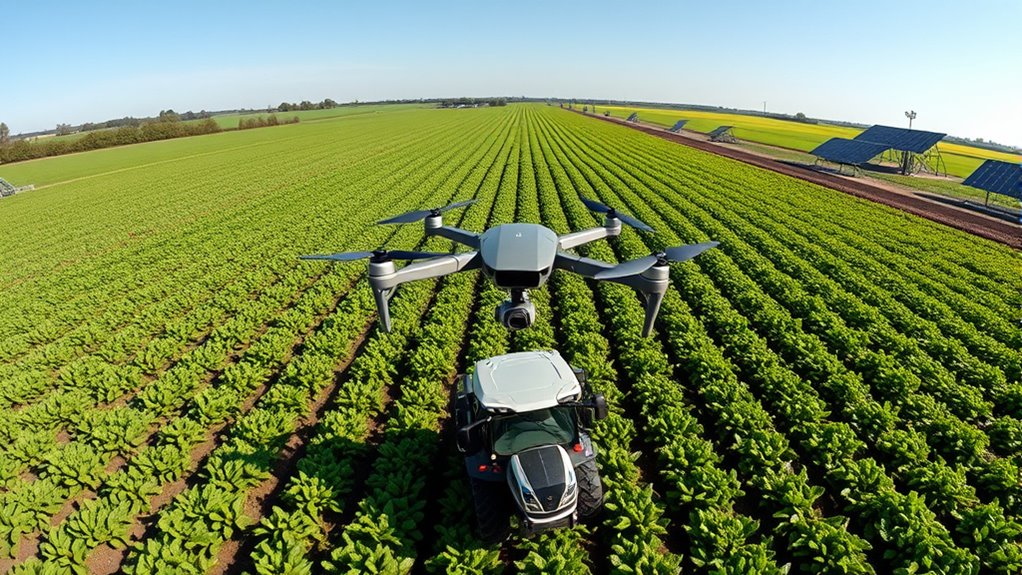

AI is revolutionizing agriculture by helping you implement smart farming practices that boost efficiency and sustainability. It enables you to detect plant diseases early, monitor crop health in real-time, and use predictive analytics to plan ahead. Automated machinery reduces labor and optimizes resource use, making farming more productive and environmentally friendly. As AI continues to evolve, you’ll discover innovative ways to grow better crops with less waste—just keep exploring to learn more.
Get ready for Prime Big Deal Days — try Prime free
Exclusive member deals on October 6–7, plus fast free delivery. Cancel anytime.
As an affiliate, we earn on qualifying purchases.
Key Takeaways
- AI-driven disease detection enables early, accurate identification of plant illnesses, reducing chemical use and promoting sustainable practices.
- Real-time crop monitoring through sensors and drones provides actionable insights for resource optimization and environmental conservation.
- Predictive analytics help farmers forecast weather, pests, and market trends, supporting proactive decision-making and improved yields.
- Automation with autonomous machinery increases efficiency, reduces labor costs, and optimizes resource use during peak farming seasons.
- Integrating AI technologies fosters a smarter, more sustainable agriculture industry focused on productivity and environmental responsibility.
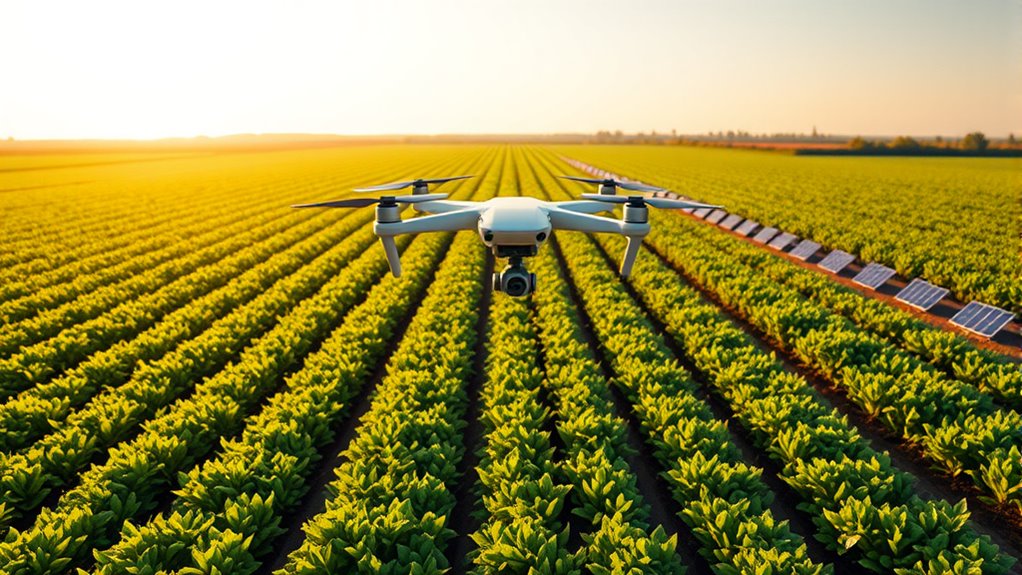
Have you ever wondered how artificial intelligence is transforming agriculture? It’s a game-changer, making farming more efficient, sustainable, and productive than ever before. With AI, farmers can now leverage data-driven insights to optimize every aspect of their operations. One of the most significant advancements is in disease detection, where AI-powered tools analyze images and sensor data to identify plant illnesses early. Instead of waiting for visible signs or relying on manual inspections, you can now deploy AI systems that quickly scan fields, spotting symptoms that might be missed by the naked eye. This early detection helps prevent the spread of diseases, saving crops and reducing the need for excessive chemical treatments. It’s a smarter, more targeted approach that not only boosts yield but also minimizes environmental impact.
AI-driven disease detection saves crops, reduces chemical use, and boosts sustainable farming practices.
Crop management has also seen a revolutionary shift thanks to AI. With the help of drones, satellite imagery, and ground sensors, you can monitor soil health, moisture levels, and crop conditions in real time. AI systems analyze this vast amount of data, providing actionable insights that enable you to make informed decisions about watering schedules, fertilization, and pest control. This precision approach ensures that resources are used prudently, reducing waste and lowering costs. For example, instead of blanket spraying pesticides or fertilizers across entire fields, AI-driven recommendations allow you to target specific areas that need attention. This level of control not only maximizes crop health and yield but also promotes more sustainable farming practices. Additionally, the integration of personal development strategies like goal setting and self-reflection can help farmers adapt and stay motivated amid rapid technological changes.
Furthermore, AI enhances crop management by predicting future outcomes based on historical data and current conditions. This predictive analytics capability helps you plan for weather fluctuations, pest outbreaks, or market demands, enabling proactive strategies rather than reactive ones. As a result, you can better manage risks, improve harvest timing, and increase profitability. AI also supports automation, with autonomous tractors and harvesters reducing labor needs and increasing efficiency during busy seasons.
In essence, AI is transforming agriculture into a more intelligent, responsive enterprise. Disease detection becomes faster and more accurate, allowing for timely interventions that protect your crops. Meanwhile, crop management becomes more precise and sustainable, optimizing resource use and boosting productivity. As technology continues to evolve, you’ll find yourself equipped with smarter tools that help you grow better crops, reduce waste, and operate more sustainably. The future of farming isn’t just about traditional practices anymore; it’s about harnessing the power of AI to farm smarter, better, and more responsibly.
Top picks for "agriculture rise smart"
As an affiliate, we earn on qualifying purchases.
Frequently Asked Questions
How Does AI Improve Crop Yield Predictions?
AI improves crop yield predictions by enhancing crop modeling and weather forecasting. You can rely on AI to analyze vast amounts of data, identify patterns, and make accurate predictions. It considers factors like soil health, climate conditions, and historical yields, allowing you to optimize planting and harvesting schedules. This proactive approach helps you maximize yields, reduce waste, and make informed decisions for better farm management.
What Are the Costs of Implementing AI in Farms?
Implementing AI on your farm involves costs like a thorough cost analysis and infrastructure investment. You’ll need to purchase sensors, data storage, and processing systems, which can be expensive upfront. Additionally, training staff and maintaining equipment add ongoing expenses. While these costs can be significant, the long-term benefits—like increased efficiency and higher yields—may justify the investment, making smart farming a valuable upgrade for your operations.
How Is Data Privacy Managed in Smart Farming?
You guarantee data privacy in smart farming by using data encryption to secure your sensitive information. Farmers often implement strict access controls and anonymize data to protect privacy. Regular audits and compliance with data protection regulations help maintain farmer privacy. By actively managing these measures, you can confidently harness AI benefits while safeguarding your data, ensuring your farm’s information remains confidential and protected from unauthorized access.
Can AI Detect Pest and Disease Outbreaks Early?
Yes, AI can detect pest and disease outbreaks early by analyzing data from autonomous drones and soil analysis. You can deploy drones equipped with cameras and sensors to monitor crops continuously, identifying signs of pests or diseases quickly. Soil analysis powered by AI helps you spot early symptoms, enabling timely interventions. This proactive approach minimizes damage and boosts yields, making your farming more efficient and sustainable.
What Are Future Trends for AI in Agriculture?
Imagine a future where AI becomes your farming compass, guiding you toward sustainable practices with precision and care. You’ll harness drone technology to monitor fields like a watchful eye, optimizing resources and reducing waste. As AI evolves, it’ll deepen your understanding of ecosystems, helping you make smarter decisions that nurture the land and boost yields. This journey promises a harmony between technology and nature, shaping a resilient, eco-friendly agricultural landscape.
Conclusion
As you embrace smart farming, AI becomes your trusted compass guiding you through the fields of innovation. It’s like having a seasoned partner, turning data into harvests and challenges into opportunities. With AI’s help, you can cultivate not just crops, but a brighter, more sustainable future. The seeds of today’s technology are sprouting into tomorrow’s abundance—proof that in this digital age, the future of agriculture is truly in your hands.
Fall Picks
fall essentials
As an affiliate, we earn on qualifying purchases.