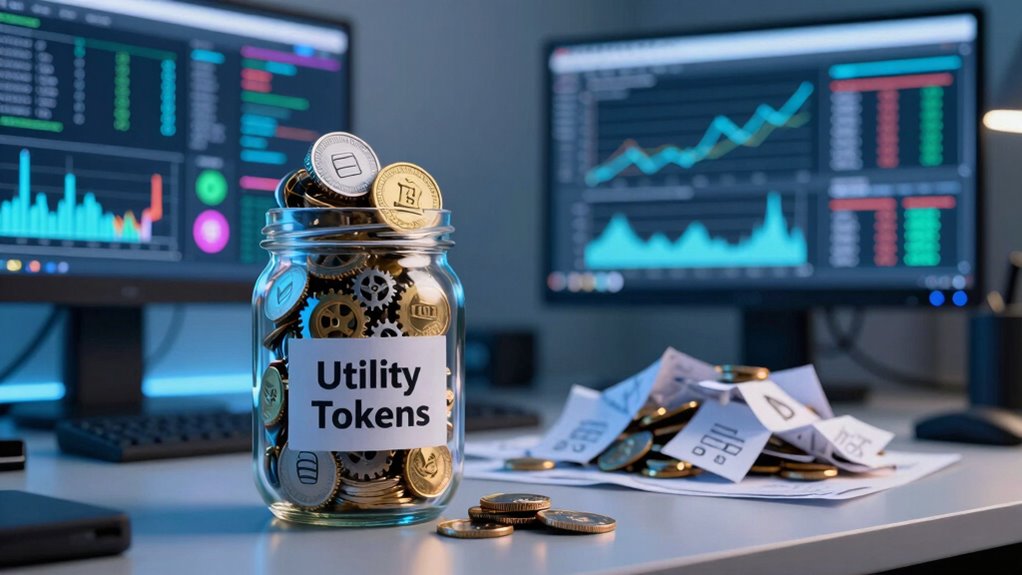

Utility tokens are designed to serve specific functions within blockchain platforms, like paying for services or accessing features, making their value tied to actual use and adoption. In contrast, pure speculation tokens are bought mainly for profit potential, often driven by hype and market sentiment, leading to higher volatility and risks. Understanding how each operates can help you make smarter investments. Keep exploring to uncover more differences and how to navigate this complex landscape effectively.

Get hardware and tech essentials delivered free with Prime
- Fast, free delivery on millions of items
- Prime Video, Amazon Music and more included
- Member-only deals all year
Key Takeaways
- Utility tokens are designed for accessing specific platform features, while speculation tokens are mainly bought for potential profit.
- Utility tokens’ value depends on platform adoption and usefulness, whereas speculation tokens’ prices are driven by market hype and sentiment.
- Utility tokens typically operate within regulated environments with clear use cases, unlike often unregulated speculative tokens.
- Utility tokens tend to be less volatile and have a stable purpose, while speculation tokens can experience rapid price swings.
- Investing in utility tokens involves assessing real-world applications, whereas speculation tokens focus on market trends and hype.

In the world of cryptocurrencies, understanding the difference between utility tokens and pure speculation is essential for making informed decisions. When you’re exploring the crypto space, it’s crucial to recognize that not all tokens serve the same purpose. Utility tokens are designed to provide access to a product or service within a specific blockchain ecosystem. For example, you might use a utility token to pay for services, access features, or participate in decentralized applications. These tokens are generally created with a clear function in mind, and their value tends to be tied to the usefulness and adoption of the platform they support.
Utility tokens grant access to blockchain services and are valued based on platform adoption and usefulness.
On the other hand, pure speculation involves tokens that are primarily bought and sold with the hope of profit, rather than for any intrinsic utility. You might see these tokens surge in value based on hype, market sentiment, or anticipated future gains, rather than actual use cases. Because of this, their prices can be highly volatile, often driven by market sentiment rather than fundamentals. This market volatility can lead to rapid gains, but it also increases the risk of significant losses. If you’re considering investing in such tokens, understanding the volatility and how quickly prices can swing is vital to managing your risk.
Token regulation is another factor that differentiates utility tokens from tokens meant for speculation. Utility tokens, especially when complying with legal standards, often face clearer regulatory frameworks. This can provide some level of security and legitimacy, reducing the risk of fraud or sudden legal crackdowns. Conversely, tokens primarily used for speculation may operate in gray areas, with less oversight. This lack of regulation can make them more susceptible to manipulation, fraud, or sudden bans, which can drastically impact your investment. Recognizing regulatory environments can help you better assess which tokens are more likely to offer long-term stability.
If you’re looking for tokens with genuine utility, focus on those that have a clear use case, active development, and real-world applications. These tend to be less affected by market volatility and regulatory uncertainties, offering a more stable investment or participation option. Additionally, understanding the market dynamics surrounding these tokens can provide insight into their potential growth and acceptance. Being aware of the token utility and how it integrates within its ecosystem can help you identify projects with long-term viability.
Conversely, if you’re attracted to speculative tokens, you need to stay aware of the high risks involved, including potential regulatory crackdowns and the unpredictable nature of their prices.
Ultimately, understanding the distinction between utility tokens and pure speculation helps you navigate the crypto landscape more effectively. You can better assess the risk-reward profile of each type, make smarter choices aligned with your goals, and avoid falling into traps set by hype or market manipulation. Whether you’re investing or using tokens for their intended purpose, clarity about their roles and risks is your best tool for success.
As an affiliate, we earn on qualifying purchases.
Frequently Asked Questions
How Do Utility Tokens Impact Blockchain Project Funding?
Utility tokens impact blockchain project funding by enabling token distribution that directly supports development and operations. You can use them to incentivize community participation, fostering a dedicated user base. When you distribute tokens strategically, it aligns community incentives with project growth. This approach not only raises funds but also encourages ongoing engagement, making your project more sustainable and attractive to investors who see real utility and active community support.
Can Utility Tokens Appreciate in Value Over Time?
Yes, utility tokens can appreciate in value over time, especially if the project gains popularity and adoption. While market volatility can cause fluctuations, the long-term potential depends on the platform’s success and utility. If the project proves valuable and attracts more users, demand increases, which can drive up the token’s value. However, always keep in mind that market volatility means prices can also decline unexpectedly.
What Legal Regulations Apply to Utility Tokens?
You need to understand that utility tokens are subject to specific regulatory classifications and legal compliance requirements. Authorities like the SEC may classify certain utility tokens as securities if they resemble investment contracts, leading to stricter rules. To avoid legal issues, guarantee your token complies with relevant regulations, such as registration or exemption processes, and maintains transparency about its purpose, avoiding misrepresentation to protect yourself and your users.
Are Utility Tokens More Sustainable Than Security Tokens?
Utility tokens are generally more sustainable than security tokens because their token utility promotes ongoing market activity, fostering market stability. You benefit from their purpose-driven nature, which encourages users to engage with the platform or service. Unlike security tokens, which often rely on speculative investment, utility tokens focus on real-world application, making them less prone to volatile swings and more aligned with long-term growth and stability.
How Do Utility Tokens Foster User Engagement?
Did you know that 65% of blockchain projects see increased user engagement through utility tokens? You foster this by making token usability central to your platform, encouraging users to actively participate. Offering user incentives, like access to exclusive features or discounts, motivates ongoing interaction. When your utility tokens provide real value and benefits, users are more likely to stay engaged and contribute, creating a vibrant, active community around your project.
blockchain platform access tokens
As an affiliate, we earn on qualifying purchases.
As an affiliate, we earn on qualifying purchases.
Conclusion
Think of utility tokens as tools in your toolbox—they’re designed for specific jobs and have real-world value. Pure speculation, on the other hand, is like betting on a roller coaster’s next drop—driven more by chance than purpose. When you understand the difference, you’re better equipped to navigate the crypto landscape. Just remember, choosing utility tokens is like building a sturdy house—focused on long-term use—while speculation can be a quick, risky ride on the wild side.
As an affiliate, we earn on qualifying purchases.
As an affiliate, we earn on qualifying purchases.
Halloween Picks
halloween
As an affiliate, we earn on qualifying purchases.