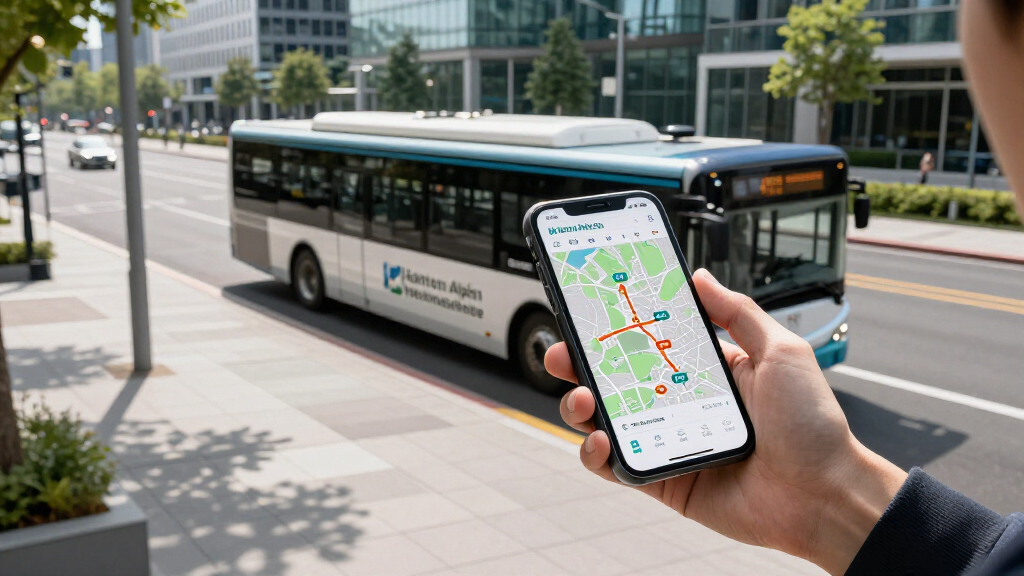

Exploring AI-Generated Elements In 'Kanton Alpin Verkehrsbetriebe'

📊 Full opportunity report: Exploring AI-Generated Elements In 'Kanton Alpin Verkehrsbetriebe' on ThorstenMeyerAI.com — validation score, market gap, and execution plan.

TL;DR

A new exhibit at ‘Kanton Alpin Verkehrsbetriebe’ features AI-generated transit elements, including a real-time clock and animated departure board, built entirely with code. This demonstrates AI’s role in digital design and precision. Details about the technology and purpose are emerging.

A dedicated AI-generated exhibition space at ‘Kanton Alpin Verkehrsbetriebe’ features a digital replica of a Swiss alpine railway station, showcasing AI-designed transit elements such as a real-time SVG clock and animated departure board. This development highlights the integration of AI in digital design, emphasizing precision and code-driven visuals.

The exhibit, titled ‘Room 23 of 175,’ is a fully code-based showcase that uses HTML, CSS, and JavaScript to generate all visual components, including pictograms, maps, and schematics, without external assets or frameworks. The centerpiece is a Mondaine-style SVG clock synchronized with real time, featuring a sweeping second hand that pauses at 12 for two seconds, mimicking Swiss railway timing. Additionally, an animated split-flap departure board displays destinations, with characters flipping through a cascade of characters every 20 seconds, and delays highlighted in red.

All elements adhere to a strict Swiss International Style aesthetic, employing a monochrome palette of white, black, and signal red, with typography inspired by Helvetica and monospaced fonts. The design relies heavily on CSS grid and SVG for structural consistency, emphasizing obsessive precision in visual execution. The entire experience is self-hosted, with no external assets or build steps, showcasing an AI-driven approach to digital architecture and design fidelity.

At a glance
reportWhen: ongoing; the exhibit is currently live…
The developmentThe exhibition showcases AI-generated transit visuals, including a Swiss-style clock and animated departure board, created entirely through code, highlighting AI’s creative application.
Crypto market snapshot
Fear & Greed Index
31/100 — Fear
Bitcoin BTC$65,600▼ 0.3%
Ethereum ETH$1,926▲ 0.2%
Tether USDT$0.9996▲ 0.0%
BNB BNB$570.26▼ 0.1%
USDC USDC$0.9998▲ 0.0%
XRP XRP$1.13▲ 0.0%
Solana SOL$77.69▲ 0.2%
TRON TRX$0.3273▼ 0.4%
Live data · CoinGecko · alternative.me (24h change)
Exploring AI-Generated Elements in ‘Kanton Alpin Verkehrsbetriebe’

Digital design dossier · Room 23 of 175

Exploring AI-Generated Elements in “Kanton Alpin Verkehrsbetriebe”

A fictional Swiss alpine railway station becomes a code-built exhibition space—complete with a synchronized clock, animated departure board, pictograms, maps, and technical schematics. The project tests how AI can support disciplined digital design without external visual assets.

Core approach 100% code-driven HTML, CSS, JavaScript, SVG, and CSS Grid
Signature mechanism 20-second cycle Split-flap characters cascade into each destination
Operational status Concept, not control AI does not operate live transit infrastructure
23 / 175 Exhibition room
2 sec Clock pause at twelve
0 External frameworks
Live Ongoing digital exhibit

Precision is the main material

Every component is generated structurally. The result imitates the clarity of Swiss public information systems while exposing the code-based architecture beneath the visual surface.

01

SVG · Time

Railway clock

A Mondaine-inspired SVG clock stays synchronized with real time. Its sweeping red second hand pauses at twelve for two seconds, echoing the distinctive timing behavior associated with Swiss railway clocks.

02

Motion · Information

Split-flap board

Destinations refresh every twenty seconds. Individual characters cycle through a rapid cascade before resolving into place, while delayed services receive a high-contrast signal treatment.

03

Grid · Wayfinding

System language

Maps, pictograms, schematics, spacing rules, and typographic hierarchies share one modular grid. This consistency turns separate interface fragments into a cohesive fictional transit identity.

Amazon

digital SVG clock kit

As an affiliate, we earn on qualifying purchases.

As an affiliate, we earn on qualifying purchases.

Time and movement, rendered in code

The exhibit’s central artifacts combine recognizable railway conventions with browser-native drawing and animation techniques.

Zeit Ziel Gleis
10:14 Bern 4
10:22 Altdorf 2
10:37 St. Moritz +8 MIN
10:45 Brig 7
10:58 Luzern 1
Real-time SVG behavior
Amazon

animated departure board display

As an affiliate, we earn on qualifying purchases.

As an affiliate, we earn on qualifying purchases.

From prompt to public-facing illusion

AI-assisted generation is only the opening move. Design rules, implementation, timing, and human review determine whether the result feels systematic and credible.

1 Intent Define the transit concept
2 Rules Constrain grid and typography
3 Generate Produce code-based elements
4 Synchronize Connect time and animation
5 Review Verify visual precision
Amazon

HTML CSS JavaScript clock components

As an affiliate, we earn on qualifying purchases.

As an affiliate, we earn on qualifying purchases.

What each layer contributes

The experience is self-hosted and browser-native. Different technologies handle structure, styling, vector geometry, and synchronized behavior.

Layer Role in the exhibit External asset required Operational control
HTML Semantic structure and information hierarchy No None
CSS Grid Alignment, modular spacing, responsive composition No None
SVG Clock, pictograms, maps, and schematics No None
JavaScript Time synchronization and split-flap animation No framework ~Exhibit behavior only
AI assistance ~Visual and code generation; exact scope undisclosed No runtime dependency stated No live transit control

✓ Confirmed capability · ~ Qualified or unclear · ✗ Not part of the system

Amazon

code-based transit display

As an affiliate, we earn on qualifying purchases.

As an affiliate, we earn on qualifying purchases.

AI supports the system; discipline creates fidelity

The project suggests that generative tools can accelerate production, but coherent public information design still depends on explicit rules, technical fluency, and rigorous review.

Design precision

The exhibit demonstrates strong consistency across timing, alignment, typography, and vector construction.

High
Loose Systematic

AI role transparency

The degree to which AI originated concepts—rather than merely generating or refining code—remains unclear.

Limited
Undisclosed Documented

Research perspective

“This project exemplifies how AI can generate precise, code-driven visual elements that mimic the discipline of Swiss design, pushing boundaries in digital transit displays.”

— Anonymous researcher

What the exhibit does—and does not—prove

The showcase is best understood as a digital design experiment, not a deployed railway product or evidence of autonomous infrastructure.

Does AI control the live display?

No. AI is associated with generating visual components and code. Scripts handle synchronization and animation; no live transit operations are controlled.

Could this run in a real station?

Not as presented. Operational deployment would require verified data connections, accessibility testing, safety controls, resilience, and regulatory approval.

Is it part of a wider rollout?

No broader initiative has been identified. Available information frames it as a standalone artistic and technical experiment.

What remains undisclosed?

The creative division of labor. It is unclear which design decisions came from AI, which were authored by people, and how generated outputs were reviewed.

Why does the project matter?

It makes a larger possibility visible: AI-assisted systems may help produce consistent maps, schematics, interfaces, and public information components—provided human designers define standards and validate the result.

Watch · Adoption

Whether similar code-generated design systems move from galleries into operational transportation environments.

Watch · Interaction

How future experiments combine dynamic visuals with verified data, accessibility, and passenger needs.

Watch · Governance

Which standards emerge for reviewing AI-generated public interfaces where clarity and reliability are critical.

Editorial context

“Kanton Alpin Verkehrsbetriebe” is described as a fictional representation. Details about the production process, the exact extent of AI involvement, and any long-term deployment intent remain limited. The exhibit demonstrates a design concept rather than an operational transit system.

Implications of AI-Generated Transit Visuals

This exhibit demonstrates how AI can be used to create highly precise, visually cohesive digital representations of transit systems, blending artistic design with technical accuracy. It showcases the potential for AI to influence public-facing interfaces, urban planning visualizations, and digital art, emphasizing the importance of design discipline and coding expertise. The project also raises questions about AI’s role in automating and standardizing design processes in transportation and public information displays.

Background on AI in Digital Design and Public Transit Displays

While AI’s role in creative fields has expanded rapidly, its application in digital design for public infrastructure remains emerging. This exhibit at ‘Kanton Alpin’ is part of a broader trend where AI-driven tools assist in generating precise, code-based visuals, often inspired by Swiss design principles known for their clarity and discipline. The project is a fictional representation, but it reflects ongoing experimentation with AI as a tool for automating complex visual tasks, especially those demanding high accuracy and consistency.

Previous projects in this vein have included AI-generated architectural schematics, digital art installations, and automated UI components. The ‘Kanton Alpin’ exhibit is notable for its strict adherence to Swiss International Style, achieved through meticulous coding and design discipline, illustrating how AI can support or augment traditional design philosophies.

“This project exemplifies how AI can be employed to generate precise, code-driven visual elements that mimic the discipline of Swiss design, pushing boundaries in digital transit displays.”

— an anonymous researcher

Unclear Aspects of AI’s Role in the Exhibit

It is not yet clear whether the AI was used solely as a tool for automating design or if it contributed creatively to the visual concepts. Details about the development process, including the extent of AI involvement in the design decisions, remain undisclosed. Additionally, the long-term intent—whether this is a standalone artistic experiment or part of a broader deployment plan—is still uncertain.

Future Developments in AI-Driven Transit Visuals

Further exploration is expected regarding AI’s integration into real-world transit systems and public information displays. Developers may experiment with more interactive or dynamic AI-generated visuals, potentially influencing actual transportation interfaces. Observers should watch for updates on whether similar AI-driven design principles will be adopted in operational transit environments or remain as artistic and conceptual projects.

Key Questions

Is the AI involved in real-time control of the transit elements?

No, the AI’s role is limited to generating the visual components and code-based animations. The exhibit’s components are built with scripts that synchronize with real-time data, but AI does not control live transit operations.

Can the visuals in the exhibit be used in actual transit systems?

Currently, the exhibit is a digital art project and not designed for operational use. Its purpose is to demonstrate AI’s potential in precise digital design and visualization.

What technologies underpin the exhibit?

The project relies on pure HTML, CSS, and JavaScript, with all visuals generated via code, SVG, and CSS grid, without external assets or frameworks.

Is this exhibit part of a broader initiative?

There is no indication that this is part of a larger deployment; it appears to be an artistic and experimental showcase of AI’s capabilities in digital design.

Will AI-generated transit visuals become standard in public transportation?

It remains to be seen. While the exhibit demonstrates potential, widespread adoption would depend on technological, operational, and regulatory factors.

Source: ThorstenMeyerAI.com

Nothing in this article is financial or investment advice. Cryptocurrency and precious-metal investments carry significant risk — do your own research and consider a licensed advisor.
You May Also Like

Fair-value appraisals for used GPUs and AI hardware

A new manual valuation method is being tested to establish fair market prices for used AI hardware, aiding brokers in resolving pricing disputes.

Rebrandable client delivery dashboard for AI agencies

A new rebrandable client delivery dashboard for AI agencies is being tested, allowing agencies to showcase progress with a white-labeled, single-view platform.

Cutrova: Edit the Words, Not the Timeline

Cutrova introduces a local-first, transcript-based video editing tool that simplifies editing, enhances privacy, and lowers the barrier for content creators.

AI Is the Alibi. The Reorg Is the Signal.

Coinbase announced 700 layoffs linked to a company-wide reorg centered on AI. The true drivers may be market pressures, with AI serving as an alibi.