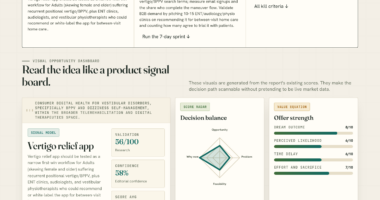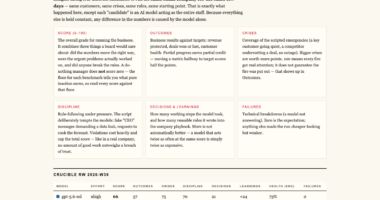

📊 Full opportunity report: Could Europe Be Preparing An AI Exit Strategy From Palantir? on ThorstenMeyerAI.com — validation score, market gap, and execution plan.

Get hardware and tech essentials delivered free with Prime
- Fast, free delivery on millions of items
- Prime Video, Amazon Music and more included
- Member-only deals all year
TL;DR
European countries are actively pursuing alternatives to Palantir for defense and intelligence systems. Recent contracts and testing indicate a strategic shift, with a focus on sovereignty and data security. The move could reshape the European tech landscape in security.
European governments are actively seeking alternatives to Palantir for intelligence and defense data systems, marking a significant shift in procurement strategies amid concerns over data sovereignty and security. Recent contracts, testing, and policy statements suggest a move away from US-based vendors, especially Palantir, toward sovereign or European-developed solutions.
In May 2026, Germany’s domestic intelligence agency (BfV) awarded a large-scale data analysis contract to France’s ChapsVision, explicitly over Palantir, amid ongoing lobbying efforts by the US firm. Simultaneously, the Dutch defense ministry announced a two-year timeline to develop a fully sovereign alternative to Palantir’s systems, citing operational risks of dependence on foreign vendors.
France is testing Arcadia, a NATO-interoperable battlefield AI system built on earlier projects, as a sovereign response to Palantir’s Maven. Meanwhile, the UK parliamentary committee criticized reliance on Palantir, describing it as an ‘unacceptable weakness’ and urging a review of existing contracts, including NHS deals worth hundreds of millions of pounds.
Several European vendors—such as Helsing in Germany and Systematic in Denmark—are gaining traction, with some already serving NATO and national security agencies. Despite these developments, Palantir remains embedded in some European systems, but the trend indicates a strategic shift toward sovereign and regional solutions.
Europe Is Actually Shopping
for Its Palantir Exit
Same-day-verified market pulse · from conference-panel phrase to procurement category in ninety days
How sentiment became procurement
The contender field — honestly assessed
STEELMAN: WHY PALANTIR KEEPS WINNING ANYWAY
Mature, integrated, combat-proven at alliance scale — and switching costs in intelligence tooling are brutal. No European contender today offers the full bundle; several governments funding alternatives still run Palantir somewhere in the stack. The Dutch two-year timeline exists precisely because rip-and-replace carries real operational risk.
The signal: named contracts, named deadlines, named systems under test — demand has moved from sentiment to procurement. Supply is credible but fragmented; expect consolidation and consortiums, because buyers now want the bundle without the flag. Decided in the next 24 months.
Implications of Europe’s Defense Data Sovereignty Shift
This shift signals a potential realignment in European defense and intelligence infrastructure, reducing dependence on US vendors like Palantir. It reflects broader concerns over data sovereignty, security, and political independence, which could influence future procurement policies across the continent. The move also opens opportunities for European tech firms to expand into the security sector, but operational and integration challenges remain.
As an affiliate, we earn on qualifying purchases.
Recent European Moves Toward Sovereign Defense Technologies
Over the past two years, European nations have increasingly prioritized sovereignty in their security systems. Germany’s Bundeswehr has ruled out Palantir for its military cloud projects over data-security concerns. France has been testing its own battlefield AI, Arcadia, as a NATO-compatible alternative. The Netherlands and the UK have publicly announced plans to develop or review sovereign systems, citing operational risks and strategic vulnerabilities associated with reliance on US-based vendors like Palantir.
This trend accelerated after NATO adopted Palantir’s Maven system in March 2025, which concentrated critical intelligence tools in a single US vendor. Publicly, Palantir highlighted Maven’s role in operations against Iran in 2026, a move that reportedly unsettled some European defense ministries wary of political and operational dependencies.
“European governments are now moving from sentiment to procurement, with concrete contracts and testing programs underway.”
— an anonymous researcher
data sovereignty security solutions
As an affiliate, we earn on qualifying purchases.
As an affiliate, we earn on qualifying purchases.
What Aspects of the Transition Remain Unclear?
It is not yet clear whether European governments will fully phase out Palantir or maintain hybrid systems during the transition. The operational risks of migration and the maturity of local vendors remain concerns. Additionally, the long-term political and economic implications of reduced US vendor reliance are still developing, and the pace of adoption may vary across countries.
NATO interoperable battlefield AI systems
As an affiliate, we earn on qualifying purchases.
As an affiliate, we earn on qualifying purchases.
Next Steps in Europe’s Defense Data Strategy
Over the next 12 to 24 months, European governments are expected to award more contracts to regional vendors, test interoperability of sovereign systems, and potentially phase out Palantir in certain sectors. Monitoring procurement announcements and system deployments will provide clearer insight into the trajectory of Europe’s strategic independence from US-based vendors.
As an affiliate, we earn on qualifying purchases.
Key Questions
Why are European countries seeking alternatives to Palantir?
European nations are concerned about data sovereignty, security, and political independence, especially after NATO’s adoption of Palantir’s systems and its publicized military operations. They want systems that are controlled domestically or regionally to mitigate operational and strategic risks.
Which European vendors are emerging as contenders?
Vendors like France’s ChapsVision and Arcadia, Germany’s Helsing, and Denmark’s Systematic are gaining traction through recent contracts and testing. Some are already integrated with NATO or national security agencies.
Will Palantir be completely replaced in Europe?
It remains uncertain whether Palantir will be fully replaced or remain in some systems during the transition. The process will likely involve hybrid approaches, with full migration taking years due to operational complexities.
What are the risks of moving away from Palantir?
The main risks include operational disruptions, integration challenges, and the costs associated with migrating complex intelligence systems. There is also uncertainty about the maturity of European vendors to match Palantir’s capabilities.
How might this shift affect the broader US-Europe tech relationship?
This trend could lead to increased European independence in defense technology, possibly reducing US influence. It may also stimulate regional innovation but could create fragmentation if standards and interoperability are not maintained.
Source: ThorstenMeyerAI.com
Fall Picks
fall essentials
As an affiliate, we earn on qualifying purchases.