
TL;DR

Get hardware and tech essentials delivered free with Prime
- Fast, free delivery on millions of items
- Prime Video, Amazon Music and more included
- Member-only deals all year
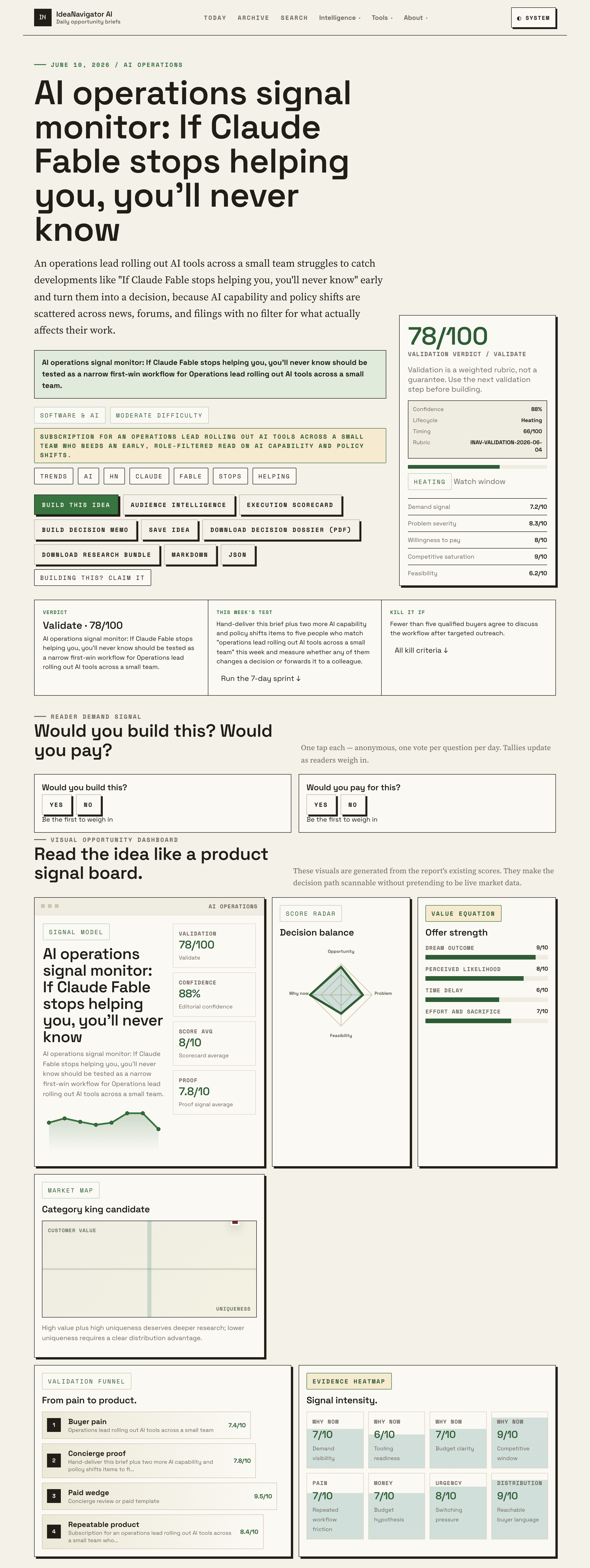
A new approach to AI operations monitoring uses signals like ‘If Claude Fable stops helping you, you’ll never know’ to alert teams of capability changes. This method aims to give operations leads a timely edge in managing AI tool deployment.
AI operations teams are increasingly relying on signal monitoring tools to detect shifts in AI capabilities, exemplified by the emerging focus on Claude Fable and its assistance status. This development aims to give operations leads a timely, role-specific alert system to manage AI deployment risks and opportunities more effectively.
Recent discussions on Hacker News highlight a new concept: monitoring signals such as ‘If Claude Fable stops helping you, you’ll never know’ to detect changes in AI operations tool performance. This approach targets small teams deploying AI tools, where early detection of capability shifts can influence decision-making and operational continuity. The idea is to build a focused monitor that filters relevant news, policy shifts, and capability updates, delivering concise alerts tailored to the needs of operations leads.
According to sources from IdeaNavigator AI, this signal-based monitoring aims to address the challenge of scattered information across forums, news, and filings, which makes it difficult for teams to act swiftly. The concept is currently in the prototype stage, with plans to validate its effectiveness through targeted testing among small teams involved in AI operations monitoring.
Why Signal Monitoring Matters for AI Deployment
This approach could significantly improve the agility of small AI teams by providing early warnings of capability changes, such as a tool like Claude Fable ceasing to assist. It reduces reliance on broad weekly summaries, enabling role-specific, real-time alerts. In an environment where AI capabilities and policies evolve rapidly, such targeted monitoring can prevent operational disruptions and inform strategic decisions, making it a valuable tool for AI operations management.
AI operations signal monitoring tools
As an affiliate, we earn on qualifying purchases.
As an affiliate, we earn on qualifying purchases.
Background on AI Signal Monitoring and Capability Shifts
The concept of signal monitoring in AI operations has gained traction as teams seek to stay ahead of rapid capability and policy changes. Previously, teams relied on manual tracking of news and updates, which often lagged behind actual shifts. The recent focus on signals like ‘If Claude Fable stops helping you, you’ll never know’ reflects an effort to automate and refine this process. This idea was popularized recently on Hacker News, where an 88/100 signal indicated high relevance for small team operations.
Historically, AI capability shifts have been difficult to detect early, especially for teams without dedicated monitoring tools. The emergence of role-specific signal filters aims to address this gap, offering a more immediate and actionable view of AI tool status and policy changes.
“Monitoring signals like ‘If Claude Fable stops helping you, you’ll never know’ could transform how small teams respond to AI capability shifts.”
— an anonymous researcher
As an affiliate, we earn on qualifying purchases.
Unconfirmed Aspects of Signal Monitoring Effectiveness
It is not yet clear how accurately the proposed signal monitoring system will detect all relevant capability shifts or how quickly teams can act on these alerts. The effectiveness of the prototype remains to be validated through real-world testing, and there is no confirmed timeline for wider deployment.
real-time AI performance monitoring device
As an affiliate, we earn on qualifying purchases.
As an affiliate, we earn on qualifying purchases.
Next Steps for Developing AI Signal Monitoring Tools
The next phase involves testing the prototype with selected small teams involved in AI deployment. The goal is to measure whether role-specific signals like ‘Claude Fable stops helping’ lead to timely decisions or operational adjustments. Feedback from these tests will shape further development, with broader rollout possible if results prove positive.
As an affiliate, we earn on qualifying purchases.
Key Questions
What is the main purpose of AI signal monitoring?
To detect early changes in AI tool capabilities or policies, enabling teams to respond proactively and avoid operational disruptions.
How does the ‘Claude Fable’ signal help teams?
It indicates whether the AI tool is actively assisting, serving as a quick, role-specific alert about potential capability shifts.
Is this monitoring system already available?
No, it is currently in the prototype stage, with validation testing underway among small AI deployment teams.
Why focus on small teams?
Small teams often lack extensive monitoring resources, making role-specific signals critical for timely decision-making.
What risks does this approach address?
It aims to reduce the risk of missing critical capability shifts that could impact AI deployment and operational continuity.
Source: IdeaNavigator AI
Halloween Picks
halloween
As an affiliate, we earn on qualifying purchases.