🔍 Read the full analysis: A Look At 14 AI Workflow Automation Tools In 2027 on ThorstenMeyerAI.com

Get hardware and tech essentials delivered free with Prime
- Fast, free delivery on millions of items
- Prime Video, Amazon Music and more included
- Member-only deals all year
TL;DR
A comparison published by ThorstenMeyerAI.com reviews 14 books and guides about AI-enabled workflow automation. It names Practical AI Workflow Automation as its beginner-friendly pick and n8n AI Automation Crash Course as its hands-on building choice, while stressing that these are learning resources, not automation platforms.
ThorstenMeyerAI.com has compared 14 books and guides about AI workflow automation, naming Practical AI Workflow Automation as its beginner-friendly pick and n8n AI Automation Crash Course as its most hands-on choice. The list is a guide to learning resources, not a comparison of automation software platforms, and the source says readers should match a title to their intended task and technical experience.
The comparison groups the titles by how they approach workflow building: beginner-oriented and no-code instruction, hands-on work with a particular platform, broader guidance for applying generative AI, and specialized material for areas such as development, content and accounting. ThorstenMeyerAI.com describes Generative AI Workflows and Practical Automation and AI Workflows as broader work-practice options, while identifying separate guides focused on Claude Code, OpenAI Codex CLI and OpenCode as developer-centered.
The publisher says it assessed the books by their stated subject, audience, skill level and scope. It says titles with an explicit practical or beginner-friendly emphasis received stronger placement, while platform-specific and developer-oriented books were separated from broad business and productivity resources. The source cautions that this reflects information available about the titles; it does not mean every workflow or tool was independently verified.
One central distinction is between a learning guide and a product used to automate work. These books can explain approaches or give implementation examples, but they are not software subscriptions that connect a reader’s apps. The comparison advises buyers to check publication dates, editions, tool versions and example coverage, since AI services and interfaces can change.
The 14 picks
- 1
 Agentic Coding with OpenAI Codex CLI: Build Intelligent Agent WorkflowsView on Amazon →
 - 2
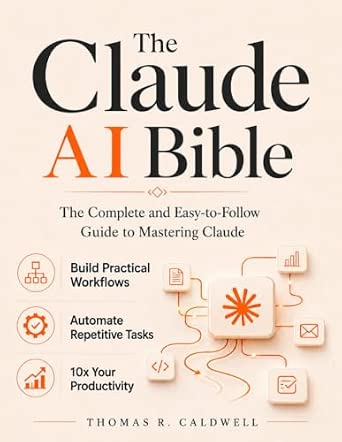 The Claude AI Bible: The Complete and Easy-to-Follow Guide to Mastering ClaudeView on Amazon →
 - 3
 Google AI Studio Guide 2026: Master Google AI Studio to Build Intelligent AI…View on Amazon →
 - 4
 OpenCode Custom Workflows: Building Intelligent Automation with AI Agents (AI…View on Amazon →
 - 5
 The No-BS Guide to AI Agents & Automation: Build AI Workflows, Automate Your…View on Amazon →
 - 6
 Practical AI Workflow Automation: A Beginner-Friendly Guide to No-Code ToolsView on Amazon →
 - 7
 Generative AI Workflows and Practical AutomationView on Amazon →
 - 8
 The AI-Powered Accountant: How to Use ChatGPT, AI Tools and Smart Automation…View on Amazon →
 - 9
 n8n AI Automation Crash Course: Build No-Code Workflows and Smart Agents for…View on Amazon →
 - 10
 AI Workflow Automation for Bloggers: Build a Simple Content System to Researc…View on Amazon →
 - 11
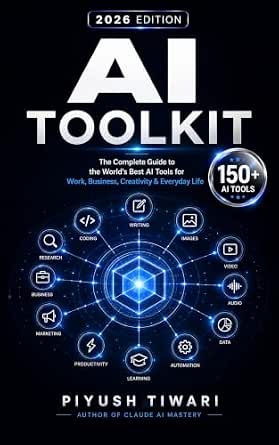 AI Toolkit 2026: The Ultimate Guide to 150+ AI Tools, Step-by-Step Workflows…View on Amazon →
 - 12
 AI Workflows: How Smart Professionals Use AI to Automate Work, Think Better,…View on Amazon →
 - 13
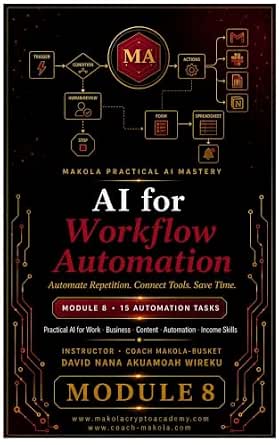 AI for Workflow Automation: Automate Repetition. Connect Tools. Save Time.View on Amazon →
 - 14
 Agentic Coding with Claude Code (5-in-1): A Practical Developer’s HandbookView on Amazon →
Choosing a Guide That Fits the Work
The comparison matters to readers trying to move from general interest in AI to a practical first project. A guide suited to a nontechnical reader may help with a simple workflow, while a command-line or coding title may be a poor match for someone seeking no-code instruction. Picking by title alone can lead to a mismatch between the reader’s skills and the steps a book assumes.
It also draws attention to the difference between learning a method and selecting a tool stack. A platform-specific book can offer concrete instructions, but those directions may depend on a service, interface or model that changes. General workflow guidance may travel better across products, though readers may need to adapt examples to their own apps and processes.
The source further recommends thinking about oversight before automating tasks with consequences for customers, financial records or published content. Readers should consider what happens if information is missing, a model response is uncertain or an integration fails. A workflow that includes human review may be more appropriate than one that automatically completes every step.
How the 14 Guides Were Grouped
The supplied comparison does not present the 14 titles as a ranking of automation platforms. Instead, it sorts books by the kind of instruction they offer: general workflow practices, no-code starting points, platform-specific building, development workflows and industry or task-focused examples. Its leading recommendation, Practical AI Workflow Automation, is described as aimed at new learners who want a no-code entry point.
The source places n8n AI Automation Crash Course in a different category because it focuses on building workflows and AI agents. Its broader selections, including Generative AI Workflows and Practical Automation and AI Workflows, are presented as guides to applying AI in work practices rather than as a single narrow implementation manual. The remaining titles include coding-focused and specialized resources, according to the publisher.
That distinction affects how readers should interpret the comparison. A book about a particular development tool is not necessarily competing with a beginner guide on the same terms. The source says it considered audience and scope, and advises readers to identify a repeatable task, its trigger, needed information and desired result before choosing a learning path.
“Practical AI Workflow Automation”
— ThorstenMeyerAI.com comparison
Edition and Tool Details to Check
The supplied material does not give a complete list of all 14 titles, their authors, publication dates, prices or editions. It also does not provide independent tests of the examples or a detailed explanation of how each title performed against the comparison criteria. The recommendations should therefore be read as the publisher’s assessment of the stated subjects and audiences, not as proof that every instruction works with current services.
It is also unclear which versions of the named AI products or automation platforms the books cover, whether their examples have been updated, and how the guidance handles service changes. The source itself tells buyers to check those details before relying on a guide for current implementation steps.
Match a Book to a First Project
The next step for a reader is to define one workflow and select a guide that fits its subject and the reader’s technical comfort. That means checking whether the example uses tools the reader can access, whether the book assumes coding, and whether its edition reflects the relevant product versions.
Before putting an AI-enabled process into use, readers should also decide where a person must review the output and how the workflow should respond to errors or missing information. The source offers no announcement of future editions or a follow-up comparison, so updates to the titles and their compatibility remain for readers to verify.
Key Questions
Are the 14 titles automation platforms?
No. The source describes them as books and guides for learning about AI-enabled workflows, not software subscriptions that automate tasks or connect business apps.
Which guide does the comparison favor for beginners?
ThorstenMeyerAI.com names Practical AI Workflow Automation as its beginner-friendly choice, citing its no-code focus. That is the publisher’s assessment, not an independent test result.
Which title is described as hands-on?
The comparison highlights n8n AI Automation Crash Course for practical workflow and AI-agent building. Readers should check the edition and platform details before following implementation steps.
How should readers choose among the guides?
Start with a specific repeatable task, then compare each book’s audience, technical requirements and subject matter with that goal. Check the tools and versions used in its examples, and think through where human review is needed.
Does the comparison verify every workflow in the books?
No. The source says its ranking reflects available information about each title’s subject, audience and scope; it does not claim that every workflow or tool was independently verified.
Source: ThorstenMeyerAI.com
Evergreen bestsellers Picks
bestsellers
As an affiliate, we earn on qualifying purchases.