Imagine a world where your digital identity is more valuable than gold—because it’s the key to everything online. As technology advances, your personal data could become the currency that unlocks secure access, personalized services, and trusted transactions. But how will you control this power? The future of digital identity promises innovation and new challenges. Keep exploring how this invisible asset might shape your digital life in ways you never expected.
Key Takeaways
- Digital identity will increasingly serve as a secure, verifiable asset for accessing services and conducting transactions online.
- Biometric verification enhances digital identity security, reducing fraud and unauthorized access.
- Data sovereignty empowers users to control their biometric and personal data, fostering trust and privacy.
- Decentralized, encrypted storage solutions are shaping the future of secure digital identity management.
- As digital identities evolve, they will become a crucial form of digital currency and personal sovereignty in the online world.
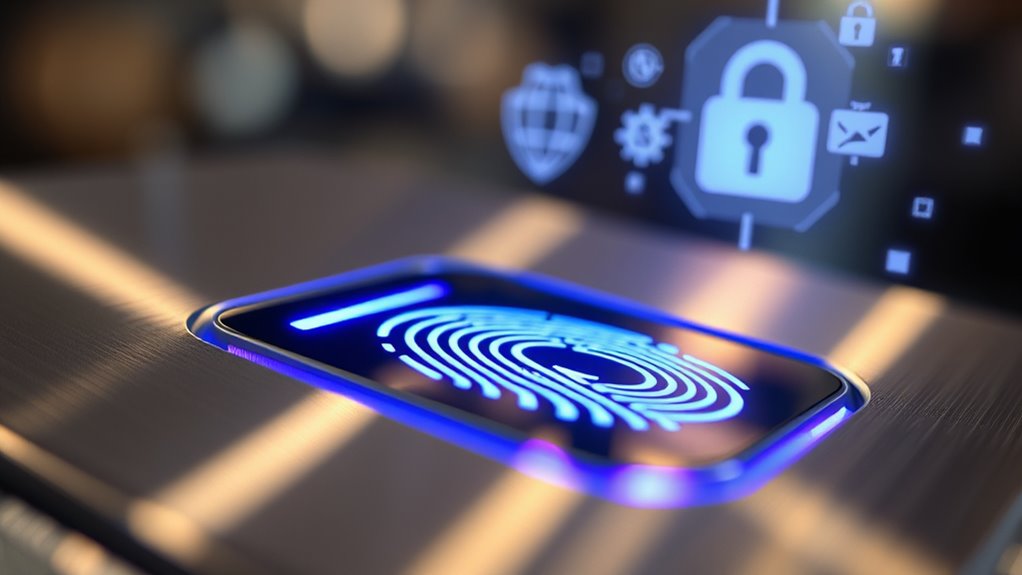
Have you ever wondered how your online presence is verified and protected? It’s a question that becomes more relevant as digital interactions become embedded in our daily lives. Today, your digital identity isn’t just a username and password; it’s a complex system that confirms who you are and guarantees your data remains secure. One of the key advancements in this sphere is biometric verification, which uses unique physical traits—like fingerprints, facial recognition, or iris scans—to confirm your identity. Unlike traditional passwords, biometric data is incredibly difficult to forge, making it a more secure method of authentication. When you log into a banking app or access sensitive information online, biometric verification can act as a gatekeeper, providing swift yet reliable access while reducing the risk of theft or fraud.
Biometric verification enhances online security with unique physical traits, reducing fraud and protecting your digital identity.
But with this increased reliance on digital verification methods, concerns around data sovereignty come into play. Data sovereignty refers to your control over your personal data—where it’s stored, how it’s used, and who has access. As your biometric data is collected and stored, guaranteeing it remains within your jurisdiction or under your control becomes essential. Without proper safeguards, your sensitive information could end up in the wrong hands or be subject to legal and regulatory frameworks that don’t align with your interests. That’s why many experts emphasize the importance of maintaining data sovereignty; it empowers you to decide what happens to your digital identity and helps prevent misuse or unauthorized access.
The integration of biometric verification with data sovereignty measures is transforming how digital identities are managed. Instead of centralized databases vulnerable to hacking, decentralized solutions or encrypted storage options keep your biometric data under your control. This not only enhances security but also fosters trust, as you can be confident that your personal information isn’t being exploited or sold without your knowledge. As more platforms adopt these technologies, you’ll find that verifying your identity online becomes faster, more secure, and more private, aligning with the evolving expectations of privacy rights in the digital age.
Ultimately, your digital identity is becoming the currency of tomorrow—an asset that grants access, proves authenticity, and facilitates secure transactions across various platforms. By understanding how biometric verification enhances security and recognizing the importance of data sovereignty, you’re better equipped to protect your identity in a digital landscape that’s constantly changing. As technology advances, so will the ways in which you control and verify your online presence, making your digital identity a powerful tool rather than a vulnerability. The future of digital identity hinges on your ability to navigate these innovations wisely, safeguarding your personal data while leveraging the convenience they offer. Emphasizing the importance of vetted security measures can help ensure your digital identity remains protected in an increasingly interconnected world.

Thetis BIOFP Plus FIDO2 Fingerprint Security Key Hardware Passkey with USB Type C/Biometric/FIDO Certified, 2FA / MFA Authenticator App Device, Works for Window, macOS, Linux, Gmail, Github
- FIDO2 Certified Passkey: Secure passwordless login support
- High-Precision Fingerprint Sensor: Fast, accurate biometric authentication
- Hardware 2FA/MFA Security: Protects against phishing and theft
As an affiliate, we earn on qualifying purchases.
As an affiliate, we earn on qualifying purchases.
Conclusion
As digital identity becomes the currency of tomorrow, you hold the power to navigate this new world confidently. Think of it like a key that grants access to secure, personalized experiences—making online interactions smoother and safer. Embracing robust, decentralized solutions means you’re in control of your data, privacy, and reputation. The future of digital identity is like a well-charted map—guiding you through a connected, trustworthy digital landscape with ease and confidence.
digital identity verification hardware
As an affiliate, we earn on qualifying purchases.
As an affiliate, we earn on qualifying purchases.
encrypted digital identity storage
As an affiliate, we earn on qualifying purchases.
As an affiliate, we earn on qualifying purchases.
biometric authentication scanner
As an affiliate, we earn on qualifying purchases.
As an affiliate, we earn on qualifying purchases.