
You might be wondering if now's the time to consider investing in Bitcoin after its recent price dip. Experts suggest this downturn could present a unique buying opportunity for retail investors. Historical trends indicate that market dips often lead to significant long-term gains. But what should you keep in mind before jumping in? Understanding the current market indicators and your own risk tolerance is crucial. Let's explore what factors you should consider before making a move.
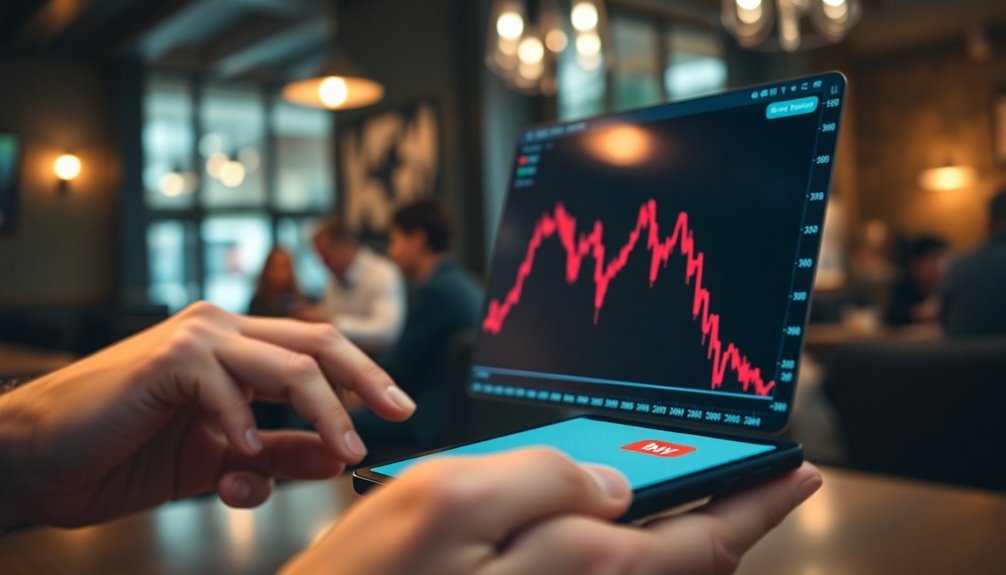
As Bitcoin's price dips, savvy retail investors might see a golden opportunity rather than a setback. Historically, Bitcoin has faced significant price fluctuations, but it's often rebounded to new heights after downturns. Think back to 2018, when Bitcoin experienced an 80% decline. Many who bought during that dip were rewarded handsomely when prices surged again.
That's the nature of the cryptocurrency market—its volatility can lead to potential losses but also substantial long-term gains.
When considering your investment strategy, you might want to keep an eye on market indicators. For instance, moving averages can help you spot trends, and the 100-day moving average currently sits at $95K. Decreasing exchange balances suggest that many investors are holding onto their Bitcoin, showing confidence in its future. A high hash rate also indicates a strong network, further supporting Bitcoin's growth potential. Additionally, current investor cost basis suggests that many new investors are positioned to benefit if prices recover.
Buying during dips often proves to be a smart move for retail investors looking to enter the market. This strategy aligns with the idea of taking a long-term perspective. Historical data indicates that market dips usually present some of the best buying opportunities for those willing to be patient.
Buying during market dips can be a strategic move for long-term investors, offering prime opportunities for those who are patient.
However, it's wise to consider your risk tolerance and avoid excessive debt to mitigate potential losses.
Economic factors play a crucial role in Bitcoin's trajectory too. Institutional adoption and mainstream acceptance are on the rise, which bodes well for future growth. Upcoming supply reductions from halving events could drive prices higher, while regulatory clarity might attract even more institutional investment.
Although macroeconomic instability can affect Bitcoin's price, its fundamental attributes—scarcity and security—remain strong.
Analysts are generally optimistic about Bitcoin's future. Some predict it could reach $500,000 as supply diminishes and demand increases. Even if the price drops 30% to around $77,000, it would still keep Bitcoin within a bull cycle.
The upcoming halving cycle is expected to support price increases over time, and many experts view current dips as opportunities rather than signs of a bear market.
In this volatile environment, managing risk is essential. Diversifying your portfolio can help mitigate risks associated with cryptocurrency investments. By carefully assessing your risk tolerance and managing your financial commitments, you could position yourself to take advantage of the next upward swing in Bitcoin's price.

Bitkey Bitcoin Hardware Wallet – The Most Secure Way to Buy, Store and Manage Bitcoin
- Bitcoin Exclusive Design: Dedicated hardware wallet for Bitcoin
- All-in-One Management: Compare prices, send, receive, and track
- Enhanced Security: Three-key system simplifies self-custody
As an affiliate, we earn on qualifying purchases.
As an affiliate, we earn on qualifying purchases.

Cryptocurrency Investing For Dummies (For Dummies (Business & Personal Finance))
As an affiliate, we earn on qualifying purchases.
As an affiliate, we earn on qualifying purchases.

Bitcoin Merch® NerdMiner 2 – Large Screen USB Solo Miner with WiFi
- Educational and Tech Use: Ideal for learning and tech enthusiasts
- Frequent Lottery Draws: Participate every 10 minutes for rewards
- Low Power Consumption: Uses only 0.71W of power
As an affiliate, we earn on qualifying purchases.
As an affiliate, we earn on qualifying purchases.

Cryptocurrency Portfolio Tracker: Log, Analyze, and Optimize Your Crypto Investments
As an affiliate, we earn on qualifying purchases.
As an affiliate, we earn on qualifying purchases.