
📊 Full opportunity report: How The Muse Spark 1.2 Launch Positions Meta In The AI Coding War on ThorstenMeyerAI.com — validation score, market gap, and execution plan.
TL;DR
Meta has launched Muse Spark 1.2 alongside Muse Code, its first dedicated coding agent, marking a significant step in its AI coding strategy. The new models focus on co-training and long-term task handling, aiming to compete with OpenAI, Anthropic, and others in the AI coding space.
Meta has introduced Muse Spark 1.2 and Muse Code, its latest AI models designed specifically for coding tasks, in a coordinated release that underscores its push into the AI developer tools market. The launch, announced publicly by Mark Zuckerberg himself, marks Meta’s strategic effort to compete with established players like OpenAI and Anthropic, especially in the realm of autonomous coding agents.
The core innovation is the co-training of Muse Spark 1.2 and Muse Code, which Meta claims results in better tool use, fewer retries, and higher-quality outputs. Unlike previous models that operated as generic wrappers, these models were trained together, focusing on long-horizon coding work involving entire repositories and complex projects. This architectural approach aims to improve the model’s understanding of extended tasks and maintain context over long sessions.
Additionally, Muse Code features a replay-exact, restart-safe runtime, allowing it to resume precisely where it left off after a crash, enabling reliable autonomous operation for extended periods. The model ships with three default skills—/plan, /grill, and /goal—and supports persistent background agents, facilitating complex, multi-step coding workflows. The models boast a genuine 1 million token context window, although the effectiveness of context compaction remains to be independently verified.
According to third-party benchmarking by Artificial Analysis, Muse Spark 1.2 scores 54 on their Intelligence Index, an increase of 3 points from Muse Spark 1.1 and 11 from the initial release. It is now effectively tied with GPT-5.5 and Grok 4.5, and close behind the leading models like Claude Opus 5 and GPT-5.6. Its strongest gains are in agentic work, with scores on the GDPval-AA v2 benchmark jumping 260 Elo points to 1631, placing it fifth among tested models and ahead of Claude Opus 4.8.
Meta shipped a coding model and its first coding agent on the same day, co-trained together. The pairing is the story — and it puts Meta straight into competition with Claude Code and Codex. Parts are genuinely strong; one part cuts against how I build.
▲ Capability claims are Meta’s own · benchmarks independentMuse Code and Muse Spark 1.2 were co-trained — harness and model together — for better tool use and fewer retries than a generic wrapper. Three default skills ship with it.
Vendor benchmarks are worth nothing until someone independent runs the model. Artificial Analysis already has, on a coding- and agent-heavy index.
One finding a launch post will never tell you — and it matters more than the headline score.
The pricing has a tell. Below the standard tier sits a contributor tier at a tenth of the price — in exchange for one thing. (The two-panel pattern below mirrors §03 by design.)
The choice here isn’t “sovereign or not” — it’s which frontier vendor’s pipeline your code flows into.
- Frontier-adjacent coding model, co-trained with a crash-safe agent
- Priced below the competition; one-command install on macOS + Linux
- The event-log runtime is a genuinely good idea
- Closed, API-only, from a company whose model is data harvesting
- Same hosted tradeoff as Claude Code / Codex — pick your pipeline
- Thin track record: replaced Llama months ago; 1.2 is a fast follow on a weeks-old 1.1
The cheapest number on the pricing page is the one that costs the most.
Meta's Strategic Position in AI Coding Race
This launch positions Meta as a serious contender in the AI coding tools market, directly challenging established models from OpenAI and Anthropic. By emphasizing co-training and long-horizon task handling, Meta aims to attract developers seeking more reliable and autonomous coding agents. The competitive pricing—about $0.40 per benchmark task—further undercuts rivals, potentially expanding access and adoption among professional developers and enterprises.
However, the initial benchmarks also reveal that the model’s reduced hallucination rate is primarily due to increased abstention rather than improved accuracy, raising questions about its true capability. This trade-off between safety and performance could influence how the model is adopted in real-world coding environments, especially where reliability and correctness are critical.

Coding with AI For Dummies (For Dummies: Learning Made Easy)
As an affiliate, we earn on qualifying purchases.
As an affiliate, we earn on qualifying purchases.
Meta’s Rapid Development of AI Coding Models
Meta has been rapidly iterating its AI models, with three major releases within four months—Muse Spark 1.0, 1.1, and now 1.2. The company’s focus on integrating co-training for models and agents aligns with broader industry trends toward long-horizon, autonomous AI systems. Prior to this, Meta’s AI efforts centered on general-purpose models, but the emphasis on specialized, agentic models signals a strategic shift toward developer-focused tools.
The launch follows recent industry benchmarks showing a competitive landscape, with models like GPT-5.6, Claude Opus 5, and Kimi K3 vying for dominance. Meta’s approach of combining architectural innovation with cost efficiency aims to carve out a significant share in this evolving market, especially as autonomous coding becomes more central to software development workflows.
"Meta’s co-training approach and focus on long-horizon tasks mark a strategic shift, aiming to produce more reliable autonomous coding agents."
— Thorsten Meyer

Practical AI Agents for Developers: Building Autonomous Coding Workflows with Claude, Cursor, and Copilot (Practical Programming)
As an affiliate, we earn on qualifying purchases.
As an affiliate, we earn on qualifying purchases.
Performance and Reliability of Long-Horizon Tasks
It remains unclear how well Muse Spark 1.2’s context compaction and long-session performance will hold up under independent testing. The real-world effectiveness of the replay-safe runtime and the impact of increased abstention on practical coding accuracy are still to be validated through broader evaluations and user deployment.
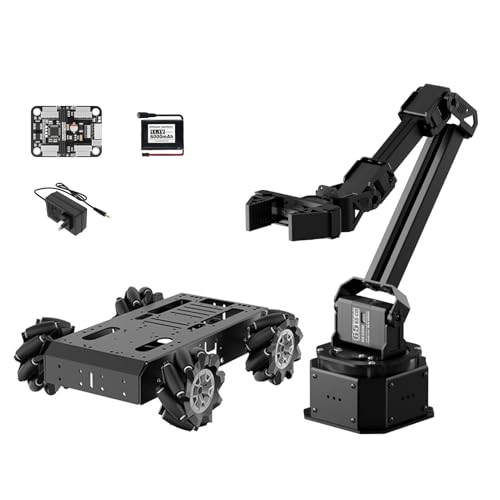
HIWONDER AI Robotic Arm Kit Imitation Learning VLA Model Development Embodied AI 6DOF Full Metal Robot Arm with Large AI Models K230 AI Vision Voice Interaction, NexArm Advanced Kit & Big Chassis
- Embodied AI Robotic Arm: Industrial-grade metal, high-precision servos
- Extended Reach and Payload: 500mm reach, 500g payload capacity
- High Precision and Smoothness: ±2mm repeatability, curve smoothing algorithms
As an affiliate, we earn on qualifying purchases.
As an affiliate, we earn on qualifying purchases.
Upcoming Independent Testing and Market Adoption
Independent researchers and industry users will soon evaluate Muse Spark 1.2’s performance across diverse coding tasks, especially long-horizon projects. Meta is likely to continue refining the model, with further benchmarks and real-world case studies expected in the coming months. The competitive landscape will also respond, as rivals update their own models and strategies to maintain market share.

Agentic Development: The Complete Guide to AI-Assisted Coding with Claude, Cursor, and Beyond
As an affiliate, we earn on qualifying purchases.
As an affiliate, we earn on qualifying purchases.
Key Questions
How does Muse Spark 1.2 compare to existing coding models?
It shows improvements in agentic work and long-horizon task handling, with a competitive intelligence score, but its reduced hallucination rate is partly due to increased abstention, which may affect practical capability.
What is the significance of co-training in Muse Spark 1.2?
Co-training allows the model and agent to be trained together, improving tool use and consistency during complex, extended tasks, which is a notable architectural innovation.
Will Muse Spark 1.2 be cost-effective for developers?
Yes, at around $0.40 per benchmark task, it is priced competitively, aiming to attract developer adoption by offering a cheaper alternative to rivals for similar performance levels.
What are the main limitations of Muse Spark 1.2?
Its lower hallucination rate results mainly from increased abstention, which may reduce the model’s willingness to attempt answers, potentially impacting productivity and accuracy in practice.
Source: ThorstenMeyerAI.com