
📊 Full opportunity report: Forezai · TradingAgents: A Trading Firm Made of Agents on ThorstenMeyerAI.com — validation score, market gap, and execution plan.
TL;DR
Forezai has announced TradingAgents, an open-source, multi-agent trading framework designed to replicate the organizational structure of a trading desk. It emphasizes structured debate among specialized AI agents and oversight to improve decision quality. This development highlights a shift toward more accountable, transparent AI-driven trading architectures.
Forezai has introduced TradingAgents, an open-source, multi-agent research framework that models a a trading desk with specialized AI agents. This development aims to address the overconfidence and unreliability of single AI models by organizing multiple roles—including analysts, traders, and risk managers—into a structured decision-making process. The framework emphasizes accountability, transparency, and organizational mimicry, marking a significant step in AI-driven trading research.
TradingAgents is designed as a multi-model, multi-role system that mirrors the structure of a traditional trading desk. It features analyst agents focused on fundamentals, news, sentiment, and technical signals, each providing different slices of market data. These findings feed into a debate between a bull researcher and a bear researcher, fostering structured disagreement rather than relying on a single model’s opinion. The debate’s outcome is passed to a trader agent, which proposes specific actions based on the discussion, and then to a risk manager, who evaluates exposure and can veto trades. This layered process emphasizes accountability and auditability, with every decision step recorded for transparency.
Forezai states that the framework’s goal is to prevent overconfidence typical of single AI models, which can produce well-argued but unreliable advice. By separating roles and introducing adversarial debate and oversight, TradingAgents aims to improve decision robustness and reduce impulsive or weak trades. The framework is fully open source, adaptable to different models, and designed to run on owned hardware, emphasizing local-first and provider-agnostic deployment.
TradingAgents — a firm made of agents
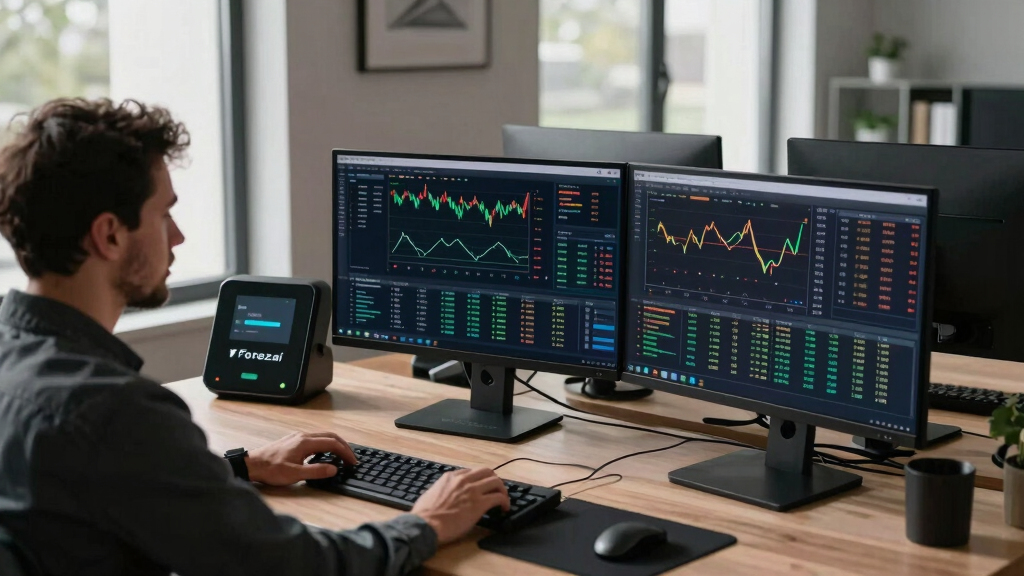
A single model is an overconfidence machine. So this isn’t one AI — it’s a whole desk: analysts, a bull and a bear who argue, a trader, and a risk manager who can say no.
Not financial, investment, legal or tax advice; not a recommendation or solicitation to trade, invest or use any software. Forezai · TradingAgents is an experimental open-source research framework (Apache-2.0), provided “as is” without warranty of accuracy or profitability. Trading and automated trading carry a substantial risk of loss including total loss of capital; past or backtested performance does not indicate future results. Market and trading-software access is regulated or restricted in some jurisdictions — you are solely responsible for compliance with applicable law. Consult a licensed professional before any financial decision. Produced with AI assistance under human editorial oversight; independent commentary, the author’s own views. Product and company names are trademarks of their respective owners; mention does not imply endorsement.
Structured Disagreement as a Trading Innovation
This development signifies a shift toward more organizationally robust AI systems in trading, where accountability and layered oversight are prioritized. By mimicking human trading desks, TradingAgents aims to reduce overconfidence and improve decision quality through structured debate and explicit vetoes. This approach could influence future AI trading platforms by emphasizing transparency, auditability, and organizational mimicry, potentially leading to more reliable and responsible automated trading strategies.
![Express Schedule Free Employee Scheduling Software [PC/Mac Download]](https://m.media-amazon.com/images/I/41yvuCFIVfS._SL500_.jpg)
Express Schedule Free Employee Scheduling Software [PC/Mac Download]
- User-friendly drag & drop interface: Simple shift planning
- Manage time-off and leave: Add sick leave, breaks, holidays
- Email schedules to employees: Send schedules directly via email
As an affiliate, we earn on qualifying purchases.
As an affiliate, we earn on qualifying purchases.
Evolution of AI in Automated Trading
Recent years have seen increasing reliance on AI models for trading decisions, but concerns about overconfidence and lack of accountability persist. Previous efforts, like single AI forecasters, have shown limitations in reliability, prompting research into organizational structures that promote debate and oversight. Forezai’s earlier work with Polybot highlighted the risks of trusting a single model’s estimate. TradingAgents builds on this by implementing a multi-agent, debate-driven architecture, reflecting traditional trading desk roles and emphasizing auditability and transparency. This approach aligns with broader industry trends seeking to improve AI decision-making accountability and robustness in financial markets.
“TradingAgents is not about any one agent being smart; it’s about organized argumentation among specialized agents with oversight to produce better, more accountable decisions.”
— Thorsten Meyer, Forezai
Context Engineering for Multi-Agent Systems: Move beyond prompting to build a Context Engine, a transparent architecture of context and reasoning
As an affiliate, we earn on qualifying purchases.
As an affiliate, we earn on qualifying purchases.
Unconfirmed Aspects of TradingAgents’ Deployment
It is not yet clear how TradingAgents performs in live trading environments or its effectiveness compared to traditional or single-model AI systems. The framework is still in experimental stages, and there are no published results on profitability or risk metrics. Additionally, the extent to which it can be integrated into existing trading infrastructures remains uncertain, as does its adaptability across different asset classes or market conditions.

The Intelligent Share Market Investor: How to Focus on High-Quality Stocks, Use Indicator Confluence, Leverage Broker Insights, and Combine AI Tools for Smarter Trading Decisions
As an affiliate, we earn on qualifying purchases.
As an affiliate, we earn on qualifying purchases.
Next Steps for TradingAgents Development and Testing
Forezai plans to continue testing TradingAgents in simulated environments, evaluating its decision quality and robustness. Future developments may include deploying the framework in live trading scenarios under controlled conditions and gathering performance data. The team also intends to expand its modularity, allowing different models and roles to be swapped or upgraded, and to engage with the broader research community for feedback and collaboration. Monitoring real-world application and performance will be critical to assessing its practical viability.

Day Trading 101, 2nd Edition: From Understanding Risk Management and Creating Trade Plans to Recognizing Market Patterns and Using Automated Software, … in Modern Day Trading (Adams 101 Series)
As an affiliate, we earn on qualifying purchases.
As an affiliate, we earn on qualifying purchases.
Key Questions
How does TradingAgents differ from traditional AI trading systems?
TradingAgents organizes AI roles into a structured debate and oversight process, mimicking a human trading desk, rather than relying on a single AI model’s output. This layered approach aims to improve decision accountability and reduce overconfidence.
Is TradingAgents ready for live trading?
No, it is currently an experimental research framework. Its effectiveness and safety in live trading are still under evaluation, and it should be used with caution and only as risk capital.
Can TradingAgents be customized with different models?
Yes, the framework is designed to be provider-agnostic and modular, allowing different models to be used for each role, making it adaptable to various research and trading needs.
What are the main benefits of this multi-agent architecture?
The main benefits include improved transparency, accountability, and decision robustness through structured debate, explicit vetoes, and audit trails, reducing reliance on overconfident single models.
Will TradingAgents replace human traders?
There is no indication that it aims to replace humans entirely. Instead, it seeks to augment automated decision-making with organizational structures that improve reliability and oversight.
Source: ThorstenMeyerAI.com