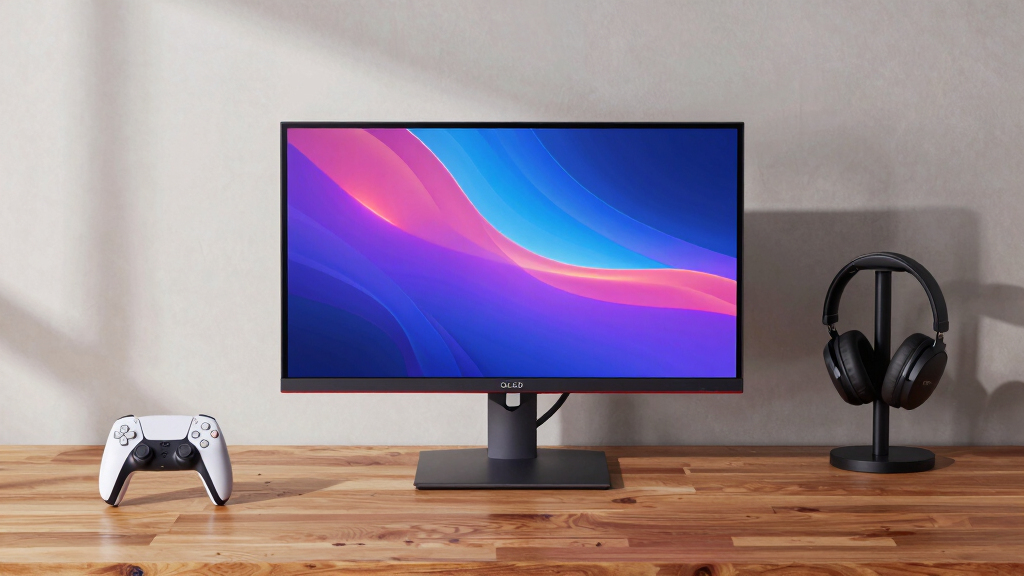
If you’re searching for the best OLED gaming monitors, you’re likely after stunning visuals, fast response times, and vibrant colors. The LG 27GX704A-B stands out for its excellent balance of performance and affordability, making it a top overall pick. The Samsung Odyssey OLED G6 offers superior contrast and color accuracy for those who prioritize image quality. Meanwhile, the AOC Agon Pro 27 delivers high refresh rates perfect for competitive gaming, but at a premium price. These options highlight the key tradeoffs: cost versus performance, size versus resolution, and feature sets versus price. Keep reading to see how these monitors compare and which one fits your gaming needs best.

Get hardware and tech essentials delivered free — and shop member deals
- Fast, free delivery on millions of items
- Access to Prime Big Deal Days deals on October 6–7
- Prime Video, Amazon Music and more included
Key Takeaways
- The top picks balance image quality with gaming performance, with some models emphasizing contrast and color accuracy while others focus on refresh rates.
- Size varies significantly, from 27-inch models perfect for desktop setups to the 49-inch ultrawide G9, catering to different gaming styles and space constraints.
- High refresh rates (240Hz and above) are common among the best monitors, crucial for fast-paced gaming, but often come at a higher price point.
- Response times and input lag are critical for competitive gamers, with some models offering ultra-low latency for smoother gameplay.
- Price ranges widely; premium models offer advanced features like G-SYNC, FreeSync, and HDR400, while more affordable options still deliver excellent OLED performance.
| LG 27GX704A-B 27-inch Ultragear QHD OLED Gaming Monitor |  | Best Overall OLED Gaming Monitor | Display Size: 27 inches | Resolution: 2650×1440 (QHD) | Refresh Rate: 240Hz | VIEW LATEST PRICE | See Our Full Breakdown |
| Samsung 27″ Odyssey OLED G6 (G61SH) QD-OLED Gaming Monitor |  | Best for Accurate Color and Visual Fidelity | Display Size: 27 inches | Resolution: QHD (1440P) | Refresh Rate: 240Hz | VIEW LATEST PRICE | See Our Full Breakdown |
| AOC Agon Pro 27 Inch Gaming Monitor QD OLED 240Hz 0.03ms, AG276QZD2 |  | Best for High-Performance Gaming with Customization | Size: 27 inches | Resolution: 2560×1440 (QHD) | Refresh Rate: 280Hz | VIEW LATEST PRICE | See Our Full Breakdown |
| Samsung 27” Odyssey OLED G5 (G50SF) Series QHD Gaming Monitor |  | Best for Affordable Premium OLED Gaming | Screen Size: 27 inches | Resolution: QHD (2560×1440) | Refresh Rate: 180Hz | VIEW LATEST PRICE | See Our Full Breakdown |
| Samsung 49-Inch Odyssey OLED G9 (G91SD) Dual QHD Curved Gaming Monitor |  | Best for Immersive, Large-Scale Gaming | Screen Size: 49 inches | Resolution: 5120 x 1440 (Dual QHD) | Refresh Rate: 144Hz | VIEW LATEST PRICE | See Our Full Breakdown |
| OLED gaming monitor | Resolution | Refresh Rate | Response Time | HDR |
|---|---|---|---|---|
| LG 27GX704A-B 27-inch Ultragea | 2650×1440 (QHD) | 240Hz | 0.03ms | VESA DisplayHDR True Black 400 |
| Samsung 27" Odyssey OLED G6 | QHD (1440P) | 240Hz | 0.03ms | HDR10 |
| AOC Agon Pro 27 Inch Gaming Mo | 2560×1440 (QHD) | 280Hz | 0.03ms GTG | HDR10 |
| Samsung 27” Odyssey OLED G5 | QHD (2560×1440) | 180Hz | 0.03ms | HDR10 |
| Samsung 49-Inch Odyssey OLED G | 5120 x 1440 (Dual QHD) | 144Hz | 0.03ms | — |
More Details on Our Top Picks
LG 27GX704A-B 27-inch Ultragear QHD OLED Gaming Monitor
The LG 27GX704A-B stands out as the best overall choice for gamers demanding top-tier visuals and smooth performance. Its 27-inch QHD OLED display delivers vibrant colors, deep blacks, and an impressive contrast ratio, rivaling the Samsung G6 but with a more versatile ergonomic stand. The 240Hz refresh rate and 0.03ms response time ensure ultra-smooth gameplay, making it ideal for fast-paced titles. However, the premium OLED tech comes with a higher price tag, and the glossy finish could cause reflections in bright rooms, making it less suited for casual or multi-purpose use. Still, for dedicated gamers seeking immersive quality and customization, it’s a strong contender.
Pros:- Vivid OLED display with high contrast and color precision
- Fast 240Hz refresh rate and 0.03ms response time for competitive gaming
- Versatile connectivity options including HDMI 2.1 and DisplayPort 1.4
- Adjustable ergonomic stand for personalized setup
Cons:- Premium OLED technology can be costly compared to non-OLED monitors
- Glossy finish may cause reflections in bright environments
- Less suitable for general productivity or multi-purpose use
Best for: Serious gamers who prioritize high refresh rates, color accuracy, and ergonomic flexibility
Not ideal for: Casual users or those with bright gaming environments who dislike reflections or are sensitive to high costs
- Display Size:27 inches
- Resolution:2650×1440 (QHD)
- Refresh Rate:240Hz
- Response Time:0.03ms
- Brightness:275 nits (standard), 1300 nits (peak)
- Contrast Ratio:1.5M:1
- Color Coverage:98.5% DCI-P3
- HDR:VESA DisplayHDR True Black 400
Our verdict“This monitor is perfect for gamers who want premium visuals and performance in a dedicated gaming setup.”
Samsung 27″ Odyssey OLED G6 (G61SH) QD-OLED Gaming Monitor
The Samsung Odyssey OLED G6 makes a compelling case for those who prioritize color accuracy and vibrant visuals. Its QD-OLED panel with Pantone validation offers rich, true-to-life colors and high brightness, surpassing many competitors like the LG 27GX704A-B in color fidelity. The 240Hz refresh rate and 0.03ms response time provide fluid gameplay, while the ergonomic stand allows tailored viewing angles. However, the higher price point and potential burn-in risks make it less appealing for budget-conscious or long-term casual users. Despite these tradeoffs, its advanced display tech is ideal for gamers and creators who demand precise color reproduction.
Pros:- Vivid, accurate color reproduction with Pantone validation
- High refresh rate of 240Hz and 0.03ms response time for smooth gaming
- Advanced OLED technology with burn-in prevention features
- Ergonomic, height-adjustable stand
Cons:- Higher price due to advanced display tech
- OLED panels may still be susceptible to burn-in over time
- Limited to 1440P resolution, not 4K
Best for: Color-conscious gamers and creative professionals who need accurate visuals
Not ideal for: Budget buyers or those worried about OLED burn-in over prolonged use
- Display Size:27 inches
- Resolution:QHD (1440P)
- Refresh Rate:240Hz
- Response Time:0.03ms
- Technology:QD-OLED
- HDR:HDR10
- Color Support:2100+ colors, 110+ skin tones
- Stand Features:Height-adjustable, pivots, tilts, swirls
Our verdict“This monitor suits gamers and creators seeking superior color fidelity and OLED benefits, with some tradeoffs in price and longevity.”
AOC Agon Pro 27 Inch Gaming Monitor QD OLED 240Hz 0.03ms, AG276QZD2
The AOC Agon Pro 27-inch delivers exceptional gaming performance with its 280Hz refresh rate and OLED panel, putting it ahead of many in responsiveness. Its deep blacks and vibrant colors match the quality of the LG 27GX704A-B, but with the added benefit of a higher refresh rate for ultra-smooth gameplay. The inclusion of G-Sync, HDR10, and RGB backlighting enhances both visual quality and aesthetic customization. The main concern is its price, which reflects the advanced OLED tech, and the risk of burn-in if not managed carefully. This monitor makes the most sense for gamers who prioritize competitive edge and vivid visuals over budget constraints.
Pros:- Exceptional color accuracy and deep blacks with OLED panel
- 280Hz ultra-high refresh rate for competitive gaming
- Supports G-Sync, HDR10, and customizable RGB lighting
- Supports multiple gaming modes for tailored performance
Cons:- High price point driven by advanced features
- Potential OLED burn-in if not properly managed
- Limited compatibility info with all consoles
Best for: High-level gamers who want maximum refresh rates and visual customization
Not ideal for: Casual gamers or those with limited budget who prefer simpler setups
- Size:27 inches
- Resolution:2560×1440 (QHD)
- Refresh Rate:280Hz
- Response Time:0.03ms GTG
- Panel Type:QD OLED
- HDR:HDR10
- Color Gamut:101% DCI-P3, 136.7% sRGB
- Backlighting:RGB
Our verdict“This monitor excels for competitive gamers who want the fastest refresh rates and vibrant visuals, accepting the higher cost and burn-in risks.”
Samsung 27” Odyssey OLED G5 (G50SF) Series QHD Gaming Monitor
The Samsung Odyssey OLED G5 offers a compelling mix of features at a slightly lower price point than its high-end counterparts like the LG 32GX850A-B. Its 180Hz refresh rate and 0.03ms response time still deliver smooth gameplay, while the HDR10 support and Pantone validation assure vibrant, accurate visuals. The inclusion of glare-free technology and OLED Safeguard helps mitigate common OLED concerns like reflections and burn-in, making it a more balanced choice. The main limitation is its lower refresh rate compared to other models, which could be noticeable in fast-paced gaming. Still, for those seeking a high-quality OLED experience without stepping into ultra-premium territory, this monitor fits well.
Pros:- Vivid QHD picture quality with high color accuracy
- Fast 180Hz and 0.03ms response time for smooth gaming
- Includes OLED Safeguard and glare-free tech for longevity
- Pantone validated for accurate color reproduction
Cons:- Lower refresh rate than other high-end models, less ideal for fast-paced eSports
- Premium price still high for some budgets
- Potential burn-in risk if not properly managed
Best for: Gamers wanting high-quality OLED visuals with good value and durability features
Not ideal for: Competitive gamers needing the absolute highest refresh rates or premium customization
- Screen Size:27 inches
- Resolution:QHD (2560×1440)
- Refresh Rate:180Hz
- Response Time:0.03ms
- Panel Type:QD-OLED
- HDR:HDR10
- Color Coverage:Pantone Validated (2100+ colors)
- Features:G-Sync, FreeSync, glare-free tech
Our verdict“This monitor offers a balanced OLED experience with strong visuals and durability, suitable for most gamers seeking quality without maximum refresh rates.”
Samsung 49-Inch Odyssey OLED G9 (G91SD) Dual QHD Curved Gaming Monitor
The Samsung 49-Inch Odyssey OLED G9 earns its place as the top pick for gamers craving an expansive, immersive display. Its ultra-wide, curved Dual QHD resolution creates a panoramic view that surpasses the standard 27-inch options like the LG 27GX704A-B, offering a truly enveloping experience. The OLED panel delivers vivid colors and perfect black levels, elevating visuals beyond conventional LCDs. Its 0.03ms response time and 144Hz refresh rate ensure smooth gameplay, rivaling high-end models like the AOC AGON QD OLED. Compatibility with G-Sync and FreeSync minimizes tearing, while ergonomic adjustments support extended gaming sessions. The main tradeoffs involve its size—less suitable for smaller desks—and its premium price, which may be a hurdle for budget-conscious buyers. Despite these, its combination of size, speed, and picture quality makes it ideal for those seeking a truly immersive experience without compromise.
Pros:- Extremely wide, panoramic 49-inch curved screen for immersive gameplay
- Vivid, vibrant colors with true black levels thanks to OLED technology
- Ultra-fast 0.03ms response time and 144Hz refresh rate ensure smooth action
- G-Sync and FreeSync support reduce tearing and input lag
Cons:- Large size may not fit in smaller or cluttered spaces
- Higher power consumption typical of OLED panels
- Premium price can be a barrier for some buyers
Best for: Gamers who want an ultra-wide, immersive display for marathon sessions and multitasking.
Not ideal for: Users with limited space or those on a tighter budget who prefer smaller or more affordable monitors.
- Screen Size:49 inches
- Resolution:5120 x 1440 (Dual QHD)
- Refresh Rate:144Hz
- Response Time:0.03ms
- Panel Technology:QD-OLED
- Color Spectrum:Wider, vibrant colors
- Stand Adjustments:Tilt, height adjustment
Our verdict“This monitor is best suited for gamers seeking an expansive, high-performance display that enhances immersion at a premium cost.”

How We Picked
These monitors were evaluated based on several key criteria: display quality, including contrast, color accuracy, and brightness; refresh rates and response times for smooth gameplay; build quality and ergonomic features; adaptability to different gaming setups; and overall value for the price. We prioritized models that excel in both visual fidelity and gaming performance, ensuring they are suitable for a range of users from casual gamers to competitive players. The ranking reflects a balance between performance, features, and cost, with a focus on how each monitor enhances the gaming experience in real-world scenarios.| OLED gaming monitor | HDR |
|---|---|
| LG 27GX704A-B 27-inch Ultragea | VESA DisplayHDR True Black 400 |
| Samsung 27" Odyssey OLED G6 | HDR10 |
| AOC Agon Pro 27 Inch Gaming Mo | HDR10 |
| Samsung 27” Odyssey OLED G5 | HDR10 |
| Samsung 49-Inch Odyssey OLED G | — |
Factors to Consider When Choosing Best OLED Gaming Monitors
Choosing the best OLED gaming monitor involves more than just picking the highest resolution or fastest refresh rate. It’s important to consider how size, response time, and adaptive sync technology impact your gameplay. Understanding these factors helps prevent common mistakes, like undervaluing response time or overestimating the importance of resolution alone. Additionally, price differences often reflect features like HDR support, ergonomic adjustments, and connectivity options, so buyers should prioritize what matters most for their gaming setup and preferences.Display Size and Resolution
Size and resolution directly influence immersion and workspace. Larger screens like ultrawides or 32-inch models provide a more cinematic experience but require more desk space and better GPU performance. Resolution, from QHD to 4K, impacts image clarity; higher resolutions deliver sharper visuals but can demand more from your hardware. Striking a balance between size and resolution based on your gaming habits and available space ensures you get a monitor that feels comfortable and performs well without unnecessary compromises.
Refresh Rate and Response Time
Fast refresh rates, typically 120Hz or higher, are essential for smooth gameplay, especially in fast-paced shooters or competitive titles. Response time, measured in milliseconds, determines how quickly pixels update, reducing motion blur and ghosting. OLED panels generally excel here, but not all models are equal. Prioritizing a high refresh rate combined with ultra-low response times ensures your gameplay feels fluid and responsive, giving you a competitive edge or a more immersive experience.
Adaptive Sync Technology
Features like G-SYNC and FreeSync synchronize the monitor’s refresh rate with your GPU, eliminating screen tearing and reducing stutter. This is particularly beneficial in fast action scenes or when frame rates fluctuate. Not all OLED monitors include these technologies, so verifying compatibility with your graphics card is vital. Investing in adaptive sync can drastically improve visual stability, but it may add to the cost. For competitive gamers, this feature often justifies the premium price for a smoother, more reliable experience.
HDR and Color Performance
HDR support enhances contrast and color vibrancy, making visuals more lifelike. OLED monitors typically excel in this area thanks to their perfect blacks and high contrast ratios. However, not all HDR implementations are equal—look for models with at least HDR400 certification for noticeable improvements. Selecting a monitor with accurate color reproduction and good HDR performance can elevate gaming visuals, especially in story-driven titles, but it might increase the price. Consider how much you value visual fidelity versus raw gaming performance.
Build Quality and Ergonomics
Comfort during long gaming sessions depends greatly on build quality and ergonomic features like height adjustment, tilt, and swivel. OLED panels are delicate, so a sturdy stand and good cable management are important to protect your investment. Some models include anti-glare coatings or adjustable stands to reduce eye strain. While these features might seem minor, they significantly affect your overall experience, particularly if you game for extended periods. Spending a little more on a well-built monitor can improve comfort and durability.
Frequently Asked Questions
Is OLED better than LCD for gaming?
Yes, OLED generally offers superior contrast, deeper blacks, and more vibrant colors compared to LCDs. This results in richer visuals and more immersive gameplay. The main advantages are the perfect blacks and faster pixel response times, which reduce motion blur. However, OLEDs can be more expensive and might be prone to burn-in over time, especially during static UI elements. For most gamers prioritizing visual quality and responsiveness, OLED provides a clear edge over traditional LCDs.
Do I need a high refresh rate for casual gaming?
While a higher refresh rate like 120Hz or above offers smoother visuals, casual gamers playing slower-paced titles may find 60Hz sufficient. Higher refresh rates become more noticeable in fast-paced games such as shooters or racing titles, where they can provide a competitive advantage. If your gaming style involves rapid action or you want the most fluid experience, investing in a monitor with 120Hz or higher makes sense. Otherwise, a lower refresh rate might save money without significantly impacting your enjoyment.
How important is response time in OLED gaming monitors?
Response time determines how quickly pixels can change, directly affecting motion clarity. OLED panels typically excel here, with many models offering response times below 1 millisecond. Fast response times reduce ghosting and motion blur, which is especially beneficial in fast-paced or competitive games. If you prioritize smoothness and clarity during rapid movements, choosing a monitor with ultra-low response time is worth the extra cost. For more casual play, slightly higher response times may be acceptable.
Can I use an OLED monitor for console gaming?
Absolutely, OLED monitors work well with consoles, providing excellent picture quality and fast response times. However, you should verify that the monitor has compatible input options like HDMI 2.1 for features like 4K at 120Hz or variable refresh rate support. Keep in mind that some OLED panels might have input lag slightly higher than gaming-specific TVs, so check the specs for low-latency modes. For a premium gaming experience on console, an OLED monitor can be a great choice if it meets your connectivity and latency requirements.
Are OLED monitors worth the extra cost over traditional monitors?
For gamers who value stunning visuals, deep contrast, and fast response times, OLED monitors often justify their higher price tag. The superior image quality can transform gaming sessions into more immersive experiences, particularly in darker scenes. However, they tend to be more delicate and can be more expensive to repair if damaged. If budget is tight, high-quality LCD monitors with high refresh rates and good contrast may offer a better balance between cost and performance. Ultimately, whether they are worth it depends on how much you prioritize visual fidelity and responsiveness.
Conclusion
The LG 27GX704A-B makes the best overall choice for most gamers seeking a balanced, versatile OLED monitor that excels in both visual quality and gaming performance. The Samsung Odyssey OLED G6 is ideal for those who prioritize top-tier contrast and color accuracy, perfect for immersive single-player titles. For competitive players willing to spend more, the AOC Agon Pro 27 offers ultra-fast refresh rates and response times. Beginners or casual gamers might find the Samsung G5 a more affordable entry point, while ultrawide enthusiasts should consider the Samsung G9 for an expansive experience. Your ideal choice depends on your budget, gaming style, and space constraints, but these picks cover the key options in 2026.
Fall Picks
fall essentials
As an affiliate, we earn on qualifying purchases.