

Healthy DAO governance ensures transparent decision-making, fair token distribution, and active community participation. You’re encouraged to engage through open channels, share feedback, and influence proposals. Strong mechanisms prevent voting manipulation, making certain influence reflects genuine contribution. Continuous evaluation helps adapt processes, keeping the system fair and inclusive. If you want to understand how to build or participate in such a balanced system, there’s much more to explore below.
Key Takeaways
- Fair and transparent token distribution encourages broad participation and prevents centralized control.
- Active community engagement ensures diverse input and inclusive decision-making processes.
- Transparent records and open communication build trust and accountability within the DAO.
- Mechanisms like quadratic voting and token lockups prevent voting manipulation and influence dominance.
- Regular evaluations and adaptations maintain fairness, resilience, and alignment with community needs.
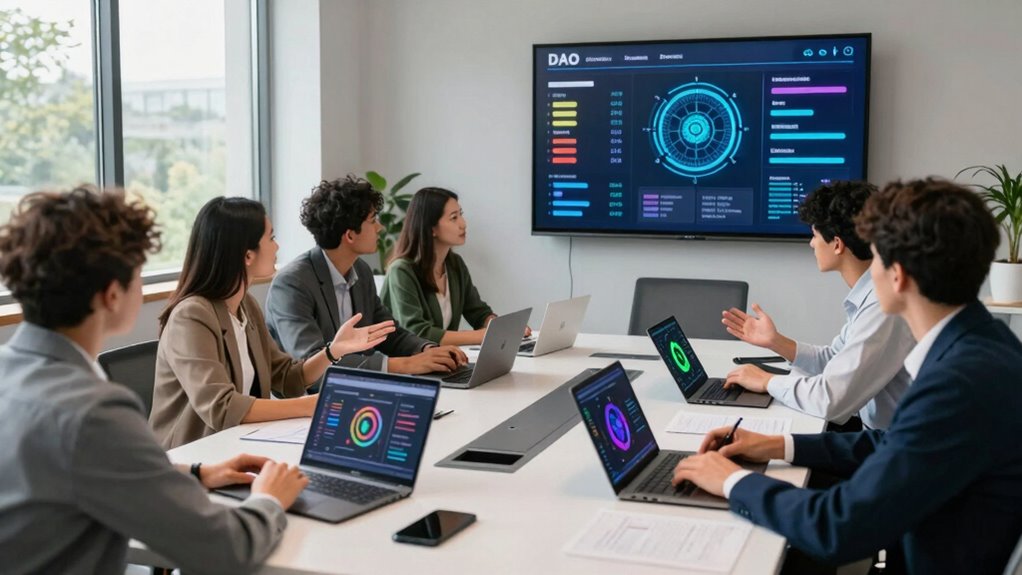
Have you ever wondered how decentralized autonomous organizations (DAOs) can maintain effective and fair governance? It all begins with how tokens are distributed and how engaged the community remains. Token distribution is essential because it determines who has voting power and influence within the DAO. If tokens are concentrated among a few early investors or insiders, it can create centralization and undermine the core principle of decentralization. A healthy DAO ensures a fair and transparent process for distributing tokens, perhaps through initial offerings, airdrops, or community rewards. This approach helps spread influence more evenly, encouraging broader participation and preventing power from consolidating in a small group. When everyone has a stake, members feel more invested and motivated to participate actively.
Fair token distribution fosters broad participation and prevents centralization in DAOs.
Community engagement is equally critical. A successful DAO fosters an environment where members feel their voices matter. This involves providing accessible communication channels, such as forums, chat groups, and regular AMAs (Ask Me Anything sessions). When members see their feedback being acknowledged and incorporated into decision-making, trust grows. A healthy DAO also cultivates a culture of collaboration, where diverse ideas are welcomed, and members are encouraged to propose initiatives. This inclusivity keeps the community vibrant and invested in the organization’s success. Additionally, implementing participatory governance mechanisms can further enhance member influence and involvement. These mechanisms often include voting systems designed to reduce voting manipulation and promote fairness, which are essential for maintaining trust. Regular evaluations and updates to governance structures are vital to adapt to evolving community needs and challenges.
Transparency plays a significant role in maintaining effective governance. Clear records of token distribution, voting outcomes, and proposal discussions create accountability. When members understand how decisions are made and how tokens are allocated, they’re more likely to trust the process. Regular updates and open discussions reinforce this trust, making governance processes feel inclusive rather than opaque. Moreover, utilizing transparent record-keeping tools ensures that all activities are accessible and verifiable by the community.
Another key aspect is implementing mechanisms that prevent voting manipulation or dominance. This might include quadratic voting, reputation systems, or time-based token lockups. These tools help balance influence, ensuring that governance remains equitable and that no single entity can dominate decision-making simply due to token holdings. It’s about creating a system where influence reflects genuine commitment and contribution rather than just financial stake. Continual assessment of these mechanisms is important to maintain fairness over time.
In practice, a healthy DAO continuously evaluates and adjusts its governance processes. It listens to community feedback, adapts to challenges, and emphasizes equitable token distribution and active engagement. When these elements align, the organization becomes resilient, democratic, and capable of steering changes effectively. That’s what true, effective DAO governance looks like in practice: a community-driven, transparent, and adaptable system where everyone’s voice matters.

Decentralized Autonomous Organization A Complete Guide
As an affiliate, we earn on qualifying purchases.
As an affiliate, we earn on qualifying purchases.
Frequently Asked Questions
How Do DAOS Handle Internal Conflicts or Disagreements?
You handle internal conflicts or disagreements through clear conflict resolution strategies and dispute mediation processes. You encourage open communication, guaranteeing everyone’s voice is heard. When disputes arise, you facilitate discussions or mediate to find common ground, promoting transparency and fairness. By establishing predefined rules and voting mechanisms, you help prevent escalation and ensure that disagreements are resolved constructively, maintaining the DAO’s health and collaborative spirit.
What Measures Ensure Transparency in DAO Decision-Making?
Transparency in DAO decision-making acts like a lighthouse guiding your community through foggy waters. You guarantee this by implementing clear transparency protocols, such as open voting records and detailed proposal histories. Encouraging active community engagement further strengthens trust, as everyone can see how decisions evolve. These measures create an environment where members feel confident and informed, fostering accountability and a shared sense of purpose within your decentralized organization.
How Are Voting Power and Token Distribution Managed Fairly?
You manage voting power and token distribution fairly by implementing transparent token allocation strategies that prevent centralization. You guarantee voting fairness by using mechanisms like quadratic voting or weighted voting, which give equal influence regardless of token holdings. Regularly reviewing and adjusting these systems helps maintain a balanced power structure, fostering trust among members and supporting inclusive decision-making within the DAO.
What Role Do External Audits Play in DAO Governance?
External audits play a vital role in DAO governance by providing external oversight and ensuring audit transparency. They help identify vulnerabilities, verify smart contract security, and promote trust among members. You can rely on these audits to confirm that the DAO’s processes are fair and compliant, reducing risks of fraud or mismanagement. By embracing external audits, you foster accountability and demonstrate your commitment to transparent, responsible governance.
How Do DAOS Adapt Governance Structures Over Time?
You adapt DAO governance structures over time by actively encouraging community engagement and leveraging innovative voting methods. As members participate more, you identify what works and what doesn’t, then implement changes to improve decision-making processes. This continuous feedback loop fosters transparency and inclusivity, ensuring your DAO evolves with its community’s needs. By staying flexible and open to experimentation, you create a resilient governance system that grows stronger over time.

Vote 2.0: Securing Democracy with Blockchain-Based Voting Platforms
As an affiliate, we earn on qualifying purchases.
As an affiliate, we earn on qualifying purchases.
Conclusion
In a well-tuned DAO, governance becomes a delicate dance, where transparency and trust lead the rhythm. You’re part of a symphony, each voice contributing to the harmony of shared goals. When open dialogue replaces shadowed corners, the collective blooms like a garden in full sunlight. Embrace this vibrant ecosystem, where every vote and idea is a seed, nourishing a resilient, thriving community that grows stronger with each harmonious step forward.

Fuzzy and Multi-Level Decision Making: An Interactive Computational Approach (Advanced Manufacturing)
As an affiliate, we earn on qualifying purchases.
As an affiliate, we earn on qualifying purchases.
community voting system
As an affiliate, we earn on qualifying purchases.
As an affiliate, we earn on qualifying purchases.