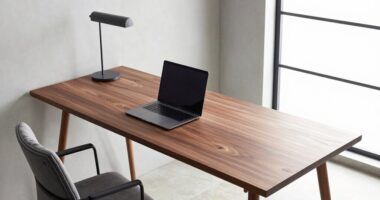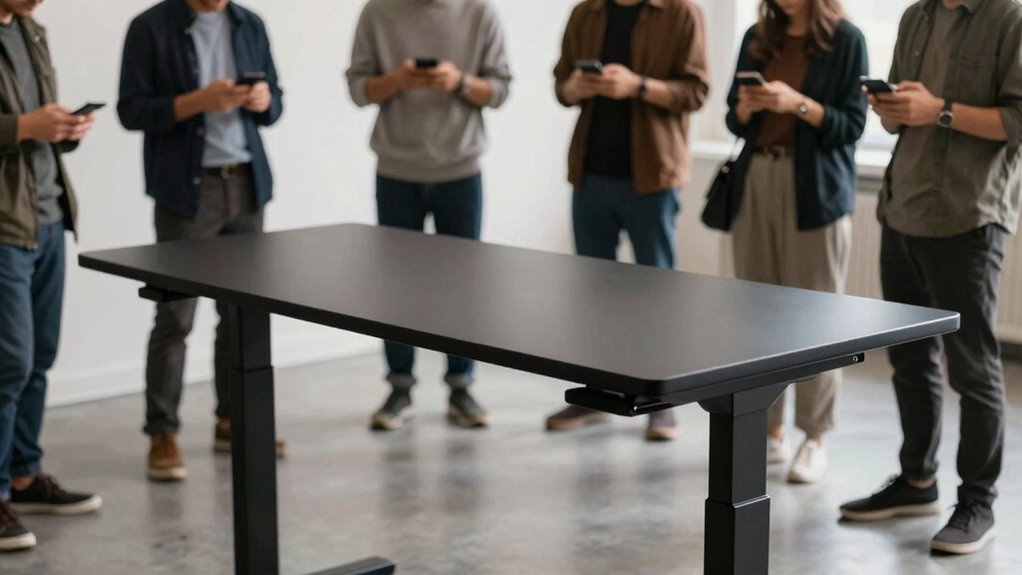

Many standing desk buyers often overlook stability, focusing more on features and height adjustments. But when the desk begins wobbling, it can cause discomfort, strain, and safety concerns that disrupt your work. Ignoring early warning signs might lead to frustration and decreased productivity. To avoid this, you should check for sturdy construction and stability before purchasing. Keep going to discover practical tips for ensuring your desk stays steady and safe during use.

Get hardware and tech essentials delivered free — and shop member deals
- Fast, free delivery on millions of items
- Access to Prime Big Deal Days deals on October 6–7
- Prime Video, Amazon Music and more included
Key Takeaways
- Buyers often prioritize aesthetics and height adjustability over structural stability, leading to overlooked wobbling issues.
- Many assume new desks are inherently stable, ignoring the importance of testing for wobble before purchase.
- Wobbling desks cause discomfort and reduce productivity, but users often ignore signs until instability becomes noticeable.
- Lack of awareness about stability features results in neglecting to assess desk sturdiness during buying decisions.
- Buyers frequently overlook the long-term impact of unstable desks, such as health issues and workspace inefficiency.
sturdy standing desk with stability
As an affiliate, we earn on qualifying purchases.
As an affiliate, we earn on qualifying purchases.
Why Desk Stability Matters for Your Comfort and Safety
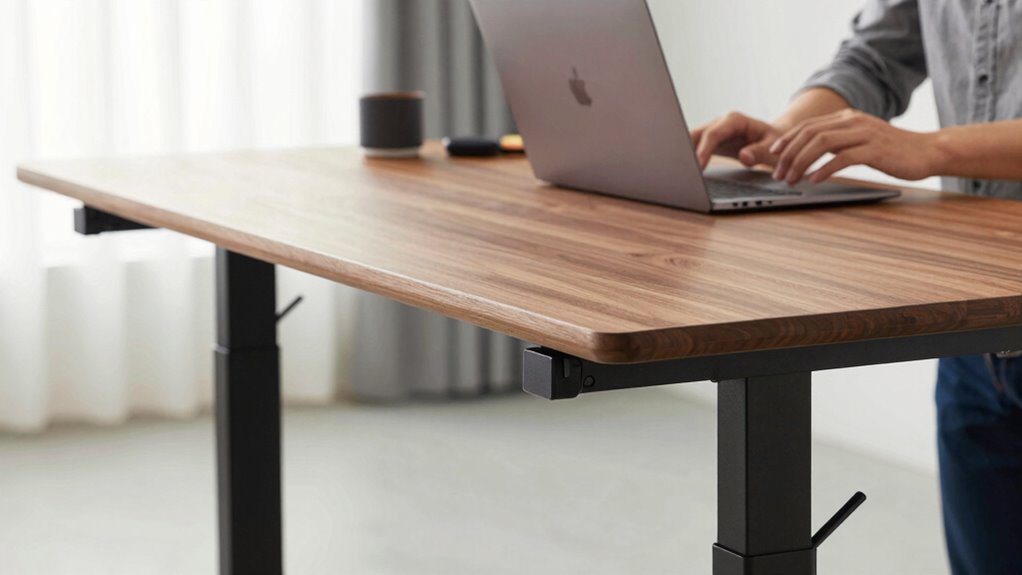
Have you ever experienced a wobbling or unstable desk while working? Stability is essential for your comfort and safety. When your desk wobbles, it can cause strain on your body, leading to discomfort or even injury over time. A stable standing desk offers ergonomic benefits, helping you maintain proper posture and reduce fatigue. It also minimizes distractions, so you stay focused on your tasks. Beyond function, a sturdy desk enhances aesthetic appeal, giving your workspace a clean, professional look. An unstable desk can undermine your confidence and productivity. Investing in stability guarantees you can work comfortably for longer periods without worry. Recognizing early warning signs of instability can help you address issues before they affect your health or work quality. Additionally, choosing a desk with robust construction can ensure lasting stability and support. Properly designed free floating desks, for example, are often built with stability in mind, ensuring they won’t wobble during use. Ensuring that the components are well-made and correctly assembled can significantly improve overall performance and reliability. Ultimately, a stable standing desk supports both your health and your workspace’s visual appeal, making it a smart choice for any workspace.
As an affiliate, we earn on qualifying purchases.
How Wobbly Standing Desks Can Affect Your Work
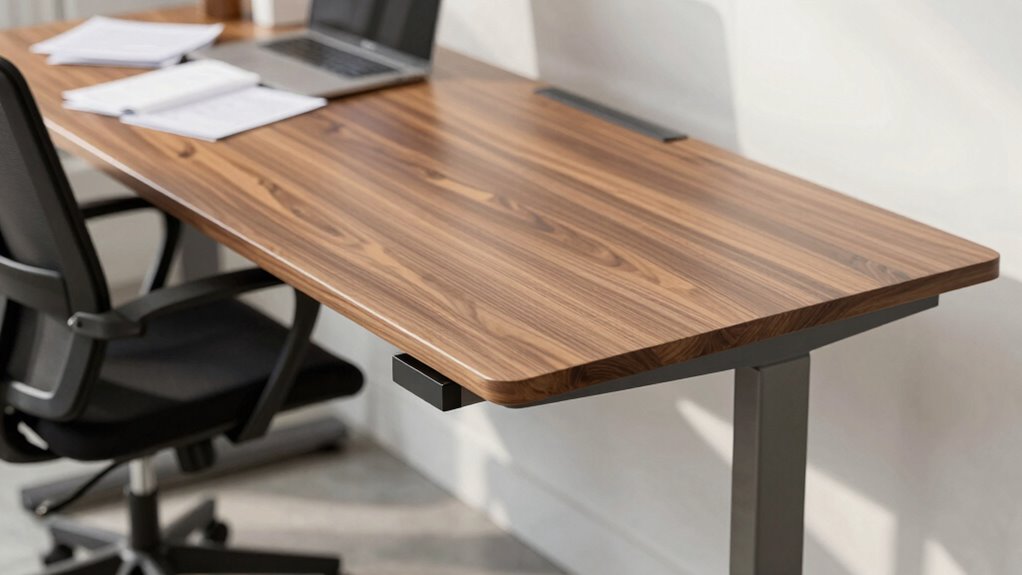
Wobbly standing desks can considerably disrupt your workday by causing constant distractions and discomfort. When your desk wobbles, maintaining an ergonomic posture becomes difficult, leading to strain on your neck, shoulders, and back. The instability also hampers your focus, making you less productive. Beyond health issues, a wobbly desk diminishes the aesthetic appeal of your workspace, giving it an unprofessional look. To illustrate, here’s how instability impacts different aspects:
| Impact | Effect | Solution |
|---|---|---|
| Ergonomic Posture | Increased strain and discomfort | Stabilize the desk for proper alignment |
| Distraction | Reduced focus and productivity | Choose a sturdy, stable desk |
| Aesthetic Appeal | Looks unprofessional | Invest in quality materials |
| Work Efficiency | Slower task completion | Prioritize stability for smooth workflow |
Additionally, understanding the importance of workspace stability can help you make more informed choices when selecting your desk. Recognizing the significance of desk stability in overall productivity and health emphasizes the need to avoid overlooked features that could compromise your workspace. Paying attention to stability factors during your purchase can prevent unnecessary frustration and discomfort later on.
heavy-duty ergonomic standing desk
As an affiliate, we earn on qualifying purchases.
As an affiliate, we earn on qualifying purchases.
Features That Help Keep Your Desk Steady

Choosing a desk with the right features can make all the difference in maintaining stability throughout your workday. Look for adjustable feet or leveling glides that compensate for uneven floors, preventing wobbling. Reinforced frames or thicker steel legs add sturdiness, guaranteeing the desk resists shifting. Incorporating ergonomic accessories like secure cable management or weight-anchored accessories can also improve stability. Additionally, an aesthetic design that emphasizes a low center of gravity helps keep the desk steady, even during dynamic movements. Some desks feature crossbars or braces that reinforce the structure without sacrificing style. Prioritizing these features ensures your desk remains steady, supporting better posture and focus while seamlessly blending with your workspace’s look. For added stability, consider top car protection and accessories, which emphasize durable and reinforced materials to withstand movement and external forces. Ensuring your workspace is free from instability hazards can further contribute to a safer, more productive environment. Regularly evaluating your setup and making adjustments based on ergonomic principles can also help maintain stability and comfort over time. Moreover, staying informed about emerging sports tech trends can inspire innovative solutions to improve workspace ergonomics and stability. Incorporating insights from stability-focused design can also help optimize your desk setup for long-term use.
As an affiliate, we earn on qualifying purchases.
How to Test a Standing Desk’s Stability Before Buying
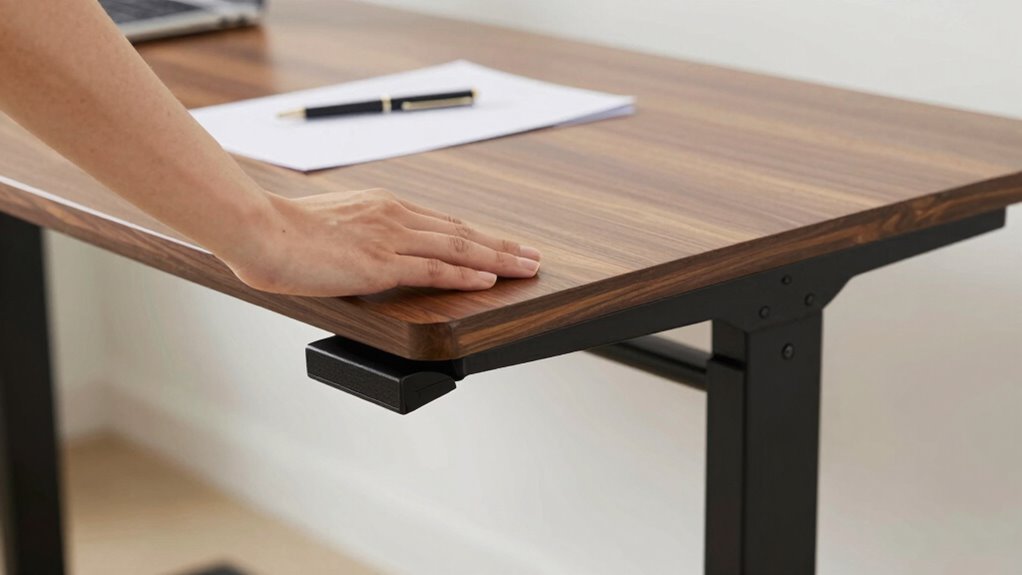
Before buying a standing desk, you should actively test its stability by checking for wobbling movements. Try different height and tilt positions to see how it responds, and pay close attention to any shaking or looseness. Also, assess the build quality by inspecting joints and materials for durability and sturdiness. To ensure long-term stability, consider testing different configurations to observe how the desk maintains its balance under various setups. Additionally, examining the material quality can give you insight into how well the desk will hold up over time and under different loads. Being aware of the structural design can help you identify potential weak points that might compromise stability.
Check for Wobbling Movements
To guarantee your standing desk is stable, you should actively test for wobbling movements before making a purchase. Gently push or shake the desk from different angles to see if it wobbles or shifts unexpectedly. Pay attention to any side-to-side or front-to-back movements, as these indicate instability. While testing, consider the aesthetic design—ensure it looks sturdy and well-built, matching your space. Don’t forget to compare prices; sometimes a higher price reflects better stability and quality. If the desk wobbles during your test, it’s a sign it might not support long-term use comfortably. Stability is key for safe, productive standing, so take the time to thoroughly check for wobbling before finalizing your choice. Additionally, understanding water damage and rug cleaning can help you identify signs of instability caused by moisture issues in your environment. Being aware of environmental factors, like moisture, can help prevent structural damage that may compromise your desk’s stability over time.
Test Different Positions
Once you’ve confirmed that the desk doesn’t wobble when pushed from a single angle, it’s important to test its stability across different positions. Adjust the height and shift your weight to mimic ergonomic positioning, ensuring the desk remains steady during typical movements. Try leaning slightly or applying gentle pressure on various parts of the surface to identify any wobbling or instability. Pay attention to how the desk’s stability affects your comfort and workflow. Additionally, consider how the desk’s aesthetics influence your workspace—choose a design that complements your environment without sacrificing stability. Testing in multiple positions helps you gauge real-world performance, ensuring your standing desk can support your daily tasks without wobbling or shifting, no matter your posture or movement. Incorporating testing methods can also reveal how well the desk maintains stability under different conditions, especially when considering the overall build quality of the desk.
Assess Build Quality
After testing the desk’s responsiveness from different angles and positions, it’s time to evaluate its build quality. Check how sturdy the frame feels when you apply gentle pressure or lean slightly on the surface. Pay attention to the aesthetic design—does it look well-constructed and solid? Research the brand reputation; reputable brands often prioritize quality and durability. Examine the materials used—metal frames tend to be more stable than cheaper plastics. Test the adjustable mechanisms to guarantee smooth, firm movement without wobbling. Also, look for signs of craftsmanship, like tight welds and secure joints. These factors help you gauge whether the desk will remain stable over time, preventing wobbling and ensuring consistent support for your work. Additionally, reviewing performance cookies can help you understand how similar products perform based on user feedback, guiding your decision. Understanding build quality can also provide insights into the overall durability and long-term stability of the desk, especially when considering material strength and construction techniques.
Common Stability Problems and How Manufacturers Fix Them
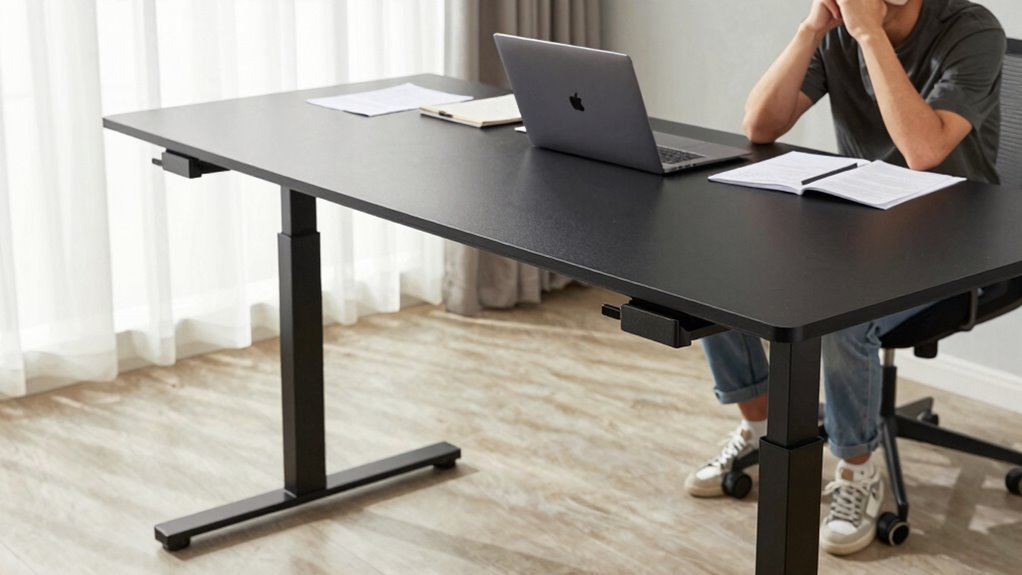
Manufacturers address stability issues by improving material quality and using stronger, more durable components. They also design desks with enhanced structural features that prevent wobbling and tipping. Additionally, adjustable stabilization options allow you to customize support based on your setup, helping you maintain a steady workspace. Properly considering design elements like door swings and stair proportions can also contribute to overall structural stability.
Material Quality Improvements
Material quality plays a crucial role in ensuring the stability of a standing desk, especially when addressing common issues like wobbling or tipping. Manufacturers now focus on using stronger, more durable materials to enhance overall steadiness and longevity. High-quality metals and reinforced joints prevent flexing and wobbling during use. They also incorporate better manufacturing processes for tighter tolerances, reducing movement. To complement stability, ergonomic accessories are designed with solid bases, further supporting the desk’s structure. Additionally, aesthetic design isn’t sacrificed—materials are chosen not only for strength but also for a sleek appearance. This focus on material improvements results in a more stable, attractive desk that minimizes wobbling, even when positioned on uneven floors or under frequent use.
- Use of reinforced steel frames for increased strength
- Advanced coatings to prevent wear and corrosion
- Tighter manufacturing tolerances for precise assembly
- Incorporation of stable, aesthetic design elements
Enhanced Structural Designs
Enhanced structural designs directly address common stability problems like wobbling and tipping. Manufacturers now incorporate reinforced frames, broader bases, and smart engineering to keep your desk steady. These improvements often include thoughtful placement of ergonomic accessories, ensuring stability isn’t compromised. Plus, the aesthetic design blends seamlessly with your workspace, making stability look effortless. When you select a desk with these enhancements, you gain confidence in its durability, even during intense work sessions.
| Stability Issue | Enhanced Solution |
|---|---|
| Wobbling | Reinforced frame and wider base |
| Tipping | Lower center of gravity, balanced weight distribution |
| Shaking | Solid joint connections and sturdy materials |
| Uneven surfaces | Adjustable leveling feet |
| Aesthetic Concerns | Sleek, integrated design for visual appeal |
Adjustable Stabilization Features
To further improve stability, many standing desks now come with adjustable stabilization features that allow you to customize support based on your workspace and usage. These features help prevent wobbling, ensuring ergonomic comfort and maintaining an appealing aesthetic design. By fine-tuning stabilization components, you can adapt the desk to uneven floors or heavier loads, reducing sway during use. Manufacturers include various solutions to address common stability problems:
- Adjustable leveling feet for uneven surfaces
- Anti-tip brackets for added safety
- Reinforced frame connectors for enhanced support
- Locking casters for mobile stability when needed
These innovations allow you to optimize stability without sacrificing style, ultimately creating a safer, more comfortable workspace.
Tips for Choosing a Stable and Safe Standing Desk

Choosing a stable and safe standing desk is essential to prevent wobbling or tipping, which can cause discomfort or accidents. When selecting a desk, prioritize a sturdy frame made from quality materials to guarantee long-term stability. Look for a design that offers ergonomic comfort, allowing you to work comfortably without strain. Aesthetic design matters too—choose a desk that complements your workspace and encourages proper posture. Check for adjustable features that lock securely into place, providing added stability during use. Avoid overly flimsy or lightweight options that may wobble easily. Also, consider the desk’s footprint; a wider base generally offers better balance. By focusing on these factors, you’ll find a standing desk that’s both safe and comfortable for everyday use.
Frequently Asked Questions
Can Adjustable Height Features Impact a Desk’s Stability?
Adjustable height features can impact a desk’s stability, especially if not designed well, which might compromise ergonomic comfort and aesthetic appeal. When you raise or lower the desk, movement or wobbling could occur if the mechanism isn’t sturdy enough. To guarantee stability, look for desks with solid construction and reliable adjustment systems. That way, you maintain both ergonomic comfort and a sleek appearance without sacrificing stability.
Are There Specific Materials That Enhance Standing Desk Stability?
Think of your desk as a sturdy tree; the right materials provide deep roots. Metals like steel and aluminum offer excellent material durability and strength, making your desk less prone to wobbling. Dense woods add stability through surface friction, preventing slipping. These materials create a solid foundation, ensuring your desk remains steady even as you move or adjust height. Choosing high-quality materials is essential for long-lasting, stable support.
How Does Weight Capacity Relate to Desk Wobbling Issues?
Weight capacity directly impacts desk wobbling, as exceeding it can cause instability. When your desk supports more weight than it’s designed for, it compromises ergonomic comfort and reduces workspace flexibility. To maintain a stable, wobble-free surface, guarantee your desk’s weight capacity matches your equipment and accessories. Properly managing this capacity helps you enjoy a secure workspace, preventing unnecessary distractions and discomfort during your workday.
Do Larger Desktops Inherently Provide Better Stability?
Like a trusty steed from a bygone era, larger desktops often offer better stability due to their increased surface area. This can enhance your ergonomic comfort and aesthetic appeal, making your workspace more enjoyable. However, size alone doesn’t guarantee stability—quality construction and proper weight distribution matter. So, choose a desk with a sturdy frame and balanced design to guarantee it remains steady, even during your busiest work moments.
What Maintenance Routines Improve Ongoing Desk Stability?
To keep your standing desk stable, regularly tighten all screws and bolts, especially around the legs and adjustable parts. Check your cable management system to prevent uneven weight distribution that can cause wobbling. Maintain an ergonomic posture by adjusting the desk height properly, which helps reduce strain and unnecessary movements. Regular maintenance like cleaning and inspecting for loose parts guarantees your desk stays sturdy, supporting your health and productivity over time.
Conclusion
Don’t wait until wobbling becomes a distraction or safety issue—stability is key. While sleek design catches your eye, it’s the solid foundation that keeps you comfortable and focused. Think of a sturdy desk as the steady beat in your workspace’s rhythm; without it, everything feels off. Prioritize stability now, so you can work confidently today and avoid the chaos of a wobbly, unreliable surface tomorrow.
Fall Picks
fall essentials
As an affiliate, we earn on qualifying purchases.