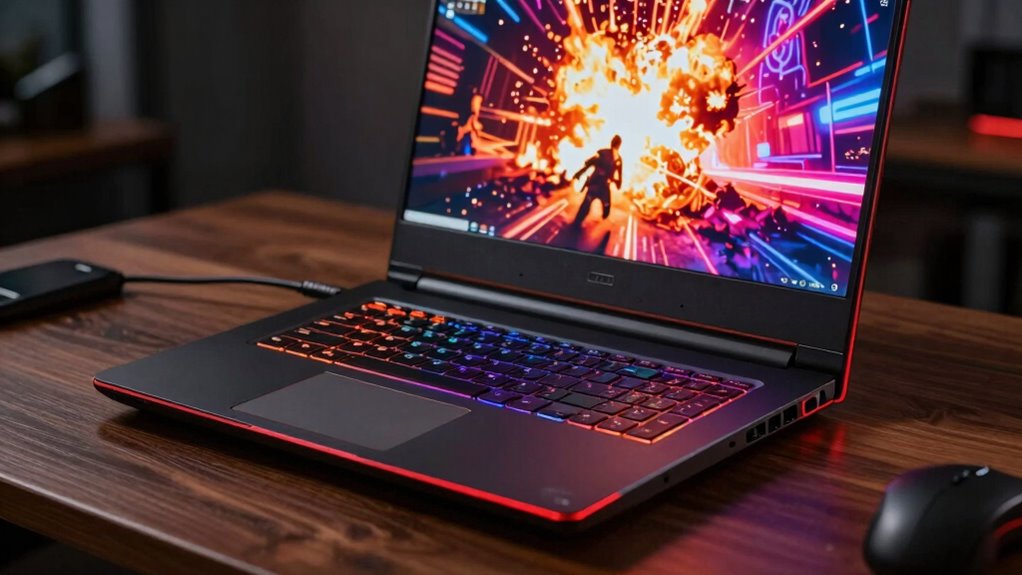

A gaming laptop that looks powerful might actually be a poor buy if its flashy design hides weak hardware, poor cooling, or low build quality. Manufacturers often use aesthetic tricks like slim bezels, RGB lighting, and concealed vents to distract from internal flaws. So, don’t be fooled by appearances—check the specifications, cooling system, and reviews. If you want to find a model that truly performs as good as it looks, keep exploring this guide.
Key Takeaways
- A flashy design with RGB lighting and slim bezels can mask weak internal hardware and poor cooling solutions.
- High aesthetic appeal often prioritizes looks over critical specifications like GPU, CPU, and thermal management.
- Visual tricks like concealed vents and curved surfaces hide internal component quality and cooling capacity.
- Branded or aggressive-looking models may have inferior components despite impressive external features.
- Benchmark results and reviews reveal true performance, which can be disappointing despite a powerful-looking exterior.

ChillCore Laptop Cooling Pad, RGB Lights Laptop Cooler 9 Fans for 15.6-19.3 Inch Laptops, Gaming Laptop Fan Cooling Pad with 8 Height Stands, 2 USB Ports – A21 Blue
9 Super Cooling Fans: The 9-core laptop cooling pad can efficiently cool your laptop down, this laptop cooler…
As an affiliate, we earn on qualifying purchases.
As an affiliate, we earn on qualifying purchases.
Why Looks Can Be Deceiving When Buying a Gaming Laptop
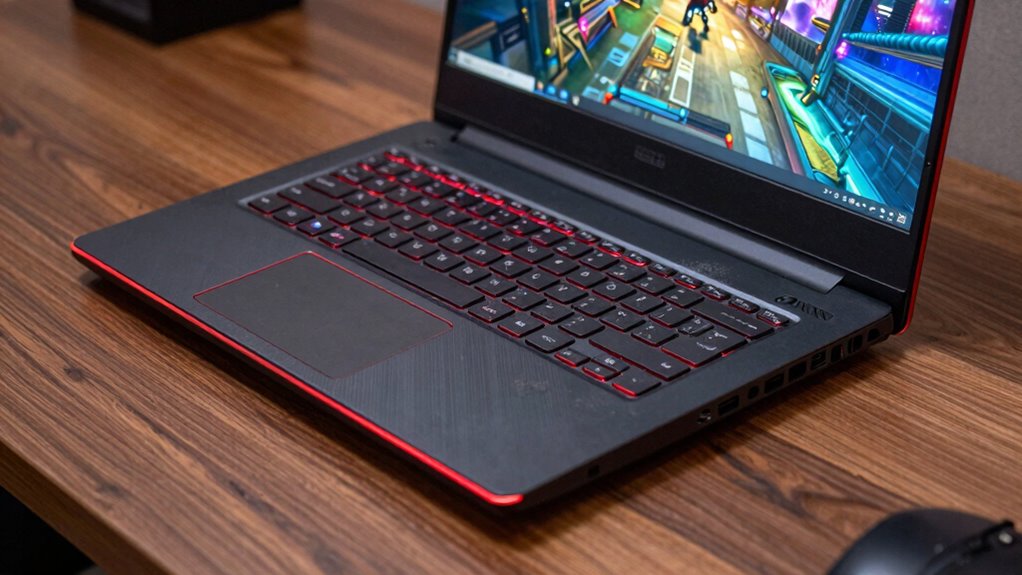
Even if a gaming laptop looks aggressive with bold designs and flashy RGB lighting, that doesn’t guarantee it has the performance to back up its appearance. Sometimes, manufacturers use aesthetic illusions to lure buyers, relying on marketing tricks that emphasize style over substance. Bright, sharp angles or eye-catching lighting can create an impression of power, but they often hide less impressive internal specs. Don’t be fooled by these visual cues—they’re designed to appeal visually rather than reflect real gaming performance. Remember, a flashy exterior might be a distraction from what truly matters: the hardware inside. Always look beyond the aesthetics and focus on genuine performance features, rather than falling for marketing tricks that are meant to impress at first glance. For a better understanding of what truly matters, consider contrast ratio and color accuracy when evaluating a gaming laptop’s power and performance capabilities. Additionally, understanding the importance of hardware specifications can help you make a more informed decision. Recognizing the difference between aesthetic appeal and technical performance is essential to avoid overspending on style rather than substance. A well-informed buyer will also consider display quality as a key indicator of overall gaming experience.
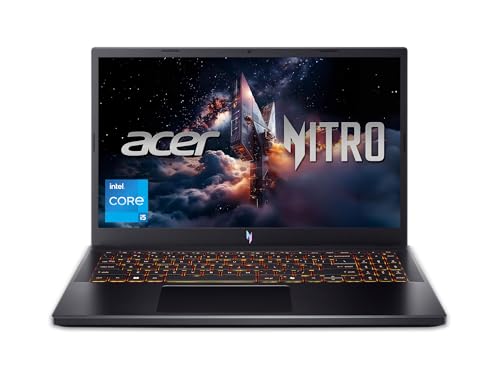
acer Nitro V Gaming Laptop | Intel Core i5-13420H Processor | NVIDIA GeForce RTX 4050 Laptop GPU | 15.6" FHD IPS 165Hz Display | 8GB DDR5 | 512GB Gen 4 SSD | Wi-Fi 6 | Backlit KB | ANV15-52-586Z
Beyond Performance: The Intel Core i5-13420H processor goes beyond performance to let your PC do even more at…
As an affiliate, we earn on qualifying purchases.
As an affiliate, we earn on qualifying purchases.
What Hardware Features Really Impact Gaming Performance
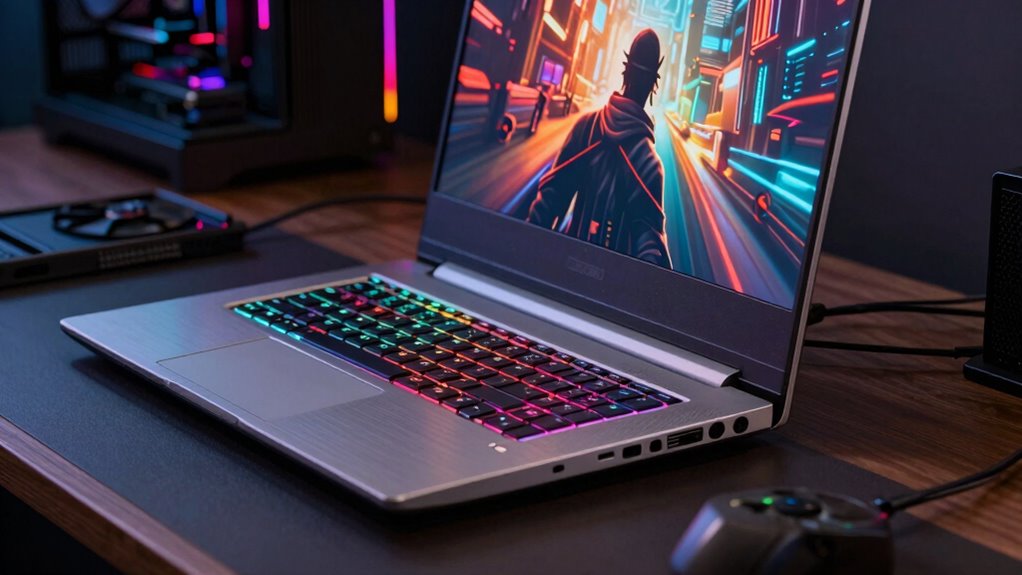
Your gaming performance depends heavily on the processor’s power and speed, which determine how smoothly your games run. The graphics card capabilities also play an essential role in rendering detailed visuals and high frame rates. Focusing on these hardware features guarantees you get the best gaming experience, rather than just a flashy-looking laptop. Additionally, incorporating wellness touches such as ergonomic design and proper lighting can enhance your overall gaming environment and reduce fatigue. Paying attention to hardware specifications ensures you’re investing in a machine that truly meets your gaming needs. Understanding system cooling is also crucial, as overheating can negatively impact performance and longevity. Staying informed about market trends can help you make smarter choices about which hardware components are worth upgrading or prioritizing, especially as new technologies emerge that can improve both performance and user comfort.
Processor Power and Speed
While a gaming laptop may look powerful, not all processors deliver the same gaming performance. Your choice of processor impacts frame rates and smooth gameplay. Check processor benchmarks to compare speeds and efficiency. A faster CPU ensures your system handles demanding titles without bottlenecks. Remember, RAM upgrades can complement your processor but won’t replace the need for a good one. Here’s what to take into account:
- Higher core counts boost multitasking and future-proofing
- Clock speed determines how quickly your CPU processes data
- Thermal performance affects sustained speed during gaming
- Compatibility with motherboard and RAM impacts overall system performance
- Proper cabling solutions are essential to maintain optimal system cooling and stability during intensive gaming sessions
Additionally, verifying hardware compatibility helps prevent potential conflicts and ensures your components work seamlessly together.
Focus on a processor that balances speed and efficiency, rather than just flashy specs. This ensures your laptop remains powerful and responsive during intense gaming sessions.
Graphics Card Capabilities
A gaming laptop’s graphics card directly determines how well your games look and perform, making it one of the most critical hardware features to evaluate. A powerful GPU handles rendering high-quality graphics, ensuring smooth gameplay and detailed visuals. If you’re into virtual reality, a robust graphics card is essential for immersive experiences without lag or stuttering. Additionally, streaming capabilities rely heavily on the GPU to encode videos in real-time without sacrificing game performance. Cheaper or outdated graphics cards struggle with new titles, especially at higher resolutions or frame rates. Look for recent-generation cards with ample VRAM, as they provide better support for demanding games and virtual reality. Skimping on the GPU means sacrificing smooth gameplay, vibrant visuals, and future-proofing your gaming setup. For an added edge, some high-end graphics cards also include advanced cooling solutions that help maintain performance during extended gaming sessions.

ASUS ROG Strix G16 (2025) Gaming Laptop, 16” FHD+ 16:10 165Hz/3ms Display, NVIDIA® GeForce RTX™ 5060 Laptop GPU, Intel® Core™ i7 Processor 14650HX, 16GB DDR5, 1TB Gen 4 SSD, Wi-Fi 7, Windows 11 Home
HIGH-LEVEL PERFORMANCE – Unleash power with Windows 11 Home, an Intel Core i7 Processor 14650HX, and an NVIDIA…
As an affiliate, we earn on qualifying purchases.
As an affiliate, we earn on qualifying purchases.
How Important Is Cooling System Performance?
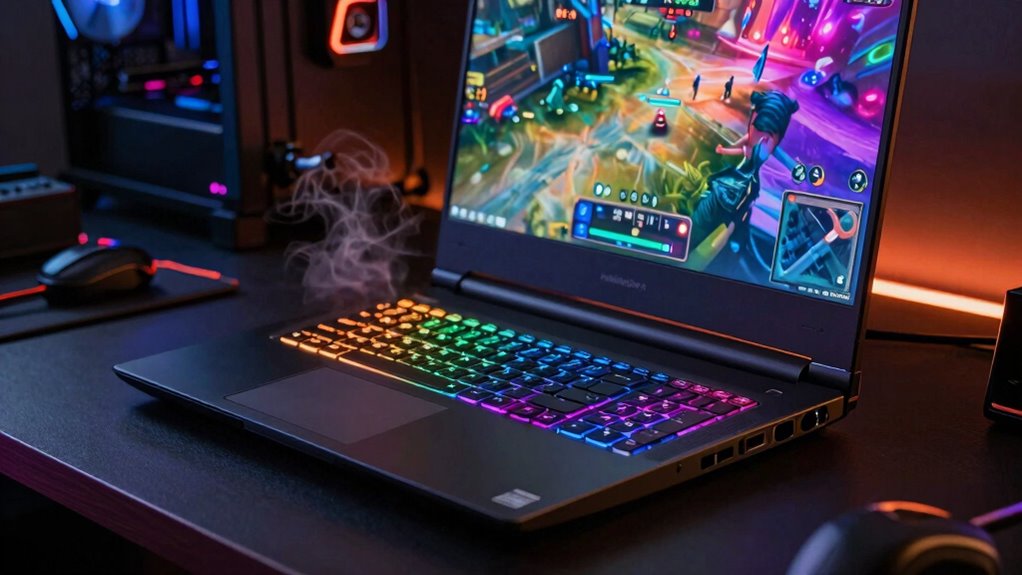
A good cooling system keeps your laptop running smoothly by managing heat efficiently, preventing overheating during intense gaming sessions. Poor heat management can lead to thermal throttling, which reduces performance and frustrates gameplay. Over time, inadequate cooling can also shorten your laptop’s lifespan, making it a vital factor in your purchase decision. Additionally, understanding the environmental impact of your device, such as the environmental impact of tissue paper, can help you make more eco-conscious choices when selecting accessories or peripherals. Proper cooling not only enhances performance but also supports the longevity of your hardware by preventing heat-related damage. Recognizing the importance of cooling system performance can help ensure your gaming laptop remains reliable and efficient over time. Considering how thermal management influences overall efficiency is also crucial for making a well-informed purchase, especially since thermal efficiency directly impacts energy consumption and device sustainability.
Heat Management Efficiency
Effective heat management is crucial because a laptop that runs too hot can throttle performance, reduce lifespan, and become uncomfortable to use. Good cooling keeps your system running smoothly during intense gaming sessions. When evaluating a gaming laptop, consider how well its cooling system handles heat. Poor heat management can lead to overheating, noise, and even hardware failure. Additionally, choosing a laptop with a reliable heat dissipation system can prevent long-term damage caused by excessive heat. Proper maintenance and regular cleaning of vents can also significantly enhance cooling efficiency, ensuring consistent performance. Regularly monitoring your device’s temperature with performance tools can help you identify potential issues early. Investing in a laptop with advanced cooling solutions often results in better overall stability and longevity. Keep in mind: – Color options may influence your choice, but don’t sacrifice cooling for style. – A reputable brand often invests in better cooling solutions. – Throttling reduces frame rates, impacting gameplay quality. – Overheating can shorten your laptop’s lifespan over time. To maximize your device’s performance and durability, it’s also beneficial to understand heat transfer principles, which play a significant role in effective cooling design. Prioritize heat management efficiency, ensuring your gaming experience stays powerful without risking long-term damage or discomfort.
Impact on Longevity
Over time, inadequate cooling can take a serious toll on your gaming laptop’s lifespan. Poor cooling performance accelerates component wear, leading to overheating and potential hardware failure. Even if your laptop has sleek aesthetic enhancements, these visual features won’t compensate for poor thermal management. A subpar cooling system can diminish overall durability, making repairs more frequent and costly. This can also contribute to shipwreck preservation in electronics, as damaged components may become difficult to repair or replace. Proper maintenance of the cooling system performance is crucial to prevent dust buildup and ensure efficient heat dissipation. This impacts brand reputation, as long-term reliability becomes a concern. You might initially be drawn to a laptop’s powerful look, but neglecting cooling performance risks premature breakdowns. Ensuring effective cooling preserves the hardware, prolongs the device’s life, and sustains its gaming capabilities. In the end, a well-designed cooling system isn’t just about performance—it’s essential for maintaining your investment over time.
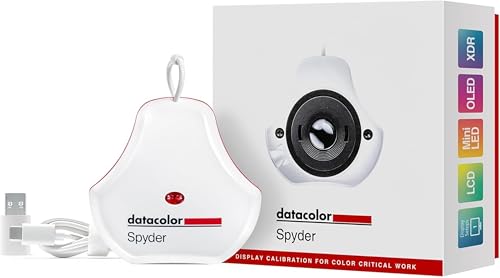
datacolor Spyder – Monitor Calibrator for Graphic Designers, Photographers, and Content Creators, Shows You True Colors, Works on OLED Monitors & LED Screens, Easy-to-Use Color Calibration Tool
Color “Surprises” Are a Thing of the Past: Datacolor’s exclusive DevicePreview TM Beta feature simulates what your photos…
As an affiliate, we earn on qualifying purchases.
As an affiliate, we earn on qualifying purchases.
Does Battery Life and Portability Matter for Gaming?
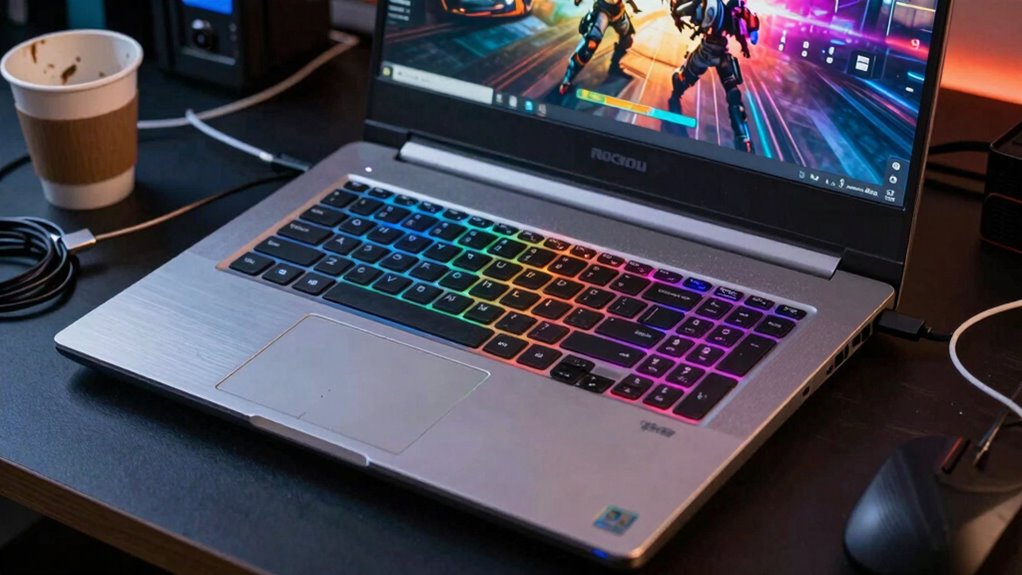
Have you ever wondered whether battery life and portability really matter when choosing a gaming laptop? The truth is, they can profoundly affect your experience. Long battery drain means you’re limited in where you can game without plugging in, especially during travel or power outages. Portability concerns come into play if you want a lightweight device that’s easy to carry around, but often these laptops sacrifice power or cooling. Consider these points:
- Short battery life limits gaming on the go
- Heavy laptops hinder portability
- Power-hungry components increase battery drain
- Balancing portability and performance is tricky
If you prioritize portability, you might accept shorter gaming sessions without constant charging. But, if you need long, uninterrupted gaming sessions, a bulky but powerful machine might be your better choice.
How to Assess Build Quality and Durability
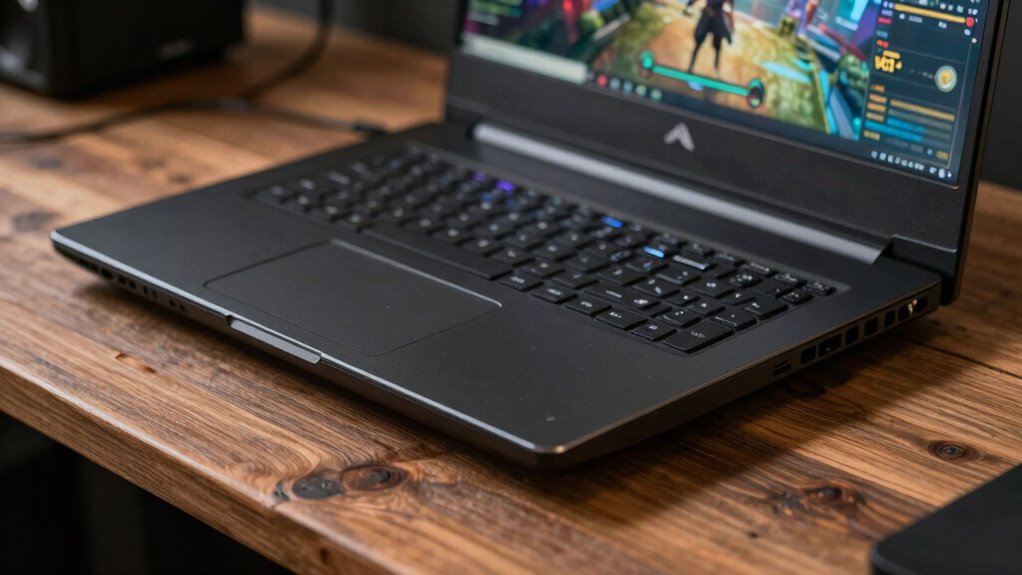
When evaluating a gaming laptop, guaranteeing its build quality and durability is essential because a sturdy design ensures it can withstand regular use and transport without failing or breaking down. Check the quality of build materials—metal chassis often outperform plastic in durability. Look for signs of weak construction, such as loose hinges or creaky panels. Conduct durability testing by gently pressing different areas, especially around the keyboard and screen, to assess flex. Examine the ports for secure attachment and resistance to wear. Consider this table to compare key factors:
| Build Material | Durability Testing | Key Indicators |
|---|---|---|
| Aluminum | Flex test | Resistance to dents |
| Plastic | Drop test | Tight hinges |
| Magnesium Alloy | Pressure test | Secure ports |
| Carbon Fiber | Vibration test | Overall rigidity |
| Steel | Impact test | Long-term resilience |
What Design Tricks Do Manufacturers Use to Hide Flaws?
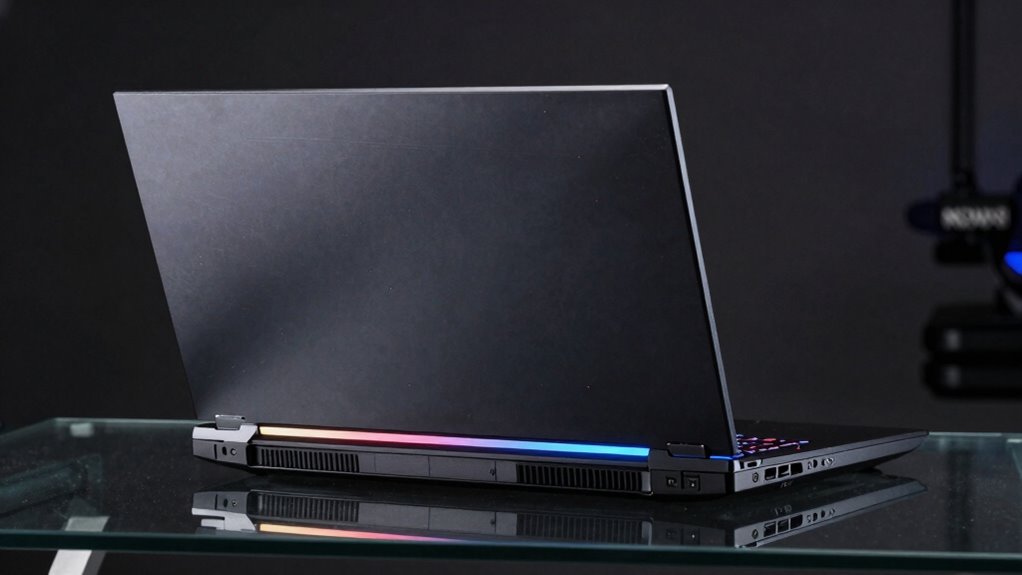
Ever wonder how some gaming laptops look sleek and flawless despite hidden flaws? Manufacturers use clever design illusions and aesthetic tricks to distract you from potential issues. They often employ slim bezels and curved surfaces to hide thick chassis or internal components. Strategic lighting, like RGB accents, draws attention away from weak spots. Smooth, matte finishes mask scratches and fingerprints, making the surface look pristine. Additionally, they place vents and ports in less noticeable areas, concealing potential overheating issues or bulky parts. These design tricks manipulate your perception, making the laptop appear more premium and well-built. By focusing on aesthetics, manufacturers hide flaws that could otherwise give away poor quality or internal weaknesses, keeping the focus on the sleek exterior rather than what’s underneath.
How Can You Spot a Gaming Laptop That’s All Looks?
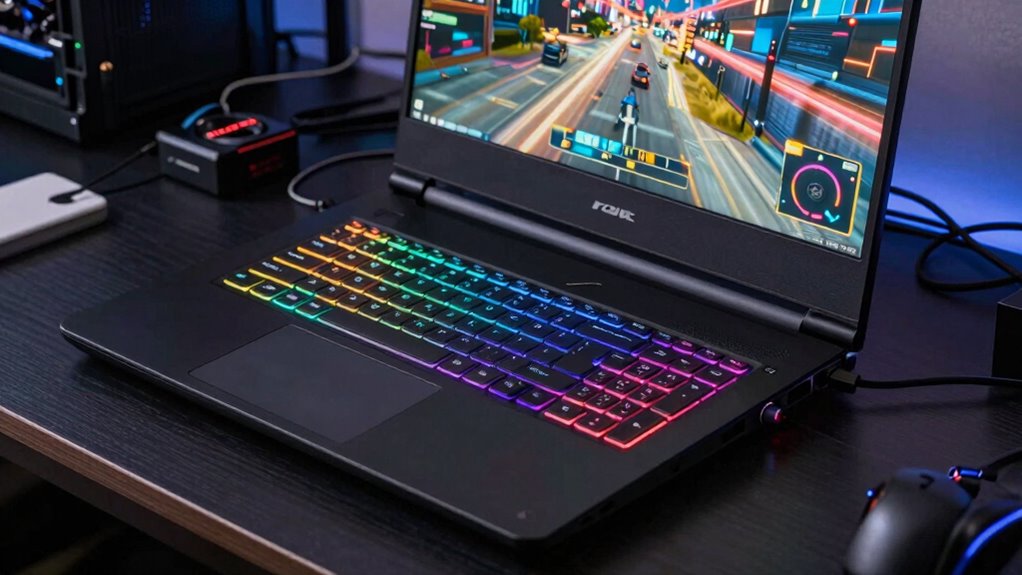
A gaming laptop that looks impressive may still hide underlying weaknesses, so it’s essential to scrutinize beyond its flashy exterior. Check the color schemes—if they rely heavily on gaudy, mismatched colors or overly vibrant hues, it might be more style than substance. RGB lighting can add flair, but if it’s the only standout feature, be cautious. Look closely at the build quality—cheap materials and flimsy hinges often accompany flashy designs. Pay attention to the keyboard and display; if they seem to prioritize looks over comfort and clarity, that’s a red flag. Additionally, a laptop with an overly aggressive design or excessive branding might be more about appearance than performance. Don’t be swayed by aesthetics alone; focus on the specs and build quality.
Does Real-World Performance Match Aesthetic Promises?
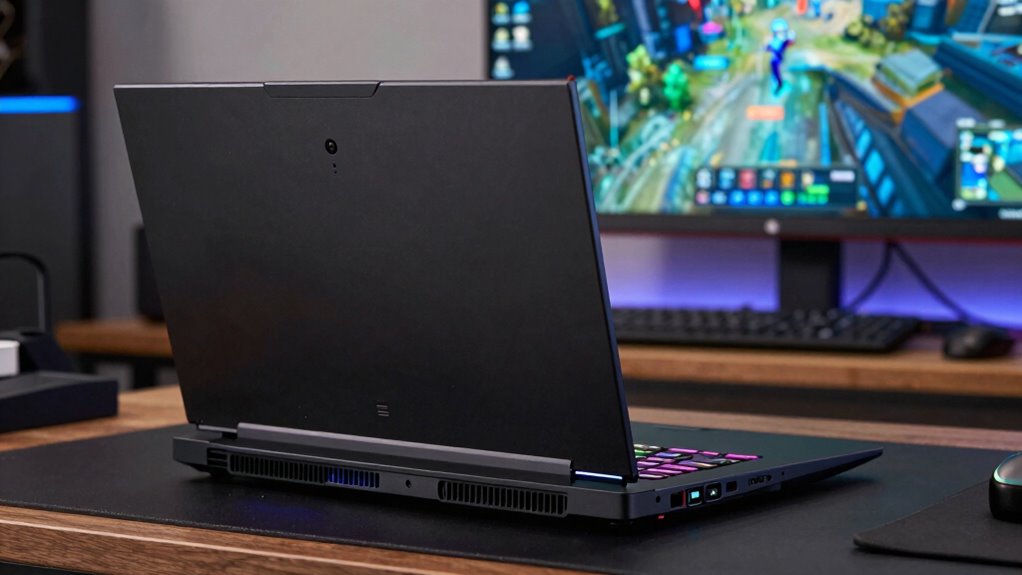
Just because a gaming laptop looks powerful doesn’t mean it can handle demanding tasks in real-world scenarios. Aesthetic trends often prioritize flashy designs over performance, making the laptop appear impressive but underperform when you need it most. Brand reputation plays a role—trusted brands tend to deliver better real-world results, while lesser-known brands might focus on looks. To gauge if performance matches promises, consider:
- Benchmark results versus actual gaming or editing experiences
- Build quality and cooling systems for sustained use
- Real-world reviews on longevity and reliability
- Consistency between marketing claims and actual hardware specs
Don’t rely solely on visuals; look beyond aesthetics to guarantee your investment aligns with your performance needs.
Tips for Choosing a Gaming Laptop That Performs as Good as It Looks
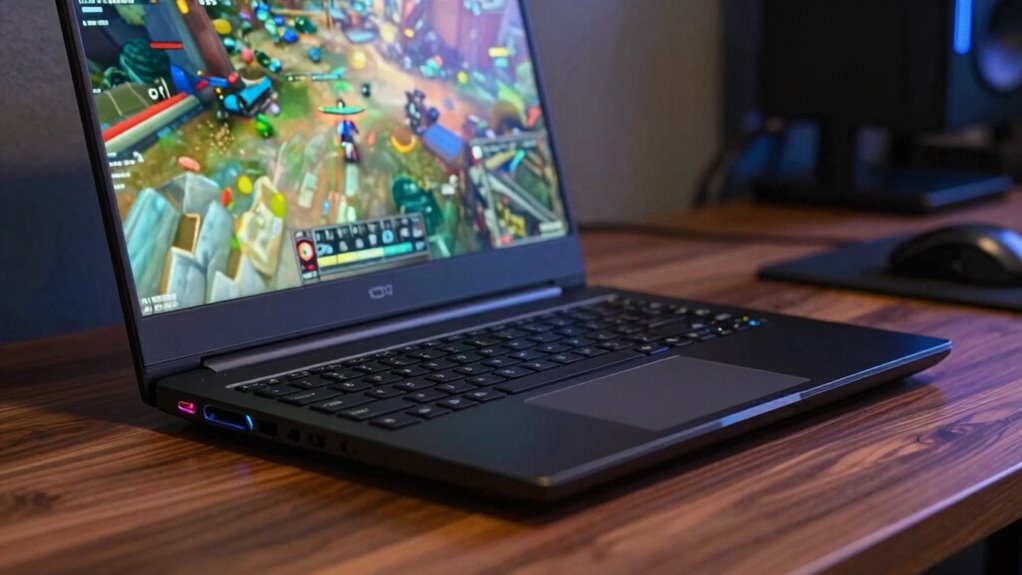
Choosing a gaming laptop that lives up to its looks requires careful scrutiny beyond its flashy exterior. To guarantee you get a machine that performs well, consider current fashion trends in gaming hardware, which can influence design but not performance. Focus on specifications like the GPU, CPU, RAM, and storage rather than just the aesthetic appeal. Additionally, research the brand’s reputation for reliability and customer support, as a well-known brand often indicates quality and durability. Avoid falling for flashy designs that sacrifice performance for style. Instead, look for a balanced combination of powerful components and sleek design. By prioritizing specs aligned with your gaming needs and choosing reputable brands, you’ll find a laptop that looks impressive and delivers the performance you require.
Frequently Asked Questions
Are Expensive Gaming Laptops Always the Best Choice?
No, expensive gaming laptops aren’t always the best choice. While they often have impressive aesthetic appeal and build quality, higher price doesn’t guarantee better performance or value. You should focus on specs that match your gaming needs and budget. Sometimes, mid-range models offer excellent performance and durability without the hefty price tag. Don’t be swayed solely by looks or brand status—prioritize what truly benefits your gaming experience.
How Much Should I Spend for a Reliable Gaming Laptop?
Imagine holding a sleek, glowing gaming laptop that catches everyone’s eye—that’s tempting, but don’t just chase aesthetics. Spend around $1,000 to $1,500 for a reliable gaming laptop that balances gaming performance with good warranty and support. Cheaper models often lack durability, while pricier ones may have unnecessary features. Prioritize solid specs, a reputable brand, and strong customer support to guarantee your investment lasts through intense gaming sessions.
Can Budget Gaming Laptops Deliver Good Gaming Performance?
Budget gaming laptops can deliver decent performance, but you should expect some performance trade-offs due to hardware limitations. They often have less powerful GPUs, slower processors, and limited RAM, which can affect gaming quality and smoothness. While they’re affordable, you might need to lower game settings or accept reduced frame rates. If you prioritize high-end gaming performance, investing a bit more for better hardware is usually worth it.
What Hidden Costs Should I Consider When Buying a Gaming Laptop?
When buying a gaming laptop, consider hidden costs like poor battery life and thermal management issues. You might need to buy a portable charger or cooling pads, which add to your expenses. Also, make sure the laptop’s cooling system is efficient, or you risk overheating and damaging hardware. These factors can increase overall costs and affect your gaming experience, so factor them into your budget before making a decision.
Do Brand Reputation and Reviews Influence Gaming Laptop Quality?
Yes, brand reputation and reviews greatly influence your perception of gaming laptop quality. You’re more likely to trust brands with strong brand loyalty, knowing they often maintain higher standards. Review credibility helps you see real user experiences, highlighting potential issues or strengths. By considering trusted reviews, you can make a smarter decision, avoiding brands with poor reputations and ensuring your investment delivers the gaming performance you expect.
Conclusion
When considering a gaming laptop, remember that striking looks can sometimes mask hidden compromises. While a sleek design might catch your eye, it’s wise to dig deeper into specs, cooling, and build quality to guarantee it truly meets your gaming needs. Don’t let aesthetics alone steer you—what’s beneath the surface often holds the real promise. With a keen eye, you can find a machine that not only impresses visually but also delivers the performance you deserve.