
Your laptop’s hardware plays a vital role in how fast or frustrating your local AI tools feel. A powerful GPU, fast CPU, and enough RAM help handle complex calculations smoothly, while an SSD guarantees quick data access. Poor cooling or weak battery health can slow things down too. Upgrading these components can make a big difference. Keep exploring to discover more tips for optimizing your AI experience through better hardware choices.
Key Takeaways
- GPU power greatly influences AI processing speed; stronger GPUs enable faster local AI performance.
- Sufficient RAM (at least 8-16GB) prevents lag during large dataset handling and multitasking.
- SSD storage reduces data access times, speeding up training and inference tasks.
- CPU speed impacts overall workflow efficiency; faster CPUs minimize processing delays.
- Hardware health, including cooling and maintenance, prevents thermal throttling that slows AI computations.

Lenovo Legion LOQ AI-Powered Gaming Laptop – Intel Core i7-13650HX, 15.6" FHD IPS 144Hz Display, GeForce RTX 5050, 16GB Memory, 1TB Storage, G-Sync, Luna Grey
STEP UP TO TRUE GAMING – The Lenovo Legion LOQ is your first step into gaming, unlocking a…
As an affiliate, we earn on qualifying purchases.
As an affiliate, we earn on qualifying purchases.
Why Your Laptop’s Hardware Matters for AI Speed
Your laptop’s hardware directly impacts how quickly AI tools run because powerful components can process data more efficiently. Faster CPUs and ample RAM enable AI applications to analyze information swiftly, giving you a smoother experience. When your hardware is robust, it also supports better implementation of AI ethics, ensuring data is handled responsibly and securely. User privacy becomes a top priority with high-quality hardware, as it allows for secure data processing locally rather than relying on cloud services. This reduces exposure to breaches and unauthorized access. In short, investing in strong hardware isn’t just about speed; it’s about ensuring that AI use respects privacy and aligns with ethical standards. The right specs make local AI more reliable, secure, and efficient. Additionally, high-quality hardware can improve color accuracy and overall image rendering, which is crucial for tasks like AI-driven visual analysis and immersive experiences. Moreover, the hardware’s ability to handle computational load effectively can significantly influence AI performance and your overall user experience. Proper hardware ensures that data security is maintained at every step, safeguarding your information from potential vulnerabilities.
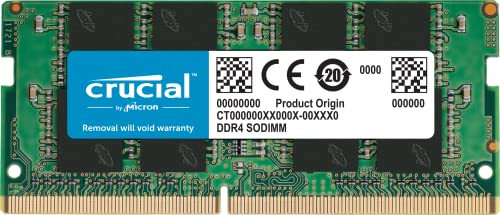
Crucial 16GB DDR4 RAM, 3200MHz CL22 (or 2933MHz or 2666MHz) Laptop Memory, SODIMM 260-Pin, Compatible with 13th Gen Intel Core and AMD Ryzen 7000 – CT16G4SFRA32A
Boosts System Performance:16GB DDR4 laptop memory that operates at 3200MHz to improve multitasking and system responsiveness for smoother…
As an affiliate, we earn on qualifying purchases.
As an affiliate, we earn on qualifying purchases.
How GPU Power Boosts Local AI Performance

A powerful GPU can substantially enhance local AI performance by handling complex computations more efficiently than a CPU alone. This boost is especially noticeable with AI model compatibility, as many models are optimized to leverage GPU acceleration. When your GPU is strong, software optimization becomes more effective, reducing processing times and increasing responsiveness. A high-performance GPU accelerates tasks like training and inference, making AI workflows smoother and faster. It also allows you to run larger models or process bigger datasets without bottlenecks. The better your GPU, the more it can take advantage of AI-specific libraries and frameworks, ensuring your hardware works seamlessly with your AI tools. Additionally, GPU architecture plays a crucial role in how well your system can handle these demanding AI tasks, directly impacting overall performance and efficiency. This results in a more efficient, frustration-free experience when working with local AI applications, especially when paired with hardware compatibility considerations. Optimizing system resources is key to maximizing your GPU’s potential and achieving optimal AI performance. Proper hardware configuration can significantly improve how well your system utilizes the GPU for AI workloads. Moreover, understanding interdisciplinary insights can help optimize AI setups by integrating best practices from related fields.

SIX NVME M.2 SSD PCIe 4.0-1TB m.2 2280 ssd, Read UP to 7350MB/s 1TB for Gaming PS5 Memory Storage Expansion with Heatsink, Internal Solid State Hard Drive PCIe gen 4×4 Nvme for Laptop Desktop pc
Unleash Upgraded power – Employing PCIe Gen4x4 High Speed Interface, SIX X7400 nvme m.2 ssd confer it UP…
As an affiliate, we earn on qualifying purchases.
As an affiliate, we earn on qualifying purchases.
Why CPU and RAM Are Key for Smooth AI Workflows

Your CPU determines how quickly your AI tasks get processed, so a faster processor means smoother workflows. Sufficient RAM allows you to handle larger datasets without slowing down, boosting efficiency. Plus, having enough memory improves multitasking, preventing frustrating delays when running multiple AI tools simultaneously.
Processing Power Matters
Processing power is vital for smooth AI workflows because it determines how quickly your laptop can handle complex tasks. A powerful CPU and ample RAM enable your system to process large datasets efficiently, reducing lag and delays. This is essential when working with AI tools that require intensive computations, like training models or analyzing data while maintaining data privacy. Faster processing also supports AI ethics by allowing secure, local data handling without relying heavily on cloud services that pose privacy concerns. If your laptop lacks sufficient processing power, you might experience frustrating slowdowns, especially during lengthy AI tasks. Investing in a robust CPU and plenty of RAM guarantees your AI workflows are seamless, protecting your data privacy and keeping performance consistent when working locally.
Memory Affects Efficiency
Since RAM and CPU work together to handle multiple tasks efficiently, having sufficient memory is crucial for smooth AI workflows. A higher RAM capacity allows you to process larger datasets without slowdowns, while better memory bandwidth ensures data moves quickly between components. When choosing a laptop, it’s important to balance these factors for AI tasks. Insufficient memory causes lag and delays, especially during intensive computations. A balanced approach to landscaping and hardware specifications can significantly enhance overall performance. The following table highlights key memory specifications:
| RAM Capacity | Memory Bandwidth | Effect on AI Workflows |
|---|---|---|
| 8 GB | Low | Limited, slow processing |
| 16 GB | Moderate | Suitable for moderate tasks |
| 32 GB | High | Ideal for heavy workloads |
| 64 GB | Very High | Professional, large datasets |
| 128 GB+ | Extreme | Specialized AI research |
Prioritize both capacity and bandwidth to maximize AI efficiency.
Multitasking Performance
Efficient multitasking during AI workflows depends heavily on how well your CPU and RAM work together. When you’re running multiple AI tools, handling complex models, or managing data privacy and AI ethics concerns, performance matters. A strong CPU ensures tasks like data preprocessing and model training happen swiftly, while ample RAM keeps everything running smoothly without slowdowns. Additionally, understanding how water-based therapies like hydrotherapy can aid physical recovery highlights the importance of supportive environments in maintaining optimal performance. Consider these points:
- A powerful CPU reduces lag when switching between AI ethics protocols or data privacy checks.
- Sufficient RAM allows you to run multiple AI applications simultaneously without crashes or delays.
- Both components help prevent bottlenecks that could compromise data security or hinder real-time decision-making.
In short, good multitasking performance guarantees your AI workflows stay seamless, secure, and efficient.

UCEC 4 Pack Thermal Pad 100x100mm (0.5mm 1.0mm 1.5mm 2.0mm) Blue Silicone Thermal Pads 6W/mK – High Conductivity Gpu & CPU Pad for Laptop Heatsink SSD IC Cooler
High Conductivity Performance: Made of premium silicone with a heat conductivity of 6.0 W/mK, these thermal pads efficiently…
As an affiliate, we earn on qualifying purchases.
As an affiliate, we earn on qualifying purchases.
SSD or HDD? Storage Speed and Its Effect on AI Tasks
Choosing between an SSD and HDD considerably impacts your AI tasks’ speed, with SSDs offering faster data access. This reduces processing delays and keeps workflows smooth, especially with large datasets. Ultimately, your storage choice can make or break your AI experience.
Faster Data Access
When working with AI tools, storage speed can make a significant difference in how quickly tasks are completed. Faster data access means your AI processes run smoothly, reducing wait times. An SSD (Solid State Drive) offers rapid read/write speeds, essential for handling large datasets or complex models. This speed enhances cloud integration by enabling quicker uploads and downloads, and it allows software optimization to maximize performance.
Consider these points:
- Upgrading to an SSD improves overall AI workflow and reduces lag.
- Faster storage minimizes bottlenecks during data transfers.
- Enhanced data access accelerates training and inference times.
Choosing the right storage guarantees your laptop keeps pace with demanding AI tasks, making your work faster and more efficient.
Reduced Processing Delays
The speed of your storage device directly impacts how quickly your AI tasks are processed. An SSD, with faster data transfer rates than an HDD, reduces processing delays, making AI computations smoother and quicker. When storage is swift, your user interface responds promptly, preventing frustrating lags during development or deployment. This efficiency also supports AI ethics by enabling real-time data analysis, ensuring timely insights without delays that could compromise decision-making. If your storage is sluggish, it hampers overall productivity and may lead to misinterpretations or errors. Choosing an SSD over an HDD can make a significant difference in AI workflows, ensuring your system handles complex tasks faster and more reliably, and that your experience remains seamless and frustration-free. Additionally, understanding extension cord standards can help you plan your hardware upgrades efficiently.
Improved AI Workflow
A storage device’s speed plays a crucial role in streamlining your AI workflows. Faster storage guarantees quicker data access, reducing delays during training and inference. With an SSD, you experience smoother interactions, which helps you focus on AI ethics and refining your user interface. Here are three ways storage speed impacts your AI tasks:
- Faster data loading minimizes wait times, boosting productivity.
- Improved responsiveness enhances real-time AI applications and user experience.
- Quicker read/write speeds support complex models, making ethical considerations easier to implement without frustration.
Choosing an SSD over an HDD means your laptop can handle AI workflows more efficiently, making development less frustrating and more aligned with user expectations. It’s a simple upgrade that greatly improves your AI projects.
How Cooling and Battery Health Can Slow Down AI Sessions
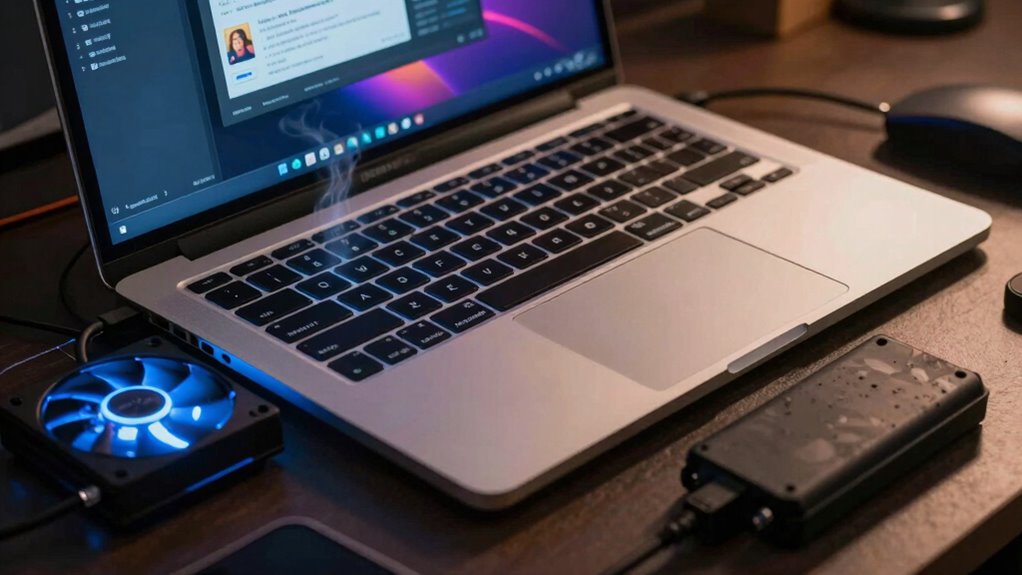
Cooling systems and battery health play a crucial role in your laptop’s AI performance, often acting as hidden bottlenecks. If your cooling efficiency drops, your processor can overheat, leading to thermal throttling that slows down AI computations. Similarly, poor battery health reduces overall battery longevity, causing your laptop to limit performance to conserve power. When your device struggles with heat dissipation, it automatically reduces processing speeds to prevent damage, which hampers AI session speed. A degraded battery forces the system to operate under power constraints, limiting resource availability. Both factors can make your AI tasks feel sluggish or frustrating, especially during intensive sessions. Maintaining hardware health through regular cleaning and updates helps ensure your laptop can handle AI workloads smoothly. Regularly monitoring hardware health ensures you catch potential issues before they impact AI performance. Additionally, using performance optimization tools can help identify and mitigate hardware bottlenecks that affect AI responsiveness, such as thermal management systems or battery calibration. Recognizing the importance of hardware durability can further prevent unexpected slowdowns during critical AI tasks.
Choosing the Right Laptop Hardware for AI on a Budget
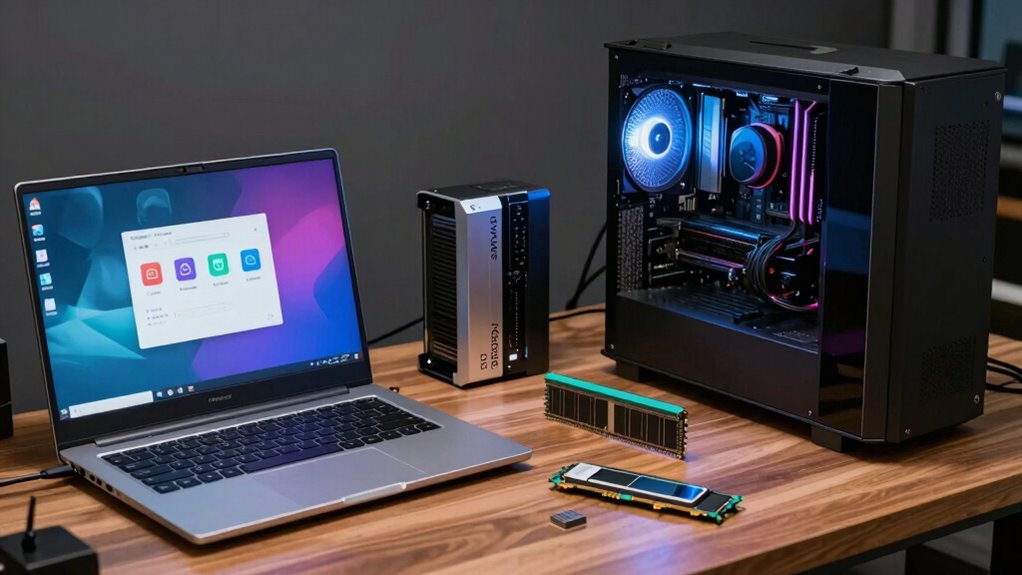
If your laptop’s cooling system and battery health are holding back performance, it’s worth considering hardware options that deliver good value without breaking the bank. For AI tasks on a budget, focus on components that balance cost with performance, while respecting AI ethics and data privacy. A well-chosen laptop can also benefit from best makeup products for women over 50, ensuring comfort during long work sessions. Here are three key tips:
- Prioritize a decent mid-range CPU, like AMD Ryzen or Intel i5/i7, for reliable processing.
- Look for at least 8GB RAM, or upgrade to 16GB if possible, to handle larger datasets smoothly.
- Choose a device with a dedicated GPU (e.g., NVIDIA GTX or RTX), essential for faster AI training and inference.
Additionally, considering hardware specifications for AI can help you make more informed choices that optimize your AI workflows. These choices help you optimize AI performance without overspending, while maintaining data privacy and ethical considerations.
Fixing Slow AI: Hardware Checks and Upgrades
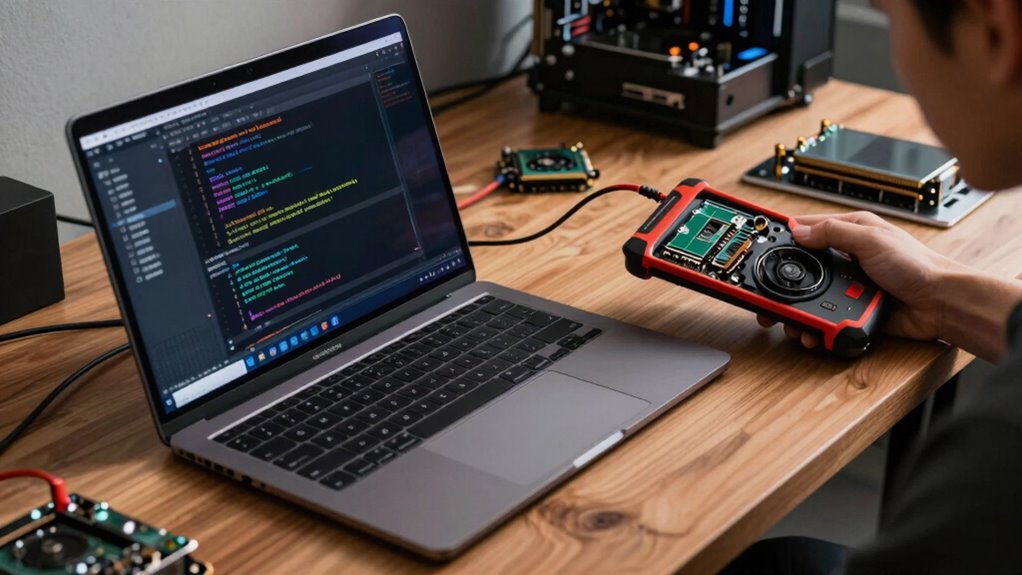
Slow AI performance often signals that your hardware may need a checkup or upgrade. First, verify your hardware supports AI model compatibility—older GPUs or insufficient RAM can bottleneck processing. Next, optimize your software by updating drivers and tweaking settings for better performance. Consider upgrading your GPU, adding more RAM, or switching to a faster SSD for smoother operation. These hardware enhancements boost AI model compatibility and improve software optimization, reducing lag. Additionally, integrating smart home technology can help streamline device interactions and improve overall efficiency. Here’s a quick guide:
| Check | Solution | Impact |
|---|---|---|
| GPU compatibility | Upgrade GPU for AI tasks | Faster processing |
| RAM capacity | Add more RAM | Handle larger models better |
| Storage speed | Switch to SSD | Faster data access |
| Software updates | Keep drivers and software current | Improved stability and speed |
Frequently Asked Questions
Can Software Optimizations Improve AI Processing Speed on Your Laptop?
Yes, software optimizations can improve AI processing speed on your laptop. By optimizing algorithms and code, you can make better use of your hardware compatibility, leading to faster performance. While cloud-based solutions sometimes offload heavy tasks, efficient local software guarantees your laptop processes AI workloads more smoothly. Keep your software updated and tailored to your hardware to maximize speed and reduce frustration, regardless of your laptop’s specs.
How Does Laptop Weight Impact Cooling and AI Performance?
Your laptop weight directly impacts cooling efficiency, which in turn affects AI performance. Lighter laptops often have limited space for robust cooling systems, risking overheating during intensive AI tasks. Heavier laptops usually feature better cooling solutions, maintaining ideal performance for demanding AI workloads. So, if you want consistent AI speed, prioritize a laptop with good cooling design, even if it means choosing a heavier device.
Are Integrated Graphics Sufficient for Local AI Tasks?
Think of integrated graphics as the engine in a compact car—great for everyday drives but limited for high-speed racing. For local AI tasks, integrated graphics often aren’t enough, especially for complex models or large datasets. They can handle simple AI jobs but struggle with demanding processing. If you want smoother, faster AI performance, consider a laptop with dedicated graphics or more powerful hardware, because integrated graphics aren’t always AI’s best friend.
What Role Does Thermal Paste Play in Maintaining AI Performance?
Thermal paste plays a vital role in maintaining AI performance by improving thermal conductivity between your CPU or GPU and the heatsink. Proper paste application guarantees efficient heat transfer, preventing overheating during intensive AI tasks. If you apply the paste unevenly or use low-quality paste, it hampers thermal conductivity, leading to higher temperatures and potential performance throttling. Keep the paste well-applied for peak AI processing and system stability.
How Does Battery Age Affect AI Processing Capabilities?
Battery age considerably impacts your AI processing capabilities because battery degradation reduces overall power efficiency. As your battery ages, it can’t supply consistent power, causing your laptop to throttle performance to conserve energy. This slowdown hampers AI tasks, making processes feel slower or less reliable. To maintain ideal AI performance, keep an eye on your battery’s health and consider replacing it when degradation starts to affect your laptop’s power efficiency.
Conclusion
Ultimately, your laptop’s hardware can make or break your AI experience, and sometimes, it’s a matter of timing—like discovering that a simple upgrade or tweak can turn frustration into speed. As technology advances, what once seemed essential becomes commonplace, revealing that the right hardware choices often align with your needs just when you least expect it. Keep an eye on your system, and you might find that what feels frustrating today becomes the smooth, effortless AI journey of tomorrow.