
If you mainly want to secure and manage your Bitcoin easily, a Bitcoin-only wallet is the better choice because it offers streamlined security and simplicity. But if you prefer flexibility to hold multiple cryptocurrencies or plan to diversify your assets, a multi-coin wallet suits you better, offering broader management options. The right pick depends on whether your focus is on security and simplicity or versatility. Explore further to find the best fit for your crypto goals.
Key Takeaways
- Choose a Bitcoin-only wallet if you prioritize specialized security, simplicity, and dedicated Bitcoin management.
- Opt for a multi-coin wallet if you want diversification and the ability to manage various cryptocurrencies within one platform.
- Consider your trading activity; active traders may prefer multi-coin wallets with integrated exchange features.
- Assess your security needs; Bitcoin-only wallets often offer streamlined, high-security options tailored for Bitcoin.
- Decide based on your investment strategy: focused Bitcoin holding or broader crypto portfolio management.
What Are the Key Differences Between Bitcoin-Only and Multi-Coin Wallets?
When deciding between a Bitcoin-only wallet and a multi-coin wallet, understanding their key differences is essential. A Bitcoin-only wallet focuses solely on Bitcoin, which simplifies coin management and enhances security by reducing attack surfaces. In contrast, a multi-coin wallet supports various cryptocurrencies, offering coin diversification that lets you hold and manage multiple assets in one place. This makes it more convenient if you’re interested in diversifying your portfolio. Additionally, multi-coin wallets often include usability enhancements, such as integrated exchanges or multi-asset tracking, making your experience smoother. While Bitcoin-only wallets excel in specialized security and simplicity, multi-coin options provide greater flexibility and convenience for managing different cryptocurrencies. Your choice depends on whether you prioritize coin diversification or streamlined usability. Understanding project features can help you choose the wallet that best fits your needs.
What Are Your Main Goals: Security, Convenience, or Flexibility?

Your main goals should guide your choice of wallet because each type offers different strengths. If security is your priority, look for wallets with strong backup options, like seed phrases or hardware options, and consider how easily you can access your funds across devices. For example, understanding drone bees and hive health can provide insight into the importance of maintaining a secure environment, similar to how secure wallets protect your assets. For convenience, cross-platform compatibility matters—choose wallets that sync seamlessly across your devices, making transactions quick and simple. Flexibility involves balancing these factors; multi-coin wallets often provide broader access and backup options, while Bitcoin-only wallets might offer streamlined security features. Think about whether you prefer a wallet that performs well on multiple platforms or one optimized for a specific use case. Your goals will determine whether a multi-coin or Bitcoin-only wallet suits your needs best. Additionally, understanding the types of wallets available can help you make a more informed decision. Exploring different wallet features can further clarify which option aligns with your priorities. For example, knowing about Gold IRA markets can be useful if you’re considering alternative investment options alongside your digital assets.
How Do Security Features Differ in Wallet Types?
You need to understand how security protocols, private key storage methods, and multi-factor authentication options vary between wallet types. Different wallets employ distinct measures to protect your funds, affecting how secure your assets are. Knowing these differences helps you choose a wallet that matches your security needs. Additionally, being aware of cybersecurity tactics such as side-channel attacks and dark web vulnerabilities can further inform your security choices. It’s also important to consider how cookie categories are managed within wallet platforms, as they can influence your privacy and security during online interactions. Understanding the security features specific to each wallet type can help you mitigate potential risks and strengthen your overall security posture.
Security Protocols Employed
Security protocols vary considerably between Bitcoin-only and multi-coin wallets, shaping how well each safeguards your assets. Bitcoin-only wallets often prioritize hardware encryption and biometric security to guard your private keys. Multi-coin wallets may incorporate these features but often add extra layers to accommodate diverse assets. For example, hardware encryption ensures your private keys are stored securely, while biometric security provides quick access with fingerprint or face recognition. Additionally, requirements traceability helps developers ensure that security features meet compliance standards. Here’s a comparison:
| Feature | Bitcoin-Only Wallets | Multi-Coin Wallets |
|---|---|---|
| Hardware encryption | Common | Often included |
| Biometric security | Frequently used | Usually available |
| Asset support | Limited to Bitcoin | Multiple cryptocurrencies |
Private Key Storage Methods
Private key storage methods are central to how wallets protect your digital assets, with different approaches offering varying levels of security. Hardware wallets use hardware encryption to keep private keys offline, preventing online hacking attempts. These devices often include secure elements designed to resist tampering, making them highly resistant to theft. Software wallets, on the other hand, typically store keys on your device, relying on encryption and secure backup procedures to safeguard your assets. Regular backups are vital, especially for wallets that depend on seed phrases or private key files; they guarantee you can recover your funds if your device is lost or damaged. The choice of storage method directly impacts your security; hardware encryption provides robust protection, but good backup procedures are indispensable regardless of the wallet type. Additionally, understanding the security features of each wallet type helps you make informed decisions about safeguarding your digital assets. Ensuring you understand the private key management techniques used can further enhance your overall security strategy. Being aware of the different storage methods can help you choose the most appropriate solution for your needs. Recognizing how spirituality and success relate to your mindset can also influence your approach to digital security and confidence in your choices.
Multi-Factor Authentication Options
Multi-factor authentication (MFA) adds an extra layer of security by requiring multiple verification methods before accessing a wallet. In multi-coin wallets, MFA options often include biometric authentication, such as fingerprint or face recognition, providing quick yet secure access. Wallets also support backup recovery methods, ensuring you can regain access if your primary device is lost or compromised. The security features differ between wallet types; Bitcoin-only wallets may rely more on hardware security modules, while multi-coin wallets often integrate diverse MFA options. Additionally, cookie categories and user consent management are vital for maintaining user privacy and secure browsing experiences.
Which Wallets Are Best for Beginners?
As a beginner, you’ll want a wallet with an easy-to-navigate interface and simple setup. Security features are vital, so look for options that offer basic protections without overwhelming you. Accessibility and customer support also matter, ensuring you can get help when you need it. Additionally, choosing a wallet that supports solar-powered security solutions can enhance your safety by leveraging eco-friendly and reliable security technology. Incorporating data storage/backup gear like optical drives or enterprise USB backups can also provide extra layers of security for your private keys and transaction records. Being aware of urban traffic challenges can help you select a wallet that works well in various environments, just as cyclists choose gear suited for different city conditions. Understanding the horsepower of electric dirt bikes can be an analogy for evaluating a wallet’s processing speed and efficiency, ensuring your transactions are handled swiftly and reliably. Ensuring your wallet complies with privacy policies and respects user consent can further safeguard your data in this digital landscape.
User-Friendly Interface Design
Choosing a wallet with a user-friendly interface is essential if you’re new to cryptocurrency. A clean, intuitive design enhances your user experience and makes managing your assets less overwhelming. Look for wallets with clear navigation, simple transaction processes, and minimal clutter to improve visual clarity.
Key features to contemplate include:
- Easy-to-understand menus and labels
- Clear transaction history and balances
- Simple backup and recovery options
- Minimal steps for sending and receiving funds
- Responsive design for mobile and desktop use
Prioritizing these elements helps you focus on your goals without confusion or frustration. A well-designed interface boosts confidence, making your entry into crypto smoother and more enjoyable.
Security Features Importance
Security features are vital when selecting a beginner-friendly wallet because they protect your assets from theft and scams. Look for wallets with hardware integration, which adds an extra layer of security by isolating private keys from internet threats. This helps prevent hacking attempts and unauthorized access. Additionally, strong backup strategies are essential; choose wallets that enable easy backup and recovery options, such as seed phrases or encrypted backups. These features guarantee you can restore your wallet if your device is lost or damaged. Incorporating security features similar to those found in smart locks and office gear can further enhance your wallet’s safety. Regularly updating your security measures and staying informed about potential vulnerabilities is also crucial; many best practices recommend reviewing your security setup periodically to adapt to new threats. Prioritizing security features like hardware integration and reliable backup options gives you peace of mind, especially as a newcomer. The right security measures help you confidently manage your Bitcoin and other cryptocurrencies without unnecessary worry.
Accessibility and Support
When selecting a beginner-friendly wallet, accessibility and support play essential roles in ensuring a smooth experience. A user interface that’s simple and intuitive helps you navigate your funds easily, reducing confusion. Reliable customer support is vital if you encounter issues or have questions, especially when you’re just starting. Look for wallets offering clear documentation, tutorials, and responsive help channels. Additionally, consider wallets with multi-platform access—mobile, desktop, or web—to fit your lifestyle. Some wallets also provide in-app educational resources to enhance your understanding. Ensuring these features will make managing your cryptocurrencies more straightforward and less intimidating, building confidence as you grow your portfolio. Incorporating user-friendly design can significantly improve your overall experience. Ultimately, a wallet with strong support and an accessible user interface makes your crypto journey more enjoyable and less frustrating.
Can Your Wallet Handle All the Cryptocurrencies You Use?
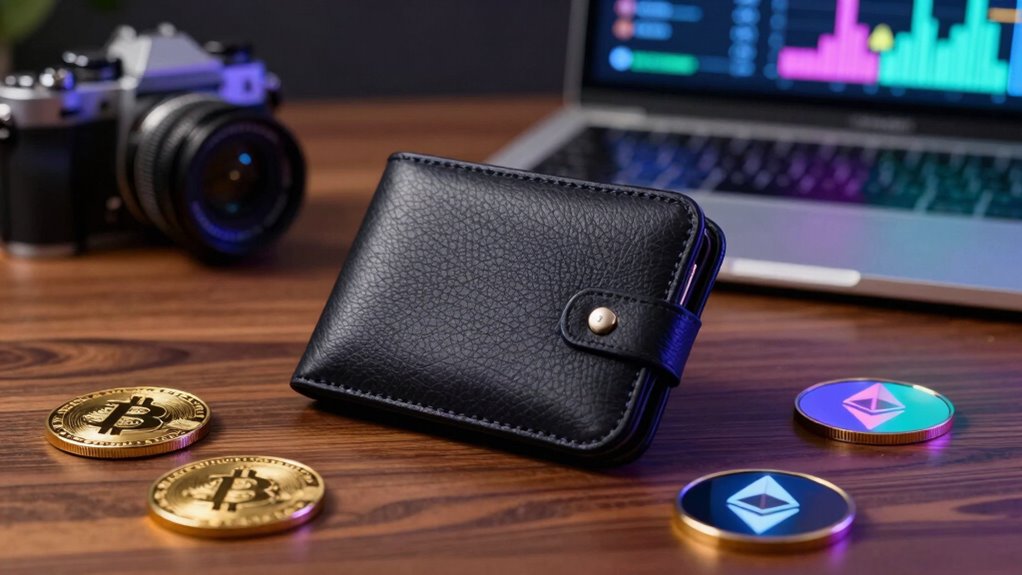
Not all wallets are created equal when it comes to supporting a diverse range of cryptocurrencies. If you use multiple types of digital assets, you need a wallet with strong cryptocurrency compatibility. Some wallets only support Bitcoin, while others offer multi-coin support. Wallet customization also plays a role—look for options that let you add or manage different cryptocurrencies easily. This way, you can store your altcoins, tokens, or newer digital assets without switching wallets constantly. Make sure the wallet’s software or hardware supports the specific coins you use regularly. Without proper cryptocurrency compatibility, you risk losing access or having to manage multiple wallets. Choosing a wallet that adapts to your needs simplifies your crypto management and reduces hassle. Additionally, understanding the diverse uses of cryptocurrencies can help you select a wallet capable of supporting your various digital assets effectively. When selecting a wallet, consider whether it offers extensive coin support to accommodate your entire portfolio.
How Do Costs and Fees Compare for Different Wallets?

Cost and fees can considerably influence your choice of wallet, especially if you frequently transact or hold large amounts of cryptocurrency. Wallets differ in their fee structures and transaction speed, impacting how much you pay and how quickly your transactions confirm.
- Some wallets charge flat fees, making costs predictable.
- Others use dynamic fee structures based on network congestion.
- Hardware wallets typically incur minimal ongoing fees but may have initial costs.
- Software wallets often offer faster transaction speeds but can include higher fees during busy periods.
- Multi-coin wallets might have varying fee models depending on supported coins.
Understanding these differences helps you choose a wallet that balances cost efficiency with transaction speed, aligning with your trading habits.
What Are the Risks and Limitations of Each Wallet Type?

Each wallet type comes with its own set of risks and limitations that can impact your security and usability. Bitcoin-only wallets often prioritize privacy, but they may have fewer features for regulatory compliance, making them less suitable if you need to adhere to specific laws. Multi-coin wallets, while offering convenience, can introduce privacy concerns since handling multiple assets might require sharing more personal data or exposing transaction details. Both types are vulnerable to hacking if not properly secured, and custodial wallets carry additional risks if the service faces regulatory issues or insolvency. Ultimately, your choice depends on balancing privacy, regulatory needs, and the level of control you want over your assets. Understanding these limitations helps you make smarter decisions for your crypto security.
Which Wallets Suit Different Investment Strategies?
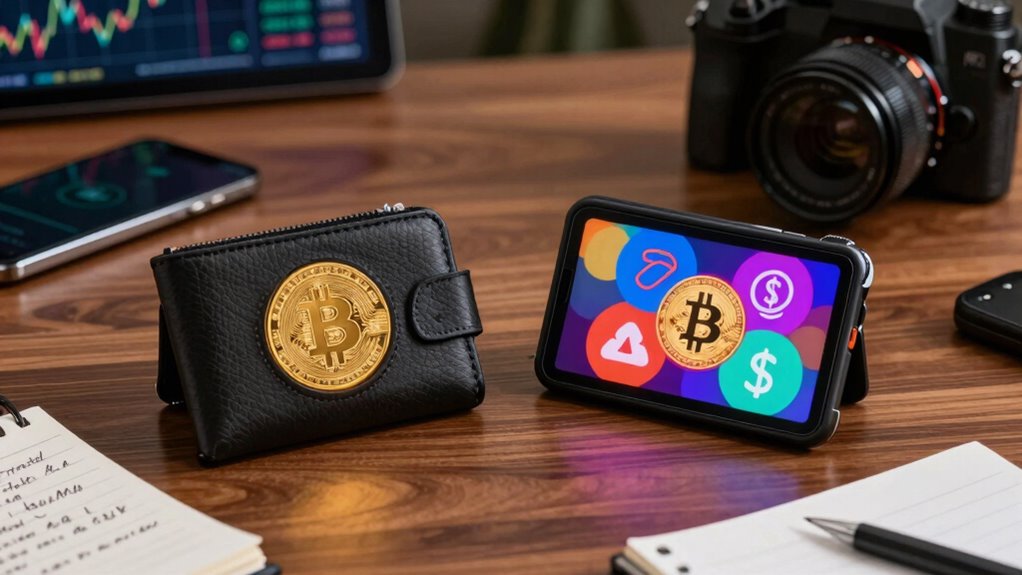
Choosing the right wallet depends heavily on your investment approach and goals. If you prioritize security and focus solely on Bitcoin, a Bitcoin-only wallet offers simplicity and specialized features. Conversely, if you seek investment diversification and hold multiple cryptocurrencies, a multi-coin wallet provides convenience and flexibility. Your strategy influences whether you prefer hardware wallets for long-term holdings or software wallets for frequent trading. Consider the following factors:
Choose a wallet aligned with your goals for security, diversification, and trading frequency.
- Wallet diversification to match your portfolio spread
- Security features aligned with your risk tolerance
- Ease of managing multiple assets
- Compatibility with your preferred cryptocurrencies
- Long-term versus active trading needs
Matching your wallet type to your investment strategy ensures you maximize security, accessibility, and diversification benefits.
How to Choose the Right Wallet for Your Needs?
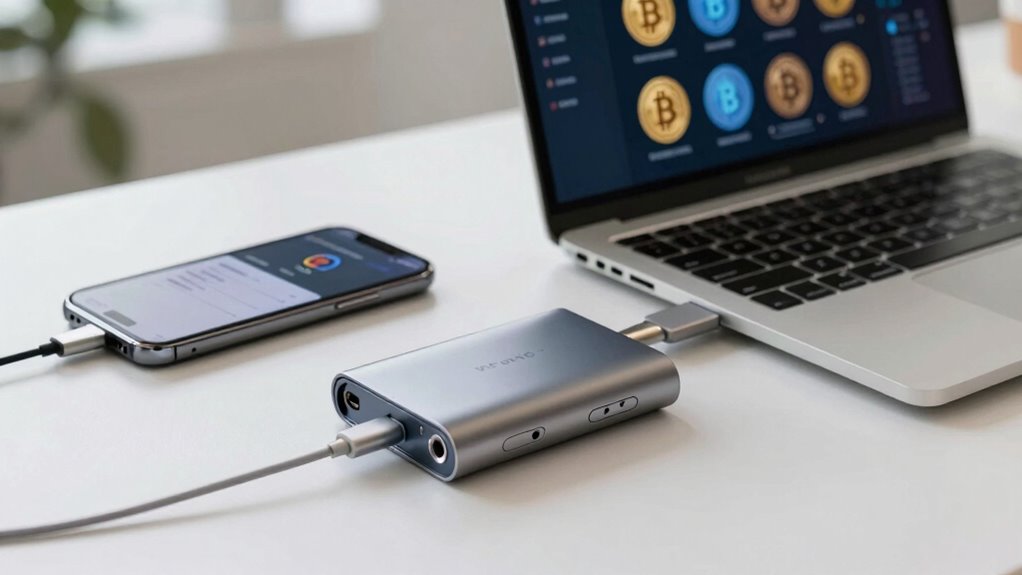
Wondering how to pick the right wallet for your needs? Start by considering wallet customization options—do you want a simple setup or one with advanced features? Think about security and ease of use, balancing convenience with protection. If you’re new to crypto, reliable customer support can make a big difference, helping troubleshoot issues or guide setup. Multi-coin wallets offer versatility if you hold various cryptocurrencies, while Bitcoin-only wallets focus on security and simplicity for Bitcoin investors. Assess your investment strategy and transaction habits to match your wallet choice. A well-chosen wallet aligns with your technical comfort level, security needs, and future plans. By evaluating these factors, you’ll find a wallet that fits your specific needs and provides peace of mind.
Frequently Asked Questions
Can a Wallet Support Future Cryptocurrency Additions?
Yes, your wallet can support future cryptocurrency additions if it offers wallet scalability. When choosing a wallet, consider its ability to handle cryptocurrency diversification, allowing you to add new coins easily. A scalable wallet guarantees you won’t need to switch later, saving time and hassle. This flexibility is essential as the crypto landscape evolves, helping you stay adaptable and manage a growing portfolio efficiently.
Are Multi-Coin Wallets More Vulnerable to Hacking?
Multi-coin wallets are like busy beehives, more vulnerable to hacking because they hold multiple assets, increasing attack surface. You face higher phishing risks and depend on custodial security, which can vary widely. While they offer convenience, their complexity may attract cybercriminals more. So, if security is your top priority, you might prefer a single-asset wallet, reducing exposure and making safeguarding your funds easier.
How Often Should I Update My Wallet Software?
You should update your wallet software as soon as updates are available, ideally immediately, to stay protected against vulnerabilities. Regular updates improve the user interface, making it easier for you to navigate, and often include security enhancements. Additionally, check if the wallet provider offers responsive customer support in case you encounter issues post-update. Staying current guarantees your wallet remains secure, functional, and user-friendly.
Do Wallet Types Differ in Recovery Options?
Just like a treasure map, wallet types differ in recovery options. Some rely solely on a seed phrase for backup security, making it simple to restore your funds if needed. Others may offer additional options like encrypted backups or cloud storage. Always confirm your recovery method is robust and secure, so you can confidently retrieve your wallet’s contents, even if the unexpected happens. Your seed phrase is your ultimate lifeline.
Is There a Compatibility Issue With Hardware Wallets?
There can be compatibility issues with hardware wallets, especially if your device isn’t supported by certain wallet software, which can pose security risks or limit user convenience. Before choosing a hardware wallet, confirm it works with your preferred apps and coins. Compatibility matters because it affects how easily you can manage your assets while maintaining security. Always verify device support to avoid unnecessary risks and improve your overall user experience.
Conclusion
Choosing between a Bitcoin-only or multi-coin wallet is like steering through a labyrinth; your goals and risk tolerance act as your guiding thread. Whether you seek the simplicity of the Minotaur’s maze or the versatility of Daedalus’s thread, understanding each wallet’s strengths helps you craft your path. Ultimately, your choice reflects your own Theseus—balancing security, convenience, and flexibility—so you can confidently chart your course through the ever-evolving world of crypto.