Blockchain can greatly benefit public services by making government processes more secure, transparent, and efficient. It creates tamper-proof digital identities, safeguards voting systems, and reduces bureaucratic delays. With blockchain, you gain more control over your data and enjoy faster, more reliable services like healthcare, tax, and licensing. Although challenges exist, such as scalability, the potential for improved trust and effectiveness is significant—exploring further reveals how these benefits can transform your interactions with government.
Key Takeaways
- Blockchain enhances security and transparency in public service transactions, reducing fraud and increasing trust.
- It streamlines administrative processes, lowering costs and improving efficiency for government agencies.
- Digital identity management on blockchain empowers citizens with control over personal data and improves service access.
- Immutable voting records increase election integrity, transparency, and public confidence in electoral processes.
- Distributed ledgers secure sensitive government data, reducing breaches and ensuring data integrity across services.
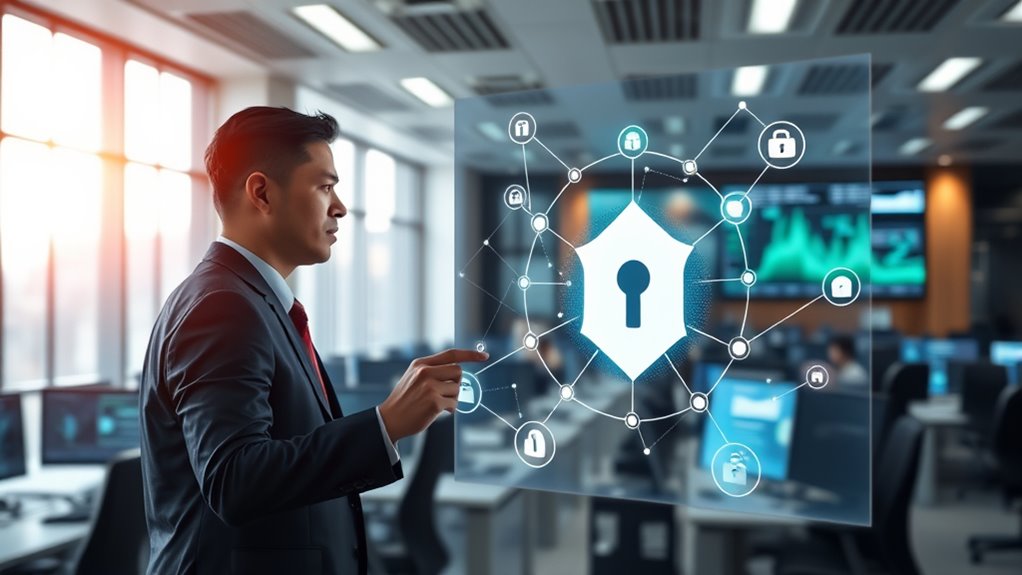
Have you ever wondered how blockchain technology could transform government operations? Imagine a world where your digital identity is secure, easily verifiable, and under your control. Blockchain enables this by creating a decentralized and tamper-proof digital identity system. Instead of relying on traditional, often vulnerable databases, your personal information is stored across a network of nodes, making it nearly impossible for hackers to compromise. This means you can confidently share your digital identity with government agencies, knowing your data remains secure and private. Such a system streamlines processes like renewing driver’s licenses, applying for social services, or voting, all while reducing bureaucratic delays and errors. This technology also enhances voting security, a critical aspect of democratic processes. By leveraging blockchain, voting becomes more transparent and trustworthy. Every vote is recorded as an immutable transaction, ensuring it cannot be altered or erased once cast. Voters can verify that their vote was counted accurately, reducing concerns about election fraud or manipulation. Because the entire process is transparent and auditable, blockchain can rebuild public trust in electoral systems. It also simplifies voter registration, allowing citizens to securely update their details without fear of identity theft or data breaches. The decentralized nature of blockchain means that no single entity controls the voting data, making it resistant to hacking attempts or tampering. As a result, election results become more reliable, and citizens gain confidence that their voices are genuinely counted. Implementing blockchain for digital identity and voting security can also cut down on administrative costs and paperwork. Transactions are processed faster, with fewer intermediaries involved, which means government agencies save time and resources. Plus, with a transparent ledger, oversight becomes easier, helping prevent corruption and fraud. For citizens, this translates into smoother, more efficient interactions with government services. Imagine being able to access healthcare records, tax information, or voting history securely from your device without cumbersome paperwork or repeated identity checks. While challenges like scalability and regulatory hurdles exist, the potential benefits of blockchain—such as increased security, transparency, and efficiency—are compelling reasons for governments to explore this technology further. Additionally, state-specific benefits can be integrated into blockchain systems to enhance service delivery and tailor solutions to local needs. Overall, blockchain has the power to make government operations more trustworthy and user-centric, ultimately strengthening civic engagement and public confidence in institutions.

Self-Sovereign Identity: Decentralized digital identity and verifiable credentials
As an affiliate, we earn on qualifying purchases.
As an affiliate, we earn on qualifying purchases.
Frequently Asked Questions
How Does Blockchain Improve Government Transparency?
Blockchain improves government transparency by making records like land registry and digital identity tamper-proof and accessible. You can verify transactions instantly, reducing fraud and corruption. It ensures data integrity, so everyone trusts the information shared. With transparent, decentralized ledgers, you gain clear insights into government actions, making processes more accountable. This technology fosters trust and openness, demonstrating how public services become more transparent and reliable through blockchain.
What Are the Privacy Concerns With Blockchain in Public Services?
You might worry that blockchain compromises data privacy since transactions are often transparent. While it enhances data security through cryptography, it raises concerns about sensitive information exposure. You need to make certain proper access controls and encryption are in place to protect personal data. Balancing transparency with privacy is vital, so implementing privacy-preserving techniques helps prevent unauthorized data access while maintaining blockchain’s benefits.
How Cost-Effective Is Blockchain Implementation for Governments?
Blockchain implementation can be cost-effective for governments if you conduct a thorough cost analysis upfront. While initial setup and adoption barriers might seem high, long-term savings from increased efficiency, reduced fraud, and streamlined processes often outweigh these costs. You need to weigh these factors carefully, considering technical challenges and training needs, to determine if blockchain’s benefits justify the investment for your public services.
What Legal Challenges Exist for Blockchain Adoption?
You face legal challenges like regulatory hurdles and guaranteeing legal compliance when adopting blockchain. Governments must navigate evolving laws that may not yet fully address blockchain technology, creating uncertainty. You need to work closely with legal experts to develop frameworks that meet existing regulations while accommodating innovation. Staying informed about legal updates and engaging with regulators helps you reduce risks and ensure your blockchain initiatives remain compliant and legally sound.
How Can Blockchain Enhance Citizen Trust in Government?
You can build citizen trust by using blockchain to enhance digital identity verification and data security. When government services leverage blockchain, citizens see transparent, tamper-proof records that protect their personal information. This technology guarantees data integrity and reduces fraud, fostering confidence in government operations. By implementing blockchain solutions, you show a commitment to secure, reliable public services, ultimately strengthening trust and encouraging more active civic engagement.

DEVELOP A BLOCKCHAIN VOTING SYSTEM WITH SOLIDITY: for transparent elections
As an affiliate, we earn on qualifying purchases.
As an affiliate, we earn on qualifying purchases.
Conclusion
Imagine the potential if governments fully embrace blockchain technology—you might see more transparent, efficient public services than ever before. But what if the true power lies just beyond our current reach? As innovation accelerates, the question remains: are we prepared to unleash the real possibilities blockchain can offer to transform governance? The future is uncertain, but one thing’s certain—you won’t want to miss what happens next in this revolutionary journey.

Government Is Not The Solution Government Is The Problem T-Shirt
- Humorous and Sarcastic Design: Great conversation starter for any occasion
- Versatile Gift Idea: Perfect for birthdays, holidays, and celebrations
- Comfortable Fit: Lightweight, classic fit with durable double-needle hems
As an affiliate, we earn on qualifying purchases.
As an affiliate, we earn on qualifying purchases.

Keyscan K-SECURE 1K MIFARE I1 Contactless Secure Smart Card QTY 50
- Product Name: Keyscan K-SECURE 1K MIFARE Card
As an affiliate, we earn on qualifying purchases.
As an affiliate, we earn on qualifying purchases.