AI in education personalizes learning by adapting to your strengths and weaknesses, creating tailored experiences that make studying more relevant and engaging. It adjusts assessments in real-time, offering just the right level of challenge to keep you motivated without frustration. Through interactive tools and instant feedback, AI helps you stay involved and confident. If you want to see how these innovations can transform your learning journey, there’s more to explore ahead.

Get hardware and tech essentials delivered free with Prime
- Fast, free delivery on millions of items
- Prime Video, Amazon Music and more included
- Member-only deals all year
Key Takeaways
- AI customizes learning experiences by adapting content and assessments to individual student strengths and weaknesses.
- Adaptive assessments adjust question difficulty in real-time, providing accurate progress evaluation.
- AI increases student engagement through personalized content, gamification, and instant feedback.
- It ensures data privacy while collecting performance data to inform tailored lesson plans.
- AI helps learners build confidence and understanding by aligning challenges with their skill levels.
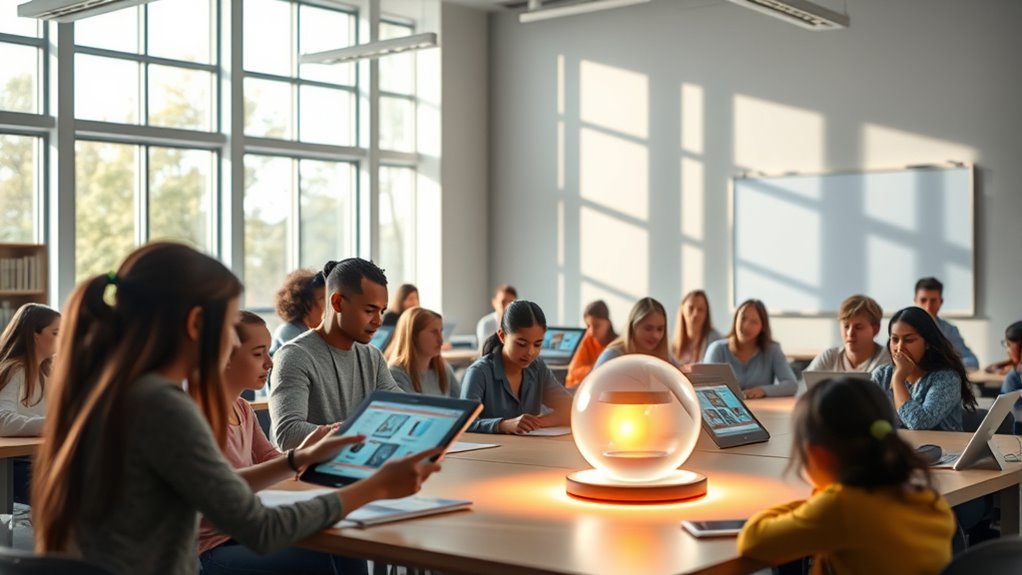
Have you ever wondered how artificial intelligence is transforming the way we learn? One of the most exciting developments is how AI is personalizing education to meet individual needs. Instead of a one-size-fits-all approach, AI-powered tools adapt to your specific strengths and weaknesses, creating a tailored learning experience. Adaptive assessments are at the heart of this transformation. Unlike traditional tests, which often measure a fixed set of skills and provide static results, adaptive assessments adjust in real-time based on your responses. If you answer a question correctly, the system presents a slightly more challenging one; if you stumble, it offers easier questions to help you build confidence. This dynamic approach guarantees that assessments are more accurate and relevant, giving you a clearer picture of your progress without the frustration of being tested on material that’s either too easy or too difficult.
AI personalizes learning with adaptive assessments that adjust in real-time, making education more relevant and effective.
As a result, student engagement skyrockets. When assessments are personalized, you’re more likely to stay interested and motivated because the content feels relevant and appropriately challenging. Instead of feeling overwhelmed or bored, you’re actively involved in your learning process. This heightened engagement encourages you to spend more time exploring concepts, asking questions, and mastering skills. AI-driven platforms also use gamification, instant feedback, and interactive exercises to maintain your enthusiasm. These features make learning feel less like a chore and more like an engaging activity tailored to your pace. Additionally, the integration of data privacy considerations ensures that your personal information remains secure as these systems collect and analyze your performance data.
Moreover, adaptive assessments enable educators to monitor your progress more effectively. Teachers receive detailed data on how you’re performing in real-time, allowing them to identify areas where you need extra support. This immediate insight helps in customizing lesson plans and interventions, making your learning journey more efficient. It also fosters a sense of ownership over your education because you see firsthand how your efforts translate into progress.
In essence, AI’s role in personalizing education through adaptive assessments isn’t just about smarter testing; it’s about creating an environment where your unique learning style is recognized and nurtured. As you move through lessons that adapt to your evolving needs, your engagement level remains high, and your confidence grows. This personalized approach helps you develop a deeper understanding of the material, making learning more effective and enjoyable. With AI continuously refining its strategies based on your responses, you’re empowered to take control of your education, unlock your full potential in ways traditional methods can’t match.
AI-powered adaptive learning platform
As an affiliate, we earn on qualifying purchases.
As an affiliate, we earn on qualifying purchases.
Frequently Asked Questions
How Does AI Adapt to Different Learning Styles?
AI adapts to your different learning styles by analyzing your interactions and performance. It provides adaptive feedback tailored to how you learn best, whether visually, verbally, or through hands-on activities. AI also offers personalized assessments that identify your strengths and weaknesses. This targeted approach helps you stay engaged and progress efficiently, ensuring that your unique learning preferences are met, making education more effective and enjoyable for you.
What Are the Privacy Concerns With AI in Classrooms?
You might feel like you’re under a microscope when it comes to AI in classrooms. Privacy concerns revolve around student data and surveillance, raising fears that personal info could be misused or leaked. As AI gathers insights to personalize learning, you need to be cautious about how your data is collected, stored, and shared. Protecting student privacy should be a top priority to prevent misuse and maintain trust.
Can AI Replace Human Teachers Entirely?
You can’t expect AI to replace human teachers entirely because students need real-world connection, empathy, and motivation that only people provide. AI enhances student engagement and helps with curriculum customization, but it lacks the emotional intelligence to truly understand individual needs. Teachers bring creativity, adaptability, and personal support, which are essential for meaningful learning. So, AI serves as a powerful tool, not a complete replacement for human educators.
How Affordable Is Implementing AI in Schools?
They say “you get what you pay for,” but implementing AI in schools is becoming more affordable. You’ll see cost reduction through scalable solutions, making AI more accessible for all students. Accessibility improvements mean more personalized learning opportunities, especially for underserved communities. While initial investments might seem high, ongoing costs tend to decrease over time, making AI a practical tool to enhance education without breaking the bank.
What Skills Do Teachers Need to Work With AI Tools?
You need teacher training and technical proficiency to work effectively with AI tools. Developing these skills helps you understand how to integrate AI into your lessons, troubleshoot issues, and customize learning experiences. Embrace ongoing professional development, stay updated on new AI features, and practice using these tools regularly. By enhancing your technical skills and staying informed, you’ll confidently leverage AI to improve student engagement and learning outcomes.
interactive learning tools for students
As an affiliate, we earn on qualifying purchases.
As an affiliate, we earn on qualifying purchases.
Conclusion
As you explore the future of education, imagine a world where every student’s unique voice is heard, their potential glowing like a beacon in the dark. AI personalizes your learning journey, guiding you through a landscape of endless possibilities. Feel the excitement of discovery, knowing technology is here to nurture your growth, lighting the way. Together, you’re shaping an education system that’s as vibrant and individual as you are—powerful, personal, and full of promise.
personalized education assessment software
As an affiliate, we earn on qualifying purchases.
As an affiliate, we earn on qualifying purchases.
gamified learning apps for students
As an affiliate, we earn on qualifying purchases.
As an affiliate, we earn on qualifying purchases.
Halloween Picks
halloween
As an affiliate, we earn on qualifying purchases.