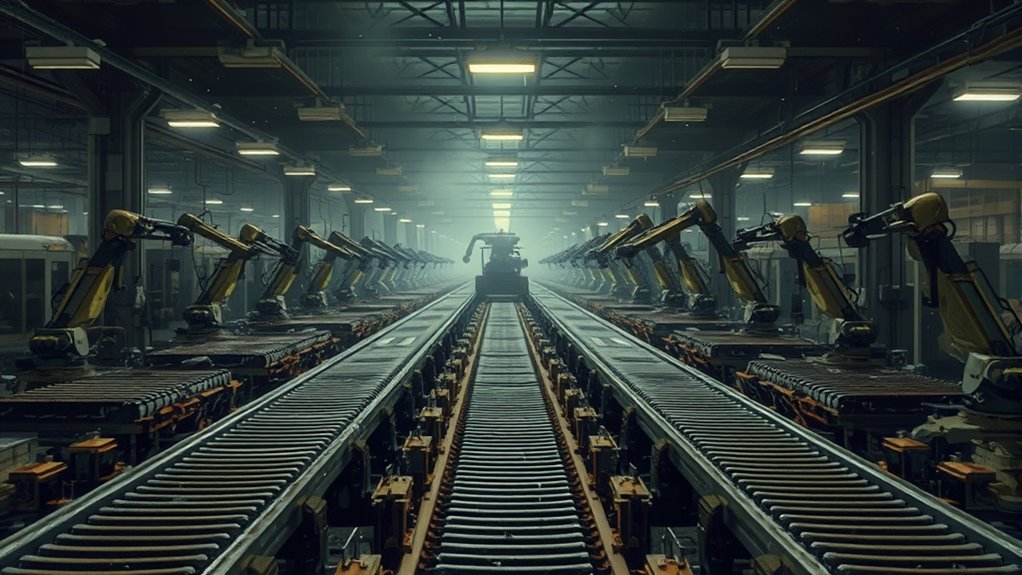

Automation is transforming many industries, most significantly manufacturing, retail, and healthcare, where roles are shifting due to advanced machines and AI systems. You’ll see fewer manual jobs in factories, more digital roles in retail, and improved diagnostics in healthcare. These changes are reshaping work and economic patterns, highlighting the need for retraining and new skills. If you want to understand how these industries are evolving and what it means for workers, keep exploring.

Get hardware and tech essentials delivered free — and shop member deals
- Fast, free delivery on millions of items
- Access to Prime Big Deal Days deals on October 6–7
- Prime Video, Amazon Music and more included
Key Takeaways
- Manufacturing industries experience significant automation, replacing manual labor with robots and AI systems, impacting traditional factory jobs.
- Retail sector sees automation through self-checkout and inventory management, reducing cashier and stock clerk roles.
- Healthcare benefits from AI diagnostics and patient monitoring, requiring staff retraining to work alongside new technologies.
- Administrative functions across industries shift due to digital workflows, affecting clerical and support positions.
- Workforce adaptation involves retraining programs focused on skills like creativity, emotional intelligence, and complex problem-solving.
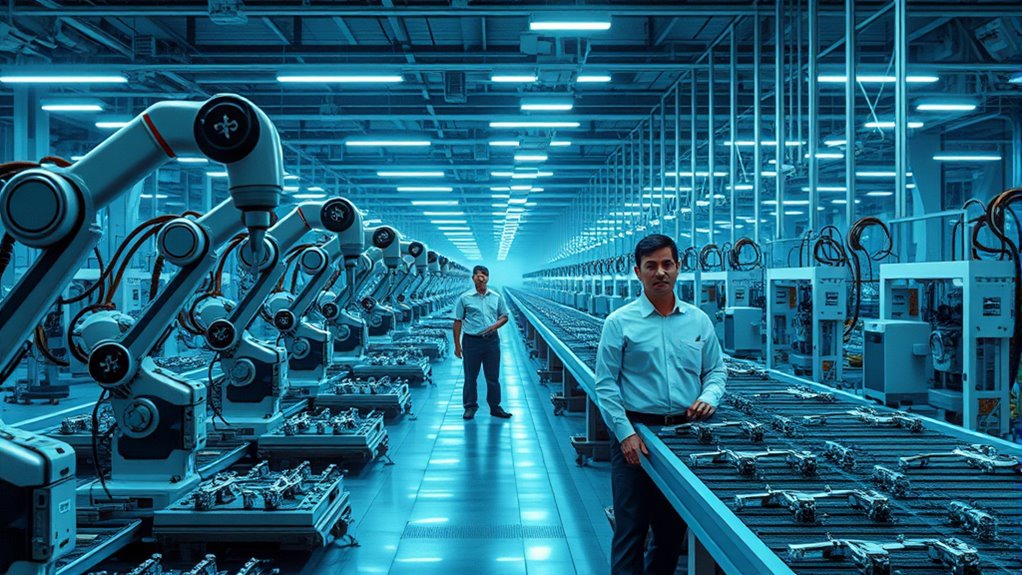
Automation is transforming many industries, changing the way work is done across different sectors. As machines and AI systems become more sophisticated, you’ll notice shifts in job roles and workplace dynamics. One of the key challenges is making certain that AI ethics are prioritized to prevent bias, guarantee transparency, and promote responsible use of technology. When automation replaces manual tasks, questions about fairness and accountability come to the forefront. You might find that organizations are now investing heavily in workforce retraining programs. This isn’t just about updating skills; it’s about helping employees shift into new roles that leverage human strengths like creativity, emotional intelligence, and complex problem-solving. If you’re part of an industry undergoing automation, you’ll need to stay adaptable. Companies are increasingly recognizing that smooth progressions require a proactive approach to workforce retraining, making certain employees aren’t left behind as technology advances.
In manufacturing, automation has revolutionized production lines. Robots now handle repetitive tasks, boosting efficiency but reducing the number of traditional factory jobs. This shift forces you to think about the importance of workforce retraining programs. Workers displaced from assembly lines need new skills to operate, maintain, or oversee automated systems. Meanwhile, AI ethics become relevant in making sure these systems operate fairly and without bias, especially when algorithms are involved in quality control or predictive maintenance. You might also notice that manufacturers are partnering with educational institutions to develop training modules tailored to their specific automation needs, helping workers transition smoothly.
In retail, automation has changed how you shop and how stores operate. Self-checkout kiosks, inventory management systems, and online automation have minimized the need for cashiers and stock clerks. While this increases efficiency, it also raises concerns about job security. To address this, retailers are investing in retraining their staff for roles in customer experience management, digital support, or logistics. AI ethics play a role here too, making certain that algorithms used for personalized recommendations or price adjustments are fair and transparent. If you work in retail, staying informed about these technological shifts and seeking retraining opportunities can help you remain relevant in a rapidly evolving environment.
In healthcare, automation enhances diagnostics, patient monitoring, and administrative tasks. While it streamlines operations and reduces human error, it also prompts you to think about workforce retraining. Medical staff need to learn how to interpret and work alongside AI-driven diagnostics tools, and administrative personnel must adapt to new digital workflows. Making certain AI ethics in this sector involves safeguarding patient data, maintaining transparency about AI decision-making, and preventing biases in healthcare algorithms. If you’re a healthcare professional, embracing continuous learning and understanding how AI integrates into your work is crucial for providing quality care while adapting to technological changes.
Across these industries, automation’s impact is undeniable. The balance between harnessing AI’s potential and maintaining ethical standards requires ongoing effort, especially in workforce retraining. Your ability to adapt, learn new skills, and understand AI ethics will determine how successfully you navigate this post-labor landscape.
Frequently Asked Questions
How Will Automation Impact Job Satisfaction Across Industries?
Automation can boost your job satisfaction by eliminating mundane tasks, allowing you to focus on more engaging work. As a result, your worker morale and job engagement may improve, making your daily experience more fulfilling. However, if automation leads to job insecurity or feels impersonal, it could decrease satisfaction. Overall, when implemented thoughtfully, automation has the potential to enhance your work life rather than diminish it.
What New Skills Will Workers Need in Automated Industries?
Think of automation as a river reshaping the landscape; you’ll need to navigate new currents. You’ll need reskilling initiatives that focus on digital literacy, complex problem-solving, and adaptability to bridge the skill gap. Embracing continuous learning, like picking up data analysis or programming skills, will help you remain relevant. Staying proactive ensures you can ride the waves of change rather than be swept away.
How Can Industries Offset Job Losses Caused by Automation?
To offset job losses caused by automation, you should focus on reskilling initiatives that promote workforce adaptation. Industries can invest in training programs, apprenticeships, and continuous learning opportunities to help workers develop new skills tailored to evolving roles. By supporting lifelong learning and flexible career pathways, you enable your workforce to shift seamlessly, reducing unemployment and ensuring industry resilience amidst technological change.
What Are the Ethical Considerations of Automating Industries?
You might think automation’s just about efficiency, but it raises serious ethical dilemmas and moral responsibilities. You should consider if replacing human workers respects their dignity and livelihoods. Automation can widen inequality if not handled carefully, so you need to weigh the benefits against potential harm. Ultimately, you’re responsible for ensuring that technological progress aligns with societal values, balancing innovation with compassion and fairness.
How Does Automation Influence Global Economic Inequality?
Automation widens global economic inequality by increasing income disparity and wealth concentration. As machines replace low- and middle-skill jobs, you might find yourself facing fewer opportunities and stagnant wages. Meanwhile, those who own the automation technology benefit disproportionately, gaining more wealth. This shift can deepen economic gaps across countries and communities, making it harder for you to access equal economic growth and stability.
Conclusion
As automation gently reshapes industries, it quietly shifts opportunities and workflows, encouraging you to adapt with resilience. While some roles may become less prominent, new pathways bloom in its wake, inviting innovation and growth. Embrace these subtle changes as chances to evolve and refine your skills. In this evolving landscape, your flexibility and openness will guide you through the gentle shift, ensuring you remain essential in a world where progress quietly redefines what’s possible.
Fall Picks
fall essentials
As an affiliate, we earn on qualifying purchases.