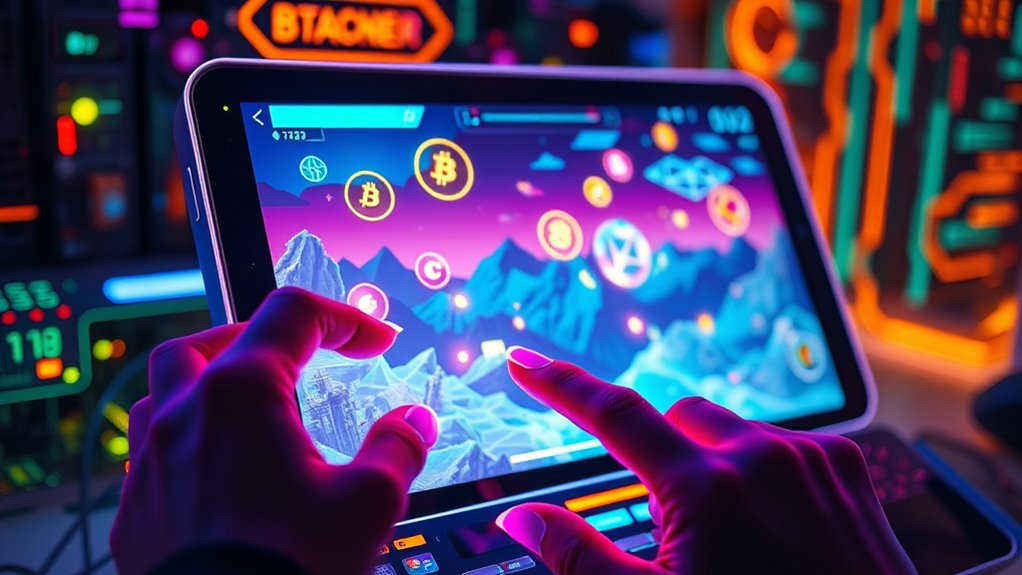

Blockchain is transforming video games by enabling decentralized, transparent, and player-driven ecosystems through dapps. You can own, buy, sell, and trade in-game assets as NFTs, creating real value outside the game. Play-to-earn models reward your skills with cryptocurrency or NFTs, while decentralization guarantees fairness and security. This shift offers exciting new ways to engage and profit from gaming—keep exploring to discover how these innovations shape your gaming experience.
Key Takeaways
- Blockchain enables true ownership and trading of in-game assets as NFTs, creating player-driven economies.
- Dapps facilitate Play to Earn models, rewarding players with cryptocurrency and NFTs for their gameplay.
- Decentralization enhances security, transparency, and fairness by securing assets on immutable ledgers.
- Blockchain integration reduces fraud and censorship, ensuring verifiable asset ownership and community governance.
- Financial features like staking, lending, and borrowing expand gaming into decentralized finance (DeFi) ecosystems.
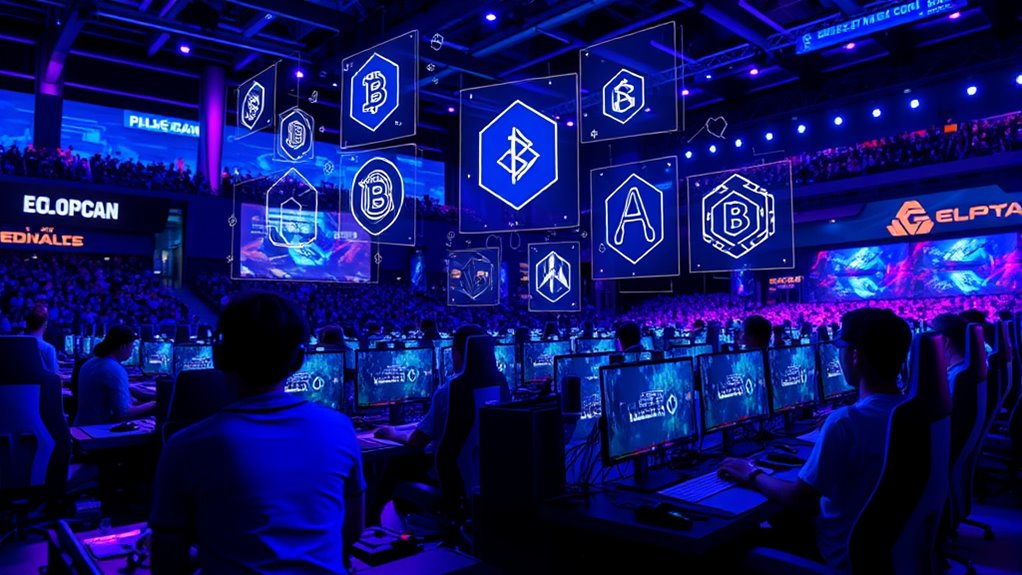
Have you ever wondered how decentralized applications, or Dapps, are transforming the gaming industry? The rise of blockchain technology is changing how players interact with games, offering new opportunities for ownership, monetization, and community engagement. One of the most exciting developments is NFT integration, which allows you to truly own in-game assets like characters, skins, or weapons as non-fungible tokens. Instead of simply playing within the confines of a game developer’s servers, you can buy, sell, or trade these NFTs on various marketplaces, making your in-game possessions valuable outside the game environment. This shift towards true ownership empowers you as a player and creates a more dynamic, player-driven economy.
Alongside NFT integration, Play to Earn models are revolutionizing the way you experience gaming. Instead of spending hours just for entertainment, you can now earn real cryptocurrency or valuable NFTs through gameplay. This model incentivizes you to participate actively, as your time and skills directly translate into tangible rewards. Many blockchain-based games reward players for completing challenges, participating in battles, or contributing to the game’s ecosystem. These rewards can be traded or sold, turning gaming into a potential source of income. Play to Earn models also foster stronger communities, as players are motivated to collaborate, strategize, and grow the game’s economy collectively.
Blockchain’s decentralization means your progress and assets aren’t tied to a single server or company. Instead, your ownership is secured on a transparent, immutable ledger, reducing risks of censorship or loss due to server crashes. This also enhances security, making it harder for malicious actors to manipulate game data or steal assets. Dapps in gaming are also fostering a new level of transparency; developers can’t easily alter game rules or asset values without community consensus, ensuring fair play and trust among players. Incorporating vertical storage solutions can further optimize asset management and improve game performance.
Furthermore, decentralized finance (DeFi) integrations within gaming Dapps are opening up innovative ways to borrow, lend, or stake assets, adding layers of financial interaction to your gaming experience. All these features combined show how blockchain and Dapps are not just improving existing gaming models but creating entirely new ones where your ownership, earnings, and community participation are at the forefront. As this technology continues to evolve, you’ll likely find yourself immersed in games that are more engaging, rewarding, and secure than ever before.

NFTs and the Future of Digital Assets : What NFTs are, use cases in art/gaming/business, and how to buy safely. (Crypto Advanced Series Book 2)
As an affiliate, we earn on qualifying purchases.
As an affiliate, we earn on qualifying purchases.
Frequently Asked Questions
How Secure Are Blockchain-Based Gaming Assets From Hacking?
Blockchain-based gaming assets are generally secure due to cryptographic security, making hacking vulnerabilities less common. However, no system is entirely foolproof, and you should still be cautious. Protect your private keys, use reputable platforms, and keep your software updated. While blockchain offers strong security features, savvy hackers can exploit weak points, so staying vigilant is key to keeping your assets safe from potential hacking threats.
Can Players Truly Own and Monetize In-Game Items?
Imagine owning a rare trading card you can trade or sell anytime—that’s digital ownership in gaming. With blockchain, you genuinely own and monetize in-game items, unlike traditional games. You can participate in play-to-earn models, turning your gameplay into real value. This tech guarantees your assets are secure, giving you control and the freedom to profit from your digital collectibles whenever you choose.
What Are the Environmental Impacts of Blockchain Gaming?
Blockchain gaming’s energy consumption raises concerns about its ecological footprint. You should know that some blockchain networks, especially proof-of-work ones, consume a lot of energy, contributing to environmental harm. However, many developers are now switching to eco-friendly alternatives like proof-of-stake, which markedly reduces energy use. By choosing blockchain games that prioritize sustainability, you can enjoy gaming while minimizing your environmental impact.
How Accessible Are Blockchain Games for Non-Crypto Users?
Blockchain games are becoming more accessible for non-crypto users thanks to improved user interface designs and simplified player onboarding processes. Developers focus on making wallets and transactions intuitive, reducing the need for technical knowledge. You can now enjoy blockchain games without deep crypto expertise, as platforms streamline onboarding steps and hide complex blockchain details. This ease of access encourages more players to explore blockchain gaming without feeling overwhelmed or excluded.
Will Blockchain Gaming Replace Traditional Game Publishers?
Blockchain gaming is unlikely to fully replace traditional publishers, but it will transform your gaming experience by emphasizing digital ownership and player empowerment. You’ll have true control over in-game assets, leading to more meaningful engagement. While publishers still hold influence, blockchain enables a decentralized environment where your ownership rights are secure. This shift allows you to participate more actively, shaping the future of gaming alongside established companies.

520-Piece Play Money for Board Games, 8 Denominations, Pretend Play Cashier
- Includes 8 denominations and colors: 65 bills per denomination in 8 colors
- 520-piece play money set: More than double the standard set
- Standard size for easy handling: Approximately 4 x 2 inches
As an affiliate, we earn on qualifying purchases.
As an affiliate, we earn on qualifying purchases.
Conclusion
As you explore the world of blockchain gaming, you’ll see how dapps are transforming the industry like a fresh breeze reshaping a familiar landscape. They give you more ownership, transparency, and new ways to play and earn. Embrace this change, and you’ll find yourself part of a pioneering movement, where the game world feels as dynamic and exciting as a roller coaster. Get ready to experience gaming’s future—it’s already happening, just like a spark igniting a flame.

Wallet PS2, Gaming Theme Accessory
- PS2 Themed Design: PlayStation 2 inspired gaming style
- Compact and Slim: Fits easily in your pocket
- Multiple Card Slots: Organize cards efficiently
As an affiliate, we earn on qualifying purchases.
As an affiliate, we earn on qualifying purchases.
As an affiliate, we earn on qualifying purchases.