

The evolution of e-commerce has taken you from simple online stores to advanced, intelligent platforms that blend digital worlds with AI-driven agents. Today, your shopping experience is personalized, seamless, and highly interactive through smart recommendations, secure payments, and automation. As technology continues to evolve, e-commerce becomes more intuitive and tailored to your needs, creating a dynamic retail environment. Keep exploring, and you’ll uncover how these innovations are shaping its future even further.

Get hardware and tech essentials delivered free with Prime
- Fast, free delivery on millions of items
- Prime Video, Amazon Music and more included
- Member-only deals all year
Key Takeaways
- E-commerce evolved from early digital transaction systems to web-based platforms, enhancing accessibility and consumer trust.
- Integration of intelligent agents, like chatbots and recommendation systems, personalizes shopping and improves customer engagement.
- Advances in AI and automation enable smarter, more efficient online shopping environments and seamless transaction processes.
- Future e-commerce will feature super-apps and immersive experiences powered by AI, AR, and personalized digital worlds.
- The convergence of digital worlds and intelligent agents transforms retail into dynamic, consumer-centric ecosystems.
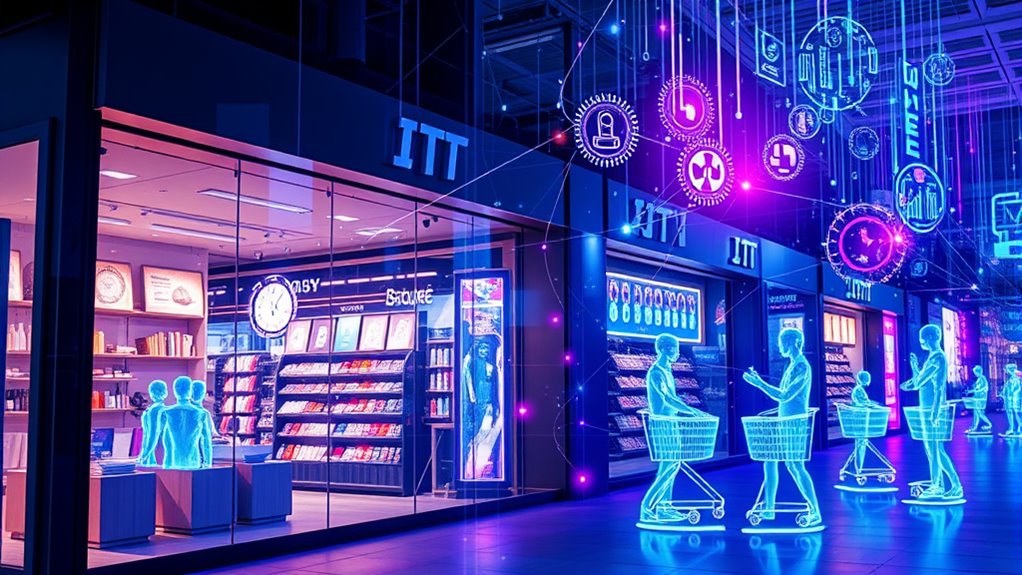
Have you ever wondered how online shopping evolved from simple digital exchanges to a global industry worth trillions? It all started back in the 1970s when businesses began using Electronic Data Interchange (EDI) to swap documents digitally, replacing traditional paper mail. This move laid the groundwork for digital transactions, even before the internet became widespread. Around that same time, CompuServe was launched in 1969, functioning as one of the first e-commerce platforms by sharing data over phone lines, giving a glimpse of what was to come. By the mid-1970s, systems like Online Transaction Processing (OTP) emerged, enabling more secure financial transactions, which became *vital* for handling money online. Then, in 1979, Michael Aldrich invented electronic shopping by connecting modified TVs to transaction-processing computers via phone lines, effectively creating the first online shopping experience. However, early e-commerce was mostly business-to-business, with consumers cautious due to limited technology and trust issues. The first online shopping system was developed in 1979, which marked the beginning of consumer-facing e-commerce.
The 1990s marked a turning point with the public opening of the World Wide Web in 1991, making online services accessible to everyone. This era saw the first secure online purchase in 1994 when a Sting CD was sold via NetMarket, signaling the start of consumer trust in e-commerce. Large companies like Amazon, eBay, and PayPal appeared mid-decade, transforming retail infrastructure and demonstrating the potential of online markets. As web browsers improved and internet access expanded, more people started shopping online. Still, in 1999, only about 0.5% of retail sales occurred online, showing that e-commerce was just getting started.
Entering the 2000s, e-commerce diversified rapidly. You could order food, stream media, buy ads, or sell items on online marketplaces. The global reach of online shopping grew thanks to credit cards, ATMs, and better internet infrastructure. By 2007, e-commerce accounted for 3.4% of total retail sales in the US. Retailers, both physical and online, began establishing digital channels, and auction sites and classified ads further broadened market options. The growth was driven by consumers seeking convenience and retailers aiming to capture new revenue streams. High refresh rates enhance gaming experiences, which also led to the increased popularity of online gaming merchandise and digital goods.
Today, e-commerce is woven into your daily life. Over 63% of purchases started online by 2022, with mobile commerce and digital wallets giving you flexible payment options. Trust and convenience have dramatically improved, encouraging more worldwide adoption. Social commerce, customer service tools, and e-procurement systems keep expanding the industry. Between early 2024 and early 2025, e-commerce sales outpaced total retail growth by nearly 75%, reflecting its dominance. The evolution continues as technological innovations like AI, secure payment gateways, automation, and super-apps redefine how you shop. From simple digital exchanges to intelligent, personalized experiences, e-commerce has become a dynamic digital world that’s shaping the future of retail.
Frequently Asked Questions
How Will AI Impact Traditional Brick-And-Mortar Stores?
AI will transform your brick-and-mortar store by making shopping more interactive and efficient. You’ll see personalized recommendations, virtual try-ons, and 24/7 customer support that enhance customer satisfaction. AI-powered inventory management and analytics will optimize operations, reduce costs, and boost sales. By embracing AI, your store can stay competitive, attract tech-savvy shoppers, and create a seamless, engaging shopping experience that blends physical and digital worlds effortlessly.
What Are the Privacy Concerns With Intelligent Agents?
Privacy concerns with intelligent agents are like shadows lurking behind bright screens. You might not realize how much personal data these agents gather—your shopping habits, browsing logs, even sensitive details—often without your clear consent. This raises risks of data breaches, misuse, and regulatory violations. As an user, you could unknowingly share more than intended, making trust fragile. Ensuring transparency, proper safeguards, and respecting your privacy is vital to prevent harm.
How Accessible Is Advanced E-Commerce Technology Globally?
You’ll find that advanced e-commerce technology is increasingly accessible, especially in developed regions with high smartphone use and reliable internet. However, in many emerging markets, infrastructure gaps, limited digital literacy, and high costs hinder access. While social commerce and AI-powered tools grow worldwide, disparities remain, meaning your ability to benefit from cutting-edge e-commerce tech depends largely on your location, infrastructure, and digital skills.
Will Automation Reduce Overall Customer Service Quality?
Automation won’t destroy customer service quality; instead, it’ll transform it. You’ll notice faster responses, reduced wait times, and personalized interactions that feel almost human. However, it’s not perfect—complex or emotional issues still need human touch. If balanced well, automation can elevate support, making it more efficient and satisfying. So, rather than lowering standards, automation helps you deliver a smoother, more responsive customer experience that keeps everyone happy.
How Do Intelligent Agents Influence Consumer Trust?
Intelligent agents influence your trust by providing seamless, transparent service that addresses your concerns about data security and transaction handling. When they come from familiar retailers with strong reputations, you’re more likely to trust them. Younger consumers and tech-savvy users tend to be more open, especially if the AI demonstrates reliability and transparency. However, trust still varies based on personal comfort levels and perceived data privacy, affecting your willingness to engage fully.
Conclusion
As you navigate this digital landscape, it’s remarkable how seamlessly intelligent agents enhance your shopping experience. It’s almost as if the future arrived quietly, right when you needed it most. With every click, you witness the evolution unfolding—bringing convenience and personalization into your world. Sometimes, it feels like technology and your desires collide in perfect harmony, reminding you that you’re part of this exciting new era where digital worlds and intelligent agents truly meet.
Halloween Picks
halloween
As an affiliate, we earn on qualifying purchases.