
When choosing the best educational games for preschoolers, I look for options that are fun, interactive, and promote learning. From magnetic fishing games and alphabet cards to matching puzzles and STEM toys, there are many engaging choices. Safety, durability, and age-appropriateness are key to making the right pick. Keep watching, and I’ll share more details on the top games that make learning both exciting and effective for your little one.

Get hardware and tech essentials delivered free — and shop member deals
- Fast, free delivery on millions of items
- Access to Prime Big Deal Days deals on October 6–7
- Prime Video, Amazon Music and more included
Key Takeaways
- Select games that combine colorful visuals and interactive features to keep preschoolers engaged and excited to learn.
- Prioritize age-appropriate activities that promote skill development in literacy, math, and social skills.
- Incorporate multisensory elements like puzzles, flashcards, and tactile toys to enhance early learning experiences.
- Ensure safety by choosing games with durable materials and minimal small parts for younger children.
- Opt for versatile games that encourage teamwork, sharing, and independent learning for holistic development.
Magnetic Wooden Fishing Game Toy for Toddlers
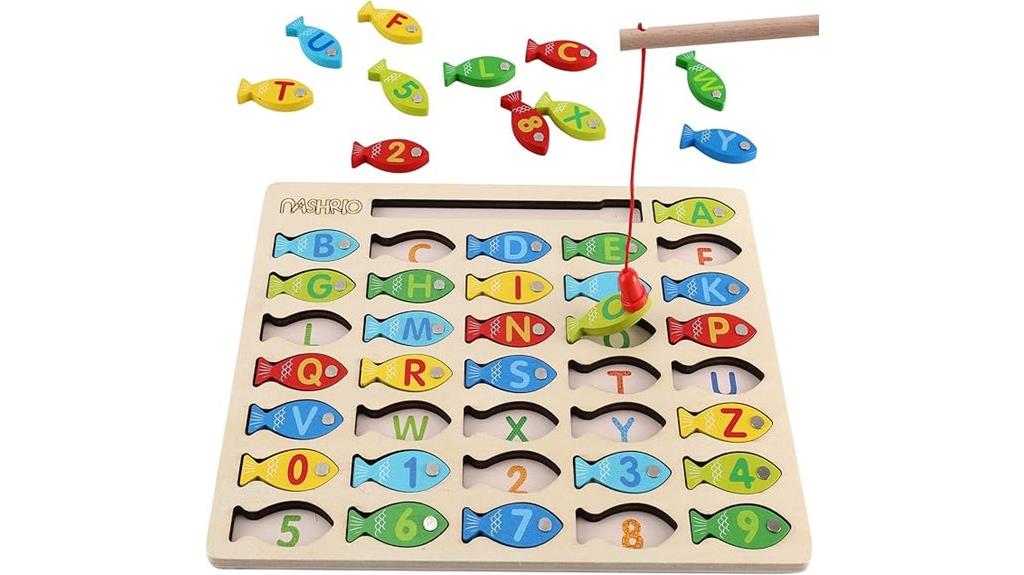
If you’re looking for an engaging educational toy for preschoolers, the Magnetic Wooden Fishing Game is an excellent choice, especially for children aged 3 to 5. I love how it’s made from eco-friendly, water-based painted wood with smooth edges, ensuring safety during play. The colorful fish pieces labeled with letters and numbers make learning fun, while the magnetic fishing pole adds a tactile element that enhances hand-eye coordination and fine motor skills. Its compact size fits small hands perfectly, making it easy to handle. Kids can enjoy fishing, matching, and practicing letters and numbers—turning playtime into a valuable learning experience.
Best For: preschool children aged 3 to 5 who are eager to develop their motor skills, early literacy, and cognitive abilities through interactive play.
Pros:
- Made from high-quality, eco-friendly, water-based painted wood with smooth edges for safety.
- Enhances hand-eye coordination, fine motor skills, and early learning of letters and numbers.
- Brightly colored fish pieces and engaging gameplay make learning fun and interactive.
Cons:
- Small fish pieces may pose a choking hazard for children prone to mouthing objects; supervision recommended.
- Only includes one fishing pole; may lead to sibling rivalry unless a second pole is added.
- Limited play modes may require additional toys or activities for extended engagement.
School Zone Go Fish Alphabet Game Cards for Kids
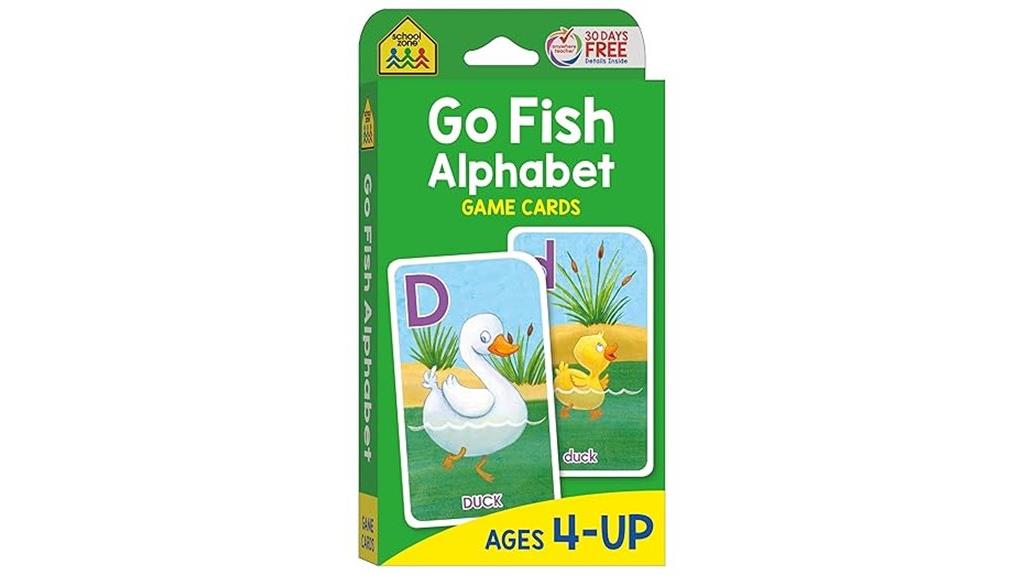
School Zone Go Fish Alphabet Game Cards are an excellent choice for parents and teachers looking to make early literacy fun and engaging. These vibrant cards teach uppercase and lowercase letters, word-picture recognition, and animal names, helping kids build foundational reading skills. The colorful illustrations and matching activities promote letter recognition and pronunciation, while the versatile gameplay includes Go Fish, memory, and ABC ordering. Made with durable cardstock and large enough for small hands, the cards are perfect for home, travel, or classroom use. Kids enjoy the engaging animal images, and parents appreciate the educational value that boosts confidence and learning progress in a playful way.
Best For: parents, teachers, and caregivers seeking an engaging, educational game to support early literacy and letter recognition for children ages 4 and up.
Pros:
- Enhances early literacy skills through vibrant animal illustrations and matching activities
- Durable, large cards that are easy for small hands to hold and suitable for travel or classroom use
- Versatile gameplay options including Go Fish, memory, and ABC ordering to suit different learning levels
Cons:
- Some cards may be tricky for children, especially with letters like U, V, Q, and X
- Minor bends can occur over time with frequent use, though cards remain durable
- Limited number of cards in the deck may require multiple sets for extensive play or classroom use
Educational Insights Pancake Pile-Up Game for Preschoolers
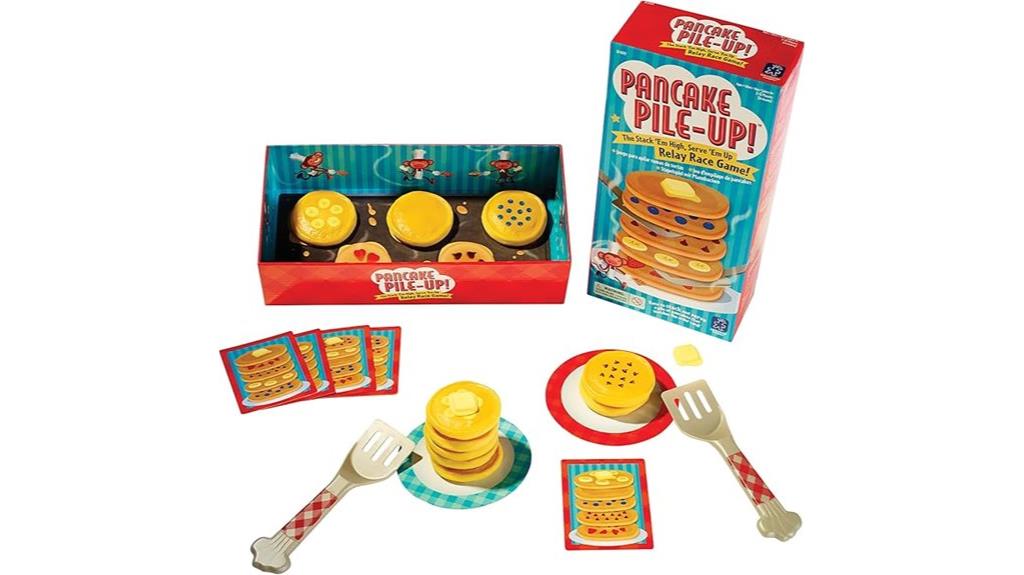
Looking for a fun, engaging game that helps preschoolers develop social skills while having a blast? The Educational Insights Pancake Pile-Up game is perfect. It’s a lively relay race where kids flip, stack, and race to match pancake orders, promoting teamwork and cooperation. As they play, children learn to share, take turns, and handle winning or losing gracefully. Plus, it boosts gross motor skills, balance, and early math skills like patterning. With colorful pancakes, plates, spatulas, and fun role-play elements, this game turns learning into an exciting, hands-on experience for kids aged 4 and up. It’s a fantastic gift for any preschooler!
Best For: preschoolers aged 4 and up who enjoy interactive, social, and hands-on games that promote learning and motor skills.
Pros:
- Encourages teamwork, sharing, and good sportsmanship among young children
- Supports development of gross motor skills, balance, coordination, and early math skills like patterning
- Features colorful, engaging play pieces that enhance pretend play and make learning fun
Cons:
- May require adult supervision for younger children to ensure proper gameplay
- Limited number of players (2-4), which might restrict larger group play
- Small parts like pancakes, pats of butter, and spatulas could pose a choking hazard if not used carefully
Wonder Forge Disney Matching Game for Kids

The Wonder Forge Disney Matching Game is an excellent choice for parents seeking a fun and educational activity tailored for preschoolers aged 3 to 5. I love how it features beloved Disney characters like Mickey, Minnie, and friends, capturing kids’ attention with vibrant, colorful tiles. This game enhances memory, focus, and pattern recognition while encouraging critical thinking. Its simple setup and clear instructions make it easy for preschoolers to learn and play independently or together. Perfect for family game nights or as a gift, this game combines entertainment with valuable cognitive development, making learning enjoyable for young children.
Best For: parents and caregivers looking for a fun, educational, and age-appropriate memory game that promotes cognitive skills and family interaction for children aged 3 to 5.
Pros:
- Engages children with colorful Disney characters, capturing their attention easily
- Enhances important skills such as memory, focus, and pattern recognition
- Easy to set up and play, suitable for independent or group play
Cons:
- Limited to preschool age range, may not hold interest for older children
- Small tiles could pose a choking hazard if not supervised for very young children
- The theme is Disney-specific, which might not appeal to all children or preferences
Matching Letter Game for Kids 3-8, Educational Toy
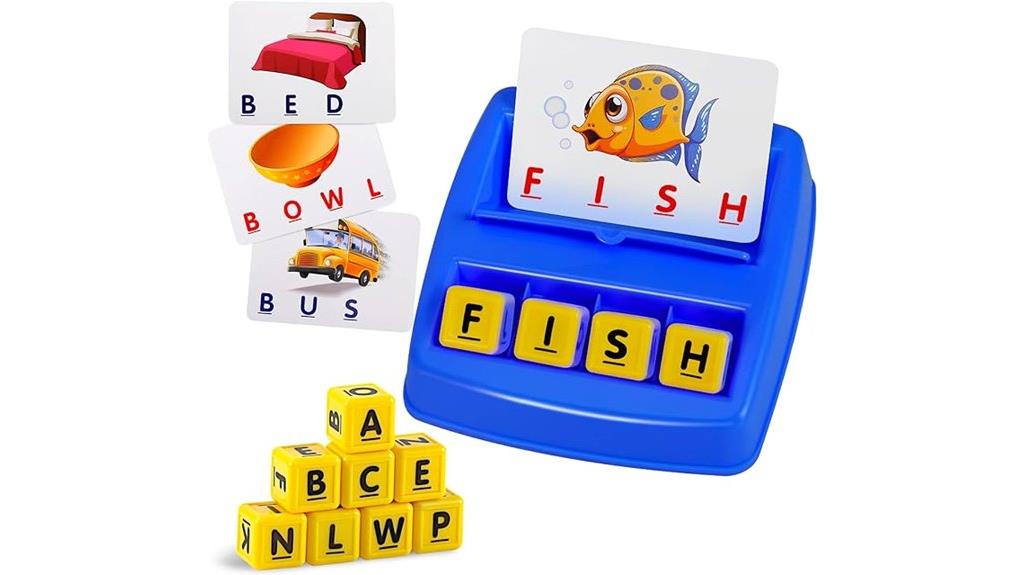
If you’re seeking a fun and educational activity for children aged 3 to 8, the Matching Letter Game is an excellent choice. This engaging toy includes a tray, eight letter cubes, and 30 cards with 60 words, helping kids recognize letters, build words, and boost vocabulary. It encourages early literacy, improves memory, and sharpens strategic thinking. Plus, it fosters family bonding as children play with parents, using picture clues to understand word meanings. Designed for multiple players, it promotes social skills like sharing and turn-taking while teaching spelling and coordination. Just remember, small parts mean adult supervision is essential for safety.
Best For: young children aged 3 to 8 who are developing early literacy skills and enjoy interactive learning games.
Pros:
- Promotes early literacy, vocabulary, and spelling skills through engaging activities
- Encourages parent-child bonding and social skills like sharing and turn-taking
- Enhances memory, strategic thinking, and hand-eye coordination in a fun way
Cons:
- Contains small parts that may pose a choking hazard for children under 3 years old
- Requires adult supervision for safety during play
- Limited to children within the specified age range, less suitable for older kids
Aitbay Cool Math Game: Preschool Frog Balance Counting Toys (63 pcs)

Aitbay’s Cool Math Game with preschool frog balance counting toys is an excellent choice for parents and educators seeking engaging STEM activities for young children. This set includes 63 colorful pieces, such as frog figurines, counting cards, weighing plates, and a frog scale, designed to make learning numbers and basic math concepts fun. The cute frog shapes spark curiosity, while the balance scale encourages hands-on exploration. Made from safe, non-toxic materials, it’s durable and perfect for home, school, or nursery use. With high customer satisfaction, this playful educational tool helps children develop cognitive skills while enjoying interactive gameplay.
Best For: parents, teachers, and caregivers seeking an engaging, educational STEM toy set to help preschool children develop basic math skills and cognitive curiosity through fun, interactive play.
Pros:
- Bright, colorful frog-shaped toys stimulate curiosity and visual learning.
- Encourages hands-on exploration of counting, numbers, and basic math concepts with a balance scale.
- Made from safe, non-toxic ABS material ensuring durability and safe play for young children.
Cons:
- May require adult supervision for younger children to ensure proper use.
- The set’s multiple pieces could be lost or misplaced if not stored properly.
- Some users might find the assembly or setup process slightly complex for very young children.
Learning Resources Noodle Knockout! Fine Motor Game

Learning Resources Noodle Knockout! I love this game because it combines fun with skill-building. With 67 pieces, kids snag noodles to knock over bowls of ramen, enhancing their fine motor skills. It’s perfect for children ages 4 and up, offering three-in-one learning: developing hand-eye coordination, counting, and color recognition. Whether playing solo or with friends, it encourages teamwork and social interaction. Plus, the reusable packaging doubles as a game board and storage, making setup and cleanup simple. It’s an excellent gift for birthdays or holidays, providing ongoing learning fun that’s both engaging and educational.
Best For: children aged 4 and up who want to develop fine motor skills, color recognition, and counting abilities through engaging, social gameplay.
Pros:
- Promotes multiple skills including fine motor development, counting, and color matching.
- Suitable for solo play or group activities, fostering teamwork and social skills.
- Reusable packaging serves as a game board and storage, simplifying setup and cleanup.
Cons:
- May require adult supervision for younger children to ensure proper use.
- Limited to small pieces, which could pose a choking hazard if not monitored.
- The game’s physical components may wear over time with frequent use.
Sight Word Stomp! Educational Indoor Game for Preschool Alphabet, Toddler Brain Toys, 114 Pieces, Age 5

is an excellent choice for preschoolers who are just beginning to build their reading skills, as it combines active play with educational content. I love how kids race to find sight words, stomp their dinosaur, and collect cards, making learning engaging and fun. With 220 Dolch sight words across five challenge levels, it effectively supports early literacy development. The game supports 1-4 players, encouraging solo play, head-to-head, or group challenges. Plus, with 114 pieces, including dinosaur figures and cards, it keeps children engaged indoors while reinforcing essential language skills for school readiness.
Best For: preschoolers and kindergarteners who are beginning to develop their reading skills through active and engaging learning activities.
Pros:
- Promotes active learning by combining physical activity with literacy skills.
- Supports up to 4 players, encouraging social interaction and group play.
- Includes a variety of educational components like cards and dinosaur figures to keep children engaged.
Cons:
- May require adult supervision for younger children to ensure safe play.
- Limited to indoor use, which could reduce outdoor activity options.
- The game setup and cleanup might be time-consuming with 114 pieces involved.
Educational Insights Sneaky Snacky Squirrel Game for Kids

If you’re looking for an engaging game that helps preschoolers develop essential skills, the Educational Insights Sneaky Snacky Squirrel Game is an excellent choice. It combines fun and learning by encouraging color recognition, matching, sorting, and strategic thinking. Kids use squirrel tongs to pick up acorns, filling their logs with all five colors first to win. The game’s sturdy design and compact tree-shaped board make it easy to set up and store. Plus, it promotes fine motor skills, patience, and social skills like taking turns and sportsmanship. It’s a versatile, educational toy perfect for both home and classroom play, appealing to children ages 3 and up.
Best For: preschool children ages 3 and up, parents, teachers, and caregivers seeking an engaging educational game that promotes early childhood development skills.
Pros:
- Encourages color recognition, matching, and strategic thinking in a fun, interactive way.
- Develops fine motor skills and hand-eye coordination through the use of squirrel tongs to pick up acorns.
- Durable, compact, and easy to set up, making it suitable for both home and classroom environments.
Cons:
- Some younger children might need initial supervision or assistance with the fine motor aspects of using the tongs.
- The game relies on spinning a spinner, which may not be as engaging for children who prefer more active gameplay.
- Limited to a small number of players (2-4), which might not accommodate larger groups easily.
Educational Insights Sophie’s Seashell Scramble: Pattern Matching Game for Toddlers

Looking for a fun, hands-on game that helps preschoolers develop pattern recognition and fine motor skills? Educational Insights Sophie’s Seashell Scramble is perfect. This engaging game features a Sophie Squeezer tool, shells in five patterns, and colorful mats. Kids spin the spinner, then use the Squeezer to collect matching shells, promoting hand-eye coordination and strategic thinking. It’s ideal for children aged 3-6, encouraging social skills like sharing and turn-taking. The compact design makes setup and cleanup easy, and the high-quality materials guarantee durability. It’s a fantastic choice for family game nights, classrooms, or therapy sessions, blending learning and fun seamlessly.
Best For: preschoolers and toddlers ages 3-6, parents, educators, and therapists seeking an engaging, educational game that promotes pattern recognition, fine motor skills, and social development.
Pros:
- Encourages pattern recognition, color matching, and fine motor development through hands-on play.
- Promotes social skills like sharing, taking turns, and sportsmanship, making it ideal for group settings.
- Durable, high-quality materials with easy setup and cleanup, suitable for classroom, family, or therapy use.
Cons:
- Small parts such as shells and the Squeezer tool require adult supervision for younger children.
- Some children may need guidance initially to understand game rules and strategies.
- The game’s physical components may be less engaging for older children beyond age 6 who seek more complex gameplay.
Educational Insights Frida’s Fruit Fiesta Toddler Board Game for Kids 3-5
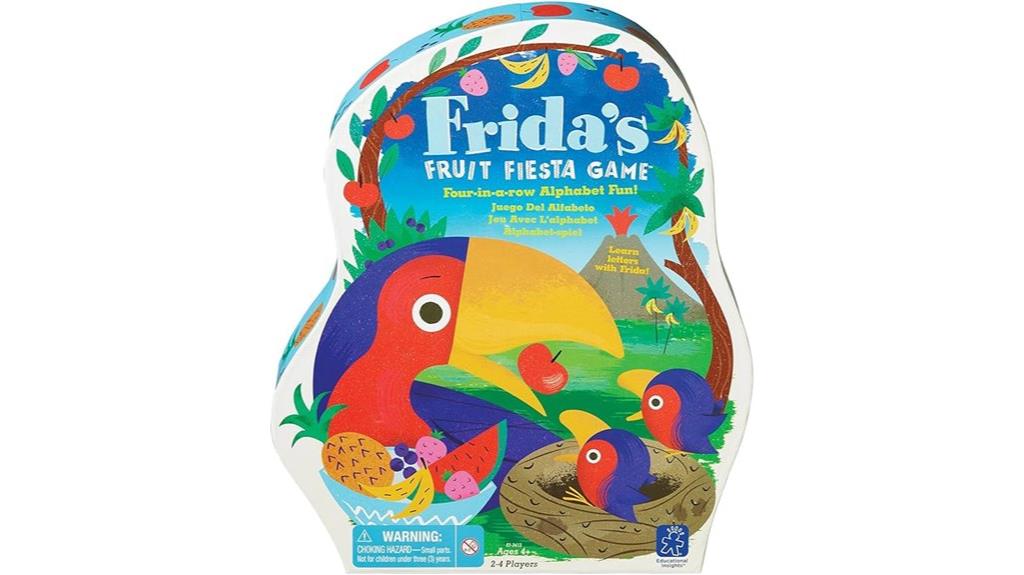
Educational Insights Frida’s Fruit Fiesta Toddler Board Game is an excellent choice for parents and teachers seeking an engaging way to introduce preschoolers to the alphabet. This colorful game encourages children aged 3-5 to practice letter recognition and matching through fun gameplay. Kids spin a triple spinner, select actions, and collect lettered fruit with Frida Squeezer, aiming to fill nest cards with matching letters. The game promotes early literacy, fine motor skills, and social-emotional development, making it perfect for classroom or family fun. With its organized design and simple setup, it’s easy to encourage independent play and learning.
Best For: parents and teachers seeking an engaging and educational game to promote early literacy, fine motor skills, and social-emotional development in preschoolers aged 3-5.
Pros:
- Promotes alphabet recognition, letter matching, and early literacy skills through fun gameplay.
- Includes organized components with storage features for easy setup and cleanup.
- Encourages social-emotional skills like taking turns, sharing, and gracious winning or losing.
Cons:
- May require adult supervision for younger children to ensure proper gameplay.
- Limited to age 3-5, so older children may find it less challenging.
- Small parts like fruit bowls and spinner could pose a choking hazard if not used carefully.
Coogam Numbers and Alphabets Flash Cards Set for Preschool Kids
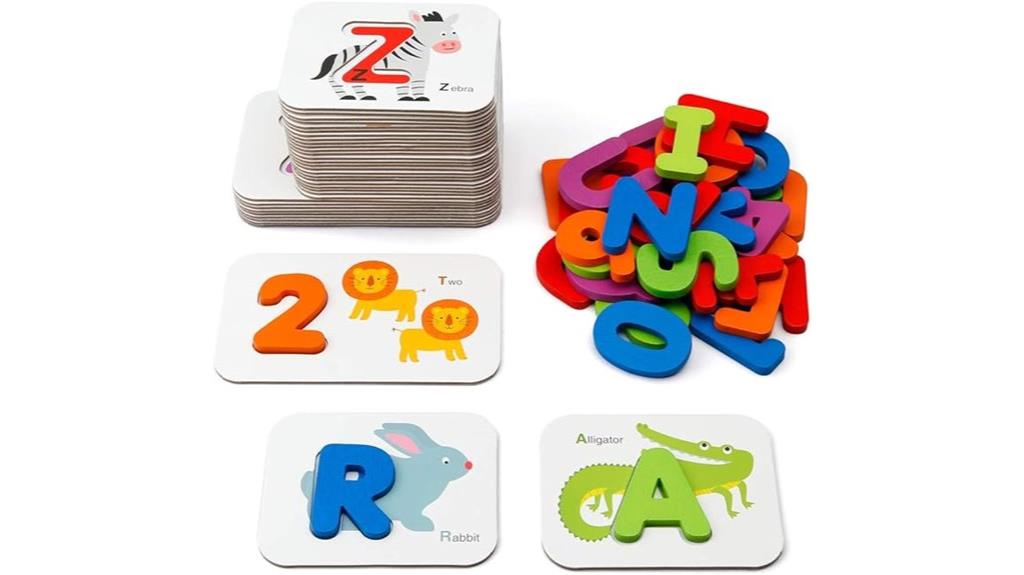
The Coogam Numbers and Alphabets Flash Cards Set is an excellent choice for preschool kids just beginning their learning journey. I love how the set includes 36 vibrant flashcards covering A-Z and 1-10, along with 37 smooth wooden animal-patterned blocks. The bright colors and clear images grab children’s attention, making learning engaging. Using the cards and blocks together helps develop hand-eye coordination, color recognition, and fine motor skills. Made from safe, durable materials, the set is designed for little hands and long-lasting use. Plus, the included storage box keeps everything organized, encouraging kids to tidy up after play.
Best For: preschool children aged 3 and above who are just beginning to learn their alphabet and numbers through interactive and engaging methods.
Pros:
- Bright, vivid images and colors that effectively capture children’s attention and stimulate interest in learning.
- Includes both flashcards and wooden blocks with animal patterns, promoting multisensory learning and skill development.
- Made from durable, safe materials with a waterproof finish, ensuring long-lasting use and safety for little hands.
Cons:
- Limited to basic alphabet and number recognition; may require additional materials for advanced learning.
- Plastic storage box may not be as eco-friendly as alternative storage options.
- The set might be less suitable for children under 3 years due to small size of the flashcards and blocks.
The Learning Journey Match It Counting Puzzle

If you’re searching for a fun, engaging way to help preschoolers develop early math skills, the Learning Journey Match It! – Counting puzzle is an excellent choice. This 30-piece, self-correcting puzzle features vibrant illustrations that make learning to count enjoyable. It reinforces foundational math skills, improves concentration, and promotes focus in a relaxed setting. Made from sturdy cardboard, the pieces are easy for little hands to grasp, helping develop motor skills. The self-correcting design builds confidence by ensuring children can succeed independently. With its bright visuals and educational value, this puzzle makes learning to count both effective and fun for young learners.
Best For: preschool children aged 3 and above who are beginning to learn counting and early math skills in a fun and engaging way.
Pros:
- Self-correcting design promotes independent learning and confidence.
- Bright, colorful illustrations make learning visually appealing.
- Durable construction supports long-term use and easy handling for small hands.
Cons:
- May be too simple for children who already have basic counting skills.
- Limited to counting activities, with no additional math concepts included.
- Requires adult supervision for younger children to ensure proper use and safety.
Factors to Consider When Choosing Educational Games for Preschoolers
When choosing educational games for preschoolers, I consider several key factors to make sure they’re beneficial and safe. Things like age appropriateness, educational value, and safety standards are essential, but I also look for games that are fun, durable, and of good quality. Keeping these points in mind helps me pick options that support learning and last through active play.
Age Appropriateness
Choosing the right educational game for preschoolers requires careful attention to their developmental stage. I focus on games designed for ages 3 to 5 to guarantee the content matches their learning abilities. It’s vital to check that the difficulty level aligns with their current skills in areas like counting or letter recognition, so the game challenges without causing frustration. I also look for games with simple rules and clear instructions, which help children play independently or with minimal guidance. Age-appropriate themes and content pique their curiosity and maintain engagement. Finally, safety is paramount—I verify that all components are safe for small children, free of choking hazards or small parts. This approach ensures a positive, enriching experience that respects their developmental needs.
Educational Value
Educational value is the cornerstone of selecting effective preschool games, as they should foster essential skills like literacy, numeracy, and problem-solving in ways that align with early learning standards. I look for games that include age-appropriate concepts, visually engaging materials, and clear instructions to support meaningful learning. Incorporating multi-sensory elements such as colors, textures, and sounds can boost engagement and help reinforce educational concepts. I also consider evidence-based benefits, like improvements in memory, fine motor skills, or early reading abilities, as indicators of a game’s educational impact. Additionally, I value games that promote social interaction, turn-taking, and cooperation, which help develop vital social-emotional skills alongside academic learning. These factors ensure the game offers a well-rounded, enriching experience for preschoolers.
Safety Standards
Ensuring safety standards are met is essential when selecting educational games for preschoolers, as their curiosity and limited experience make them more vulnerable to potential hazards. I always check that toys meet safety certifications like ASTM F963 or EN71, which ensure they are free from harmful chemicals and small parts that could cause choking. It’s important to verify that paints and finishes are non-toxic, water-based, and safe in case of accidental ingestion. I also examine the edges and surfaces of the game, making sure they are smooth, rounded, and free from splinters or cuts. Durability is key, so I guarantee all parts are securely attached to prevent breakage into small, swallowable pieces. Finally, I look for clear age labeling and manufacturer compliance to confirm the game has passed safety testing for preschoolers.
Playability & Fun
When selecting games for preschoolers, it’s important to contemplate how engaging and enjoyable they are, since children are naturally drawn to colorful visuals and fun themes that capture their interest. Games with bright colors, lively characters, and playful themes encourage kids to want to play repeatedly. Playability improves when rules are simple, instructions are clear, and children can understand and enjoy the game independently or with minimal help. Fun features like sound effects, tactile components, and interactive challenges boost motivation and keep kids emotionally invested. A good educational game balances learning with entertainment, making education feel like a fun activity rather than a chore. Including opportunities for social interaction also promotes cooperation and positive social skills in a playful environment.
Durability & Quality
Choosing durable educational games is essential because young children tend to handle toys and materials roughly. I look for games made from high-quality, non-toxic materials like thick cardboard, sturdy plastic, or polished wood, which can withstand frequent use. Well-constructed games feature smooth edges and surfaces, preventing injuries and ensuring safety during play. I also prioritize eco-friendly options that use water-based dyes and finishes, making them safe for kids and environmentally conscious. High-quality pieces resist chipping, fading, or breaking, maintaining their educational value over time. Reinforced components and secure fastening mechanisms are vital because they reduce the chances of lost or damaged parts, even after extensive handling. Ultimately, durable games offer long-lasting fun and learning without constant replacement.
Frequently Asked Questions
How Do Educational Games Support Preschoolers’ Social Skills Development?
Educational games support preschoolers’ social skills by encouraging interaction, sharing, and teamwork. I’ve seen children learn to take turns, listen to others, and communicate effectively while playing together. These activities foster empathy and patience, helping kids understand different perspectives. I believe that through collaborative play, children build confidence and develop essential social skills that serve them well beyond the classroom.
What Safety Features Should Parents Look for in Educational Toys?
When choosing educational toys, I always look for safety features like non-toxic materials, smooth edges, and sturdy construction to prevent choking hazards. I also check that small parts are securely attached and that the toy meets safety standards like ASTM or CE certifications. Ensuring age-appropriate labels is vital, so I can be confident the toy is safe for my preschooler’s developmental stage.
How Can Parents Encourage Cooperative Gameplay Among Preschoolers?
I encourage cooperative gameplay among preschoolers by setting clear, simple rules and praising teamwork. I create opportunities for them to share, take turns, and work together on tasks. I also join in, modeling positive interactions and patience. By fostering a supportive environment and emphasizing the fun of working as a team, I help preschoolers develop social skills, empathy, and a sense of accomplishment through collaborative play.
Are There Educational Games Suitable for Children With Special Needs?
Absolutely, there are fantastic educational games designed specifically for children with special needs. I’ve seen games that focus on sensory play, communication, and fine motor skills, tailored to various abilities. Just like a good old-fashioned treasure hunt, these games engage children while supporting their development. I recommend seeking out apps and tools created by specialists, ensuring they’re adaptable and inclusive, making learning both fun and accessible for every child.
How Do Educational Games Promote Long-Term Learning Motivation?
Educational games promote long-term learning motivation by making learning enjoyable and rewarding. I’ve found that when kids experience success and feel challenged without frustration, they develop a love for discovering new things. These games often incorporate progress tracking and positive reinforcement, which keep children enthusiastic to continue playing and learning. This engaging approach helps build confidence and curiosity, encouraging kids to stay motivated and develop a lifelong passion for learning.
Conclusion
So, there you have it—your cheat sheet to turning preschool chaos into learning adventures. Who knew education could be so fun? With these games, you’ll be the cool parent who makes homework look like playtime (spoiler: it is). Just remember, the real magic isn’t in the toys, but in your patience—and maybe a backup snack stash. Happy gaming, and may your little scholar’s giggles outshine those math problems!
Fall Picks
fall essentials
As an affiliate, we earn on qualifying purchases.